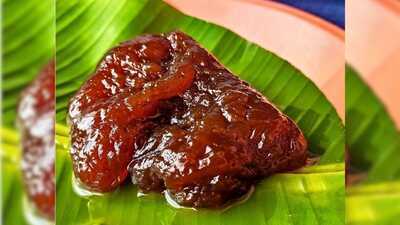
New Delhi: Tirunelveli, often called Nellai, carries a rich cultural identity shaped by history, spirituality and food. Known for the centuries-old Nellaiappar Temple and nourished by the Thamirabarani river, the city in Tamil Nadu has long held importance as an agricultural and cultural centre in Tamil Nadu. Yet, beyond its temples and landscapes, Tirunelveli is best recognised for one unforgettable speciality – its halwa. This soft, glossy sweet has earned the city a distinct place on India’s culinary map.
For generations, visitors and locals alike have associated Tirunelveli with its rich, chewy halwa that carries a taste difficult to replicate elsewhere. The connection is so strong that the city’s name itself often brings this dessert to mind. At the heart of this legacy lies a small, unassuming shop that turned a simple recipe into a cultural symbol. Its story reflects tradition, patience and a surprising journey that links South India to distant northern roots.
Tirunelveli halwa and Iruttu Kadai legacy Why Tirunelveli is known as halwa capital of SouthTirunelveli earned its title through a long-standing tradition of preparing wheat-based halwa that stands apart in taste and texture. The preparation relies on simple ingredients like wheat, sugar and generous amounts of ghee, yet the result feels distinct. Local belief credits the mineral-rich water of the Thamirabarani river for enhancing its flavour and consistency. Slow cooking in large copper vessels allows the mixture to thicken gradually, creating its signature glossy finish and soft bite that has remained unchanged for decades.
Story behind Iruttu Kadai halwaThe fame of Tirunelveli halwa is closely tied to Iruttu Kadai Halwa Shop, a modest outlet known for its dimly lit interiors and limited working hours. Established in the early 20th century, the shop built its reputation through consistency rather than expansion. The name itself, meaning ‘dark shop’, comes from its minimal lighting, which has become part of its identity. Despite its simplicity, the shop draws steady crowds, with customers often waiting patiently for freshly prepared halwa.
North Indian roots of a southern specialityThe origins of this halwa trace back to the early 19th century, when the Zamindar of Chokkampatti developed a liking for halwa during his visit to North India. He brought skilled cooks from the Rajputana region, now known as Rajasthan, to recreate the sweet in his palace. Over time, these families settled in Tirunelveli and continued the craft independently. Names such as Jegan Singh and Bijli Singh are often linked to this transition, marking the shift from royal kitchens to local trade.
How halwa tradition evolved over timeAs generations passed, the recipe adapted to local conditions while retaining its core technique. The use of regional water, cooking methods and ingredients gave the halwa its unique character. What began as a royal indulgence gradually became a local speciality, eventually turning into a symbol of Tirunelveli’s identity. The involvement of families with roots in northern India added depth to the story, creating a rare culinary link across regions.
Tirunelveli’s halwa is a story of migration, tradition and careful craftsmanship that continues to draw people back, one warm serving at a time.
-
IPL 2026: Tilak Varma’s return to form offers Mumbai Indians a way forward

-
IPL 2026: 'I hate to ... ': Captain Ruturaj Gaikwad's blunt verdict after Chennai Super Kings loss

-
CSK vs GT: Sarfaraz Khan gamble fails as CSK panic move grabs spotlight

-
Mumbai: AAP members detained during protest against Raghav Chadha, six MPs' merger with BJP

-
Karthik Applauds Krunal Pandya for Revolutionizing Finger-Spin Bowling