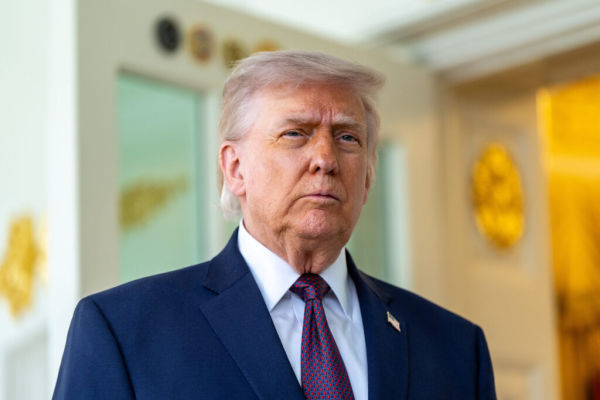
Judge Questions Trump’s $10B Lawsuit Against IRS and Treasury/ TezzBuzz/ WASHINGTON/ J. Mansour/ Morning Edition/ A federal judge is questioning whether President Donald Trump can legally pursue his $10 billion lawsuit against the IRS and Treasury Department over the leak of his tax returns. Judge Kathleen Williams raised concerns about Trump suing federal agencies he controls as president, calling attention to possible constitutional conflicts. The case also highlights ongoing settlement talks that could result in Trump’s own administration paying damages to him and his family.
- Trump is suing the IRS and Treasury for $10 billion
- The case centers on leaked tax returns released by former contractor Charles Littlejohn
- Judge Kathleen Williams questioned whether Trump can sue agencies he oversees
- The judge ordered a hearing on whether both sides are truly adversarial
- Trump’s lawyers are seeking a 90-day extension for settlement talks
- Any financial settlement could come from Trump’s own administration
- Charles Littlejohn was sentenced to five years in prison in 2024
Federal Judge Raises Questions Over Trump’s IRS Lawsuit
A federal judge expressed serious skepticism about President Donald Trump’s $10 billion lawsuit against the IRS and Treasury Department over the leak of his confidential tax returns.
Florida District Judge Kathleen M. Williams questioned whether Trump, as the sitting president, can legally sue federal agencies that operate under his own executive authority.
The case centers on whether the president and the agencies are truly opposing parties in court or whether the unusual setup creates a constitutional conflict.
Williams ordered both sides to provide more information and scheduled further review on whether the lawsuit can properly move forward.
Her concerns focus less on whether Trump’s tax records were wrongly leaked and more on whether the lawsuit itself is legally appropriate.
Can a President Sue His Own Government?
Judge Williams pointed directly to what she described as the unusual nature of the case.
Her concern is that Trump is effectively suing agencies that answer to him.
That creates a legal problem because courts require genuine conflict between opposing parties.
If the president controls both sides of the dispute, the judge questioned whether the case meets that standard.
That issue could determine whether the lawsuit survives at all.
Judge Points to Trump’s Expanded Presidential Power Claims
Williams also referenced Trump’s broader efforts to expand presidential authority.
She cited one executive order requiring executive branch employees not to advance legal interpretations that conflict with the president’s own legal opinions.
That includes the Attorney General, who has a legal obligation to defend the IRS when it is sued.
That conflict sits at the center of the judge’s constitutional concern.
Trump Acknowledged the Strange Dynamic
The judge also pointed to Trump’s own public comments about the case.
During a January trip aboard Air Force One, Trump admitted the unusual nature of suing his own administration.
Trump also said he had considered donating any money won from the government to charity.
Settlement Talks Are Already Underway
At the same time, Trump’s legal team is already engaged in discussions with the IRS and Treasury Department to potentially settle the case.
His attorneys have requested a 90-day extension while negotiations continue.
That raises another unusual issue.
If the lawsuit ends in a monetary settlement, Trump’s own administration could be paying damages directly to him and his family.
That possibility has intensified legal scrutiny around the case.
It also raises political questions about how taxpayer money would be used in such a resolution.
Legal Analysts Call It Highly Irregular
CNN Senior Legal Analyst Elie Honig said the judge is highlighting the obvious conflict built into the lawsuit.
That legal distinction may become the deciding factor.
The Lawsuit Stems From a Major IRS Leak
Trump, along with his sons Donald Trump Jr. and Eric Trump, filed the lawsuit in January.
They allege the IRS failed to protect confidential tax records belonging to them and the Trump Organization.
The records were illegally obtained and leaked by Charles Littlejohn, a former IRS contractor who worked through Booz Allen Hamilton.
According to the lawsuit, Littlejohn gained “staff-like access” to sensitive tax return information and exploited long-standing IRS security failures.
Those records were later provided to media outlets including The New York Times and ProPublica.
The leak became one of the most significant tax privacy breaches involving a U.S. president.
Littlejohn Was Sentenced to Prison
The leak involved not only Trump’s records but also tax information tied to other wealthy individuals.
Trump’s legal team argues that the IRS remains legally responsible because the agency failed to prevent the breach despite previous warnings about security vulnerabilities.
They claim the government’s failure directly enabled the leak and caused significant reputational and financial harm.
That forms the basis of the massive $10 billion damages request.
DOJ Recently Settled Other Trump-Linked Cases
Trump’s effort to resolve this lawsuit comes as his Justice Department has recently settled several other high-profile legal cases involving former advisers.
This week, the DOJ reached a settlement in a lawsuit brought by former Trump campaign adviser Carter Page over flawed FBI surveillance tied to his Russian contacts in 2016.
That followed a $1 million settlement involving former National Security Adviser Michael Flynn’s wrongful prosecution case.
Those agreements show the administration has been willing to resolve politically sensitive litigation involving Trump allies.
That backdrop makes settlement discussions in the IRS case even more significant.
Lawsuit Could Become Major Constitutional Test
Beyond the tax leak itself, the case could become a major test of presidential legal boundaries.
The central question is no longer simply whether Trump was wronged.
It is whether a sitting president can use the courts to sue agencies under his own command while those same agencies are required to defend themselves under his authority.
Judge Williams appears unconvinced that such a structure fits within normal constitutional limits.
Her upcoming review could determine whether the lawsuit proceeds—or becomes another major legal fight over the expanding power of the presidency.
More on US News
-
Men's Fashion: Charming Ways To Style Pink With Cues From Sidharth Malhotra, Ranveer Singh, Aditya Roy Kapur, Ranbir Kapoor

-
RCB Star Virat Kohli Closing In On Rare IPL Milestone In Crucial DC Encounter At Arun Jaitley Stadium

-
Iran Resumes Flights To Beijing, Istanbul, Muscat As Fragile Ceasefire Holds

-
Daughter Of Former Uzbek President Faces Trial In Switzerland Over Money Laundering

-
Kashmir Administration Declares Shopian’s Jamia Siraj-ul-Uloom Unlawful, Citing Jamaat Links and Radicalization Concerns