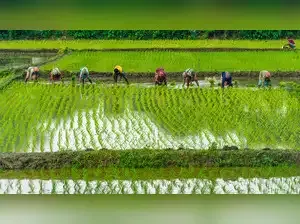
When our agricultural farms are clad in shades of green, it is not just the farmer who is smiling; it also shows that our economy is ticking all the right boxes. And why not? Agriculture remains the backbone of India’s economy. The sector employs 42% of the workforce and contributes 18% to the country’s gross domestic product (GDP). Thus, when the agriculture sector is thriving, the economy is also thriving. Agriculture is central to the country’s food security and rural economies. Yet, it is also saddled with vulnerabilities related to climate shocks.
What was once a seasonal risk has now become a year-round uncertainty. March and April, once considered relatively safe, have shown unusual weather patterns. In just the first 38 days of the pre-monsoon period this year (March 1 to April 7), unseasonal rains and hail were reported on 29 days across 24 states. March alone recorded crop damage across at least 65,000 hectares, the highest in five years. The India Meteorological Department (IMD) has projected monsoon rainfall at 92% of the Long Period Average (LPA), the lowest first-stage forecast in 25 years, raising fresh concerns about rainfall variability and crop stress in the upcoming kharif season. In three of the past four years (2022, 2024, and 2025) extreme weather events during the pre-monsoon period caused significant agricultural losses. India’s weather office has forecast a below-average monsoon this year, with an El Niño likely to develop and suppress rainfall in the latter half of the monsoon season (June-September). In past episodes, El Niño has triggered droughts that damaged crops and strained rural incomes.
Fragmented farmlands leave many Indian farmers vulnerable to debt traps, as they make scanty income and face heavy crop losses due to extreme weather conditions. Technology can be leveraged to make our farmers manage such risks better. Technology will not ward off the risks but will transform unpredictability into manageability. The farmer need not look to the sky to guess weather patterns.
There are three main risks the farmer faces: monsoon variability, climate extremes, and supply disruptions due to geopolitical headwinds. Nobel laureate Michael Kremer has estimated that the spread of artificial intelligence (AI)-driven weather forecasts can generate over $100 in value for farmers for every dollar invested. Here are some ways technology can be transformational for India’s farms:
1. AI-based warnings
A stitch in time saves nine. AI-enabled apps are taking the guesswork out of farming. It is easier with AI and geospatial technology to figure out impending weather changes, and farmers can then sow crops accordingly and act in time. Platforms such as Fasal provide 14-day micro-climatic forecasts, helping farmers decide when to harvest or protect crops ahead of unseasonal rain or hail.
2. Hyperlocal alerting systems
It is of no good if the farmer comes to know of a change in weather in the northern hemisphere or in some random state. It is more important to know precisely what will happen in the specific location where the farmer is planning to sow. Precision weather intelligence enables better farm decisions. Combined with real-time weather tracking, this marks a shift from generic alerts to actionable, localised intelligence, delivered in local languages.
3. Smart irrigation to stretch every drop
According to a study published in the scientific journal Nature Water (2024), India accounted for 36% of global unsustainable irrigation expansion that happened between 2000 and 2015 with environmental and socio-economic implications. Due to over-extraction, almost 17% of India’s groundwater assessment units are deemed “over-exploited”, while 3.9% are in a “critical” state. AI-driven irrigation systems combine soil moisture sensors, weather data, and predictive analytics to optimise water use. Such systems reduce water usage significantly while maintaining crop health in critical water-stress areas.
4. Real-time field monitoring for floods
Extreme rainfall events are becoming more frequent and intense. Satellite-based monitoring detects waterlogging in near-real time, enabling faster crop-loss assessment, quicker insurance payouts, and timely action to protect stored produce. This reduces both economic loss and recovery time for farmers.
5. Crop switching
The farmer is going to be dependent on the weather. Sometimes, even with technology, such conditions can be hard to avoid. In the long run, it is important for the farmer to understand which is the right crop to sow, given the geography of the locale and the weather pattern. Dealing with climate risk demands flexibility. AI systems can help farmers choose climate-resistant crops. Farmers may also reschedule planting and harvesting based on predictive insights. This will help manage food security better.
Headwinds that slow down adoption
Tech is an enabler. The broader challenge in the Indian farms lies in the Bharat-India divide. Disseminating information in real time is key to success. Climate resilience requires an integrated ecosystem, one that joins all the dots and connects data, policy, and farmer-level action seamlessly. As extreme weather events become more frequent and less predictable, the future of Indian agriculture will depend on how effectively it combines traditional wisdom with technological innovation. The Indian farmer’s digital thali will be his shield against climate shocks.
The author is Founder & CEO, MapMyCrop. Views are personal
What was once a seasonal risk has now become a year-round uncertainty. March and April, once considered relatively safe, have shown unusual weather patterns. In just the first 38 days of the pre-monsoon period this year (March 1 to April 7), unseasonal rains and hail were reported on 29 days across 24 states. March alone recorded crop damage across at least 65,000 hectares, the highest in five years. The India Meteorological Department (IMD) has projected monsoon rainfall at 92% of the Long Period Average (LPA), the lowest first-stage forecast in 25 years, raising fresh concerns about rainfall variability and crop stress in the upcoming kharif season. In three of the past four years (2022, 2024, and 2025) extreme weather events during the pre-monsoon period caused significant agricultural losses. India’s weather office has forecast a below-average monsoon this year, with an El Niño likely to develop and suppress rainfall in the latter half of the monsoon season (June-September). In past episodes, El Niño has triggered droughts that damaged crops and strained rural incomes.
Fragmented farmlands leave many Indian farmers vulnerable to debt traps, as they make scanty income and face heavy crop losses due to extreme weather conditions. Technology can be leveraged to make our farmers manage such risks better. Technology will not ward off the risks but will transform unpredictability into manageability. The farmer need not look to the sky to guess weather patterns.
There are three main risks the farmer faces: monsoon variability, climate extremes, and supply disruptions due to geopolitical headwinds. Nobel laureate Michael Kremer has estimated that the spread of artificial intelligence (AI)-driven weather forecasts can generate over $100 in value for farmers for every dollar invested. Here are some ways technology can be transformational for India’s farms:
1. AI-based warnings
A stitch in time saves nine. AI-enabled apps are taking the guesswork out of farming. It is easier with AI and geospatial technology to figure out impending weather changes, and farmers can then sow crops accordingly and act in time. Platforms such as Fasal provide 14-day micro-climatic forecasts, helping farmers decide when to harvest or protect crops ahead of unseasonal rain or hail.
2. Hyperlocal alerting systems
It is of no good if the farmer comes to know of a change in weather in the northern hemisphere or in some random state. It is more important to know precisely what will happen in the specific location where the farmer is planning to sow. Precision weather intelligence enables better farm decisions. Combined with real-time weather tracking, this marks a shift from generic alerts to actionable, localised intelligence, delivered in local languages.
3. Smart irrigation to stretch every drop
According to a study published in the scientific journal Nature Water (2024), India accounted for 36% of global unsustainable irrigation expansion that happened between 2000 and 2015 with environmental and socio-economic implications. Due to over-extraction, almost 17% of India’s groundwater assessment units are deemed “over-exploited”, while 3.9% are in a “critical” state. AI-driven irrigation systems combine soil moisture sensors, weather data, and predictive analytics to optimise water use. Such systems reduce water usage significantly while maintaining crop health in critical water-stress areas.
4. Real-time field monitoring for floods
Extreme rainfall events are becoming more frequent and intense. Satellite-based monitoring detects waterlogging in near-real time, enabling faster crop-loss assessment, quicker insurance payouts, and timely action to protect stored produce. This reduces both economic loss and recovery time for farmers.
5. Crop switching
The farmer is going to be dependent on the weather. Sometimes, even with technology, such conditions can be hard to avoid. In the long run, it is important for the farmer to understand which is the right crop to sow, given the geography of the locale and the weather pattern. Dealing with climate risk demands flexibility. AI systems can help farmers choose climate-resistant crops. Farmers may also reschedule planting and harvesting based on predictive insights. This will help manage food security better.
Headwinds that slow down adoption
Tech is an enabler. The broader challenge in the Indian farms lies in the Bharat-India divide. Disseminating information in real time is key to success. Climate resilience requires an integrated ecosystem, one that joins all the dots and connects data, policy, and farmer-level action seamlessly. As extreme weather events become more frequent and less predictable, the future of Indian agriculture will depend on how effectively it combines traditional wisdom with technological innovation. The Indian farmer’s digital thali will be his shield against climate shocks.
The author is Founder & CEO, MapMyCrop. Views are personal
(Disclaimer: The opinions expressed in this column are that of the writer. The facts and opinions expressed here do not reflect the views of www.economictimes.com.)