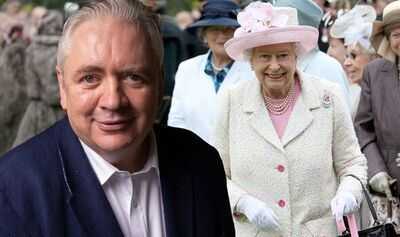
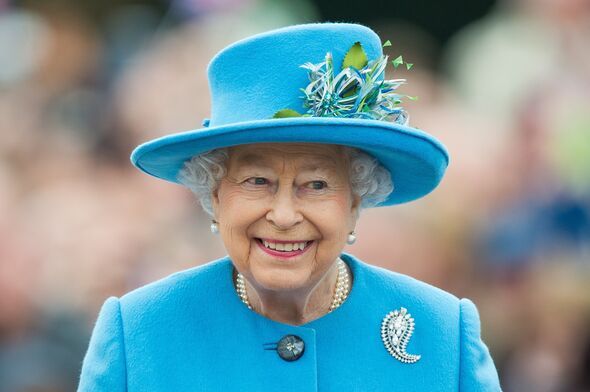
Amid deepening political sleaze and turmoil, two events this week served as powerful reminders of patriotism's uplifting influence. A reception at Buckingham Palace on Tuesday marked the centenary of the late Queen Elizabeth's birth - followed yesterday by the annual celebrations for St George, patron saint of the nation she served so well. Devout and dutiful, she became a symbol of unity who brought her people together with her dedication to her role. As the King said in a heartfelt tribute to his mother: "She remained constant, steadfast and wholly dedicated to the people she served."
Undemonstrative, reserved, stoical and private, the late Queen was a quintessentially English figure, which made the proximity of her birthday two days before St George's Day all the more fitting. Indeed, for many of her subjects, she embodied what it meant to be English. Intriguingly, for much of her reign, St George's Day was regarded with widespread indifference. A warrior and Christian martyr from Roman times, he never actually set foot in England and did not become our patron saint until the 14th century. It was only in the Tudor era that St George's Day acquired any real significance in the national calendar. But by the 18th century, it had once again faded from public consciousness.
Yet recent decades have seen a deep public yearning to celebrate England's national day. The surge in Celtic nationalism has been a vital factor in this change of mood.
If the Scots and Welsh are allowed to show pride in their homeland, why shouldn't the English enjoy the same rights, particularly given that it is taxpayers' money from England that enables lavish subsidies to the other three parts of the United Kingdom?
Another factor has been the comparative success of England's sports teams. In football, the accomplishment of reaching two finals and a semi-final between 2016 and 2024 under the quietly effective manager Sir Gareth Southgate, saw the country regularly bedecked in a sea of red and white.
Southgate, who describes himself as a "huge patriot" was so struck by this fervour that in 2021 he penned an open letter to fans, which set out how national pride could be retained in the age of diversity through collective endeavour, optimism about the future and a reverence for our history.
But the heart-warming revival of pride in England has not been universally welcomed. There is dismay among left-wingers, who view English patriotism as a form of bigotry that belongs to the far-right.
In his famous 1941 essay on English identity, George Orwell wrote: "England is perhaps the only great country whose intellectuals are ashamed of their own nationality. In left-wing circles, it is always thought there is something slightly disgraceful in being an Englishman."
Those attitudes are perhaps even more prevalent today, epitomised by Dame Emily Thornberry's notorious sneer at a modest house festooned with St George flags during the Rochester by-election in 2014.
Only last year, some NHS managers complained that the presence of the traditional English flag on our streets amounted to "deliberate intimidation" to black and Asian staff - while the Royal College of Nursing moaned that the emblem was helping to fuel a "growing cesspool of racism".
The woke agenda is aimed at the demolition of traditional national loyalty, reflected in the drive for "decolonisation" and the corporate neurosis about "white privilege". The best way to challenge this kind of institutional self-loathing is to fly the flag with an open, inclusive spirit.
As the Queen's own inspirational life proved, there's nothing bigoted or reactionary about national pride. On the contrary, it's a noble, positive force that promotes solidarity through a sense of belonging. Without such a shared set of values, division and distrust can only flourish.
-
Sanjay Singh To Write Letter To RS Chairman, Seeks Disqualification Of Chadha, Mittal, Pathak
-
Nagaland State Lottery Result: April 24, 2026, 8 PM Live - Watch Streaming Of Winners List Of Dear Horizon Sambad Night Friday Weekly Draw
-
Sikkim State Lottery Result: April 24, 2026, 6 PM Live - Watch Streaming Of Winners List Of Dear Crown Friday Weekly Draw
-
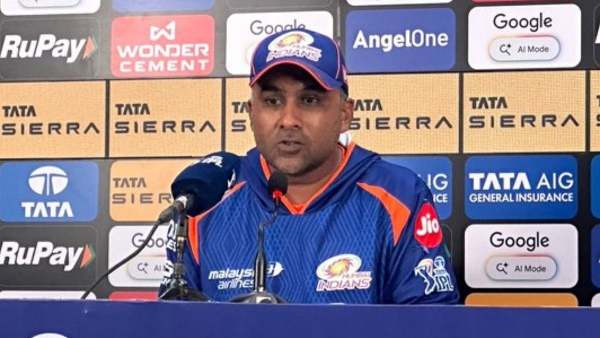
IPL 2026: Mahela Jayawardene Urges Mumbai Indians To Regain Focus After 103-Run Loss, Dismisses Fatigue Concerns
-
'Why Doesn't He Give Up His Captaincy?': Netizens Slam Hardik Pandya As Mumbai Indians Suffers Mammoth 103-Run Loss Against CSK In IPL 2026 Match