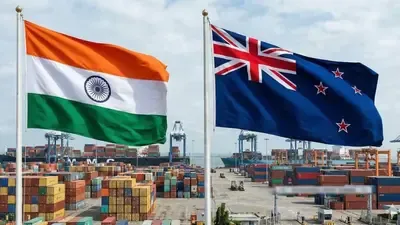
A major diplomatic controversy has erupted after Shane Jones, a senior leader from New Zealand’s coalition partner party, made a contentious remark referring to a proposed trade agreement with India as a “butter chicken tsunami.” The statement has sparked widespread criticism from political leaders, community groups, and observers, who have labelled the comment as insensitive and racially inappropriate.
The remark comes at a crucial time, as New Zealand prepares to sign a significant free trade agreement with India in New Delhi. The deal is being positioned as a landmark economic partnership that could reshape bilateral ties and open new opportunities for businesses in both countries.
Controversial Remark Triggers Political Storm
The controversy began when Shane Jones publicly stated that his party would “never accept” the proposed agreement, citing fears about increased migration. His use of the phrase “butter chicken tsunami” was widely interpreted as a stereotypical and dismissive reference to Indian culture.
The comment quickly drew sharp reactions across political and social circles. Critics argued that such language not only undermines diplomatic relations but also risks alienating the Indian community in New Zealand.
Strong Reactions From Indian Community
Leaders of Indian-origin communities in New Zealand strongly condemned the remarks. Community representatives described the statement as offensive and concerning, particularly in a multicultural society that prides itself on diversity and inclusion.
Shanti Patel, president of the Auckland Indian Association, expressed deep concern, stating that such rhetoric could create divisions and foster prejudice. Many community members also took to social media to voice their disappointment, calling for accountability and respectful dialogue.
Political Opposition Calls Out Racism
The remarks were also criticised by opposition leaders, including Priyanca Radhakrishnan, who described the comments as “outright racism.” She emphasized that political leaders have a responsibility to use inclusive and respectful language, especially when discussing international partnerships.
Her statement reflects a broader concern within New Zealand’s political landscape about maintaining standards of public discourse and avoiding rhetoric that could harm social cohesion.
Government Distances Itself
Prime Minister Christopher Luxon responded to the controversy by calling the remarks “unhelpful.” While not directly condemning his coalition partner, he made it clear that such statements do not align with the government’s approach to international relations.
The response highlights the delicate balancing act within New Zealand’s coalition government, where differing viewpoints among partners can sometimes lead to public disagreements.
The Proposed India–New Zealand Trade Deal
The free trade agreement between India and New Zealand is being described as a transformative economic initiative. Officials have called it a “once-in-a-generation” opportunity that could significantly boost trade, investment, and economic cooperation.
India, as the world’s most populous country and one of the fastest-growing major economies, represents a vast market for New Zealand businesses. The agreement is expected to enhance access to sectors such as agriculture, education, and services.
However, the deal has also raised concerns among certain political groups about its potential impact on immigration and domestic industries.
Migration Concerns at the Center of Debate
One of the key issues fueling opposition to the agreement is the possibility of increased migration from India to New Zealand. Reports suggest that the deal could lead to the entry of more than 20,000 Indian nationals.
Critics argue that such an influx could strain resources and affect job opportunities for local citizens. Supporters, on the other hand, contend that skilled migration can contribute positively to the economy and address workforce shortages.
The debate reflects a broader global trend where trade agreements are increasingly intertwined with migration policies.
Economic Stakes and Investment Commitments
Another point of contention is the reported investment commitment tied to the deal. New Zealand is expected to invest approximately NZ$34 billion (around US$20 billion) in India over a 15-year period.
While proponents see this as a strategic move to strengthen economic ties, opponents have raised concerns about the scale of the investment and its potential implications for New Zealand’s economy.
These financial considerations have added another layer of complexity to the political debate surrounding the agreement.
Coalition Tensions and Legislative Challenges
The disagreement over the trade deal has exposed divisions within New Zealand’s ruling coalition. The opposition from NZ First means that the government may need support from the Labour Party to pass the necessary legislation.
This situation underscores the challenges of coalition politics, where differing priorities and ideologies can complicate decision-making processes.
The outcome of the legislative vote will be crucial in determining the future of the trade agreement.
Diplomatic Implications
The controversy has also raised questions about its potential impact on diplomatic relations between India and New Zealand.
India has not officially responded to the remarks, but such incidents can influence perceptions and affect the tone of bilateral engagements. Maintaining mutual respect and understanding is essential for the success of any international partnership.
Diplomatic experts suggest that both countries will likely focus on the broader benefits of the agreement while addressing concerns through dialogue.
Cultural Sensitivity in Political Discourse
The incident highlights the importance of cultural sensitivity in political communication. In an increasingly interconnected world, statements made by public figures can have far-reaching consequences.
Using stereotypes or culturally loaded language can undermine trust and hinder constructive dialogue. Political leaders are expected to exercise caution and promote inclusivity in their rhetoric.
The backlash against the “butter chicken tsunami” remark serves as a reminder of these responsibilities.
Broader Context of Global Trade Politics
The debate surrounding the India–New Zealand trade deal is part of a larger global conversation about trade, migration, and economic integration.
Countries around the world are grappling with similar issues as they seek to balance economic growth with domestic concerns. Trade agreements are no longer just about tariffs and market access; they also involve social, cultural, and political dimensions.
This case illustrates how these factors can intersect and create complex challenges for policymakers.
Public Opinion and Media Influence
Media coverage and public discourse have played a significant role in shaping the narrative around this controversy. The rapid spread of information through digital platforms has amplified reactions and brought the issue into the spotlight.
Public opinion can influence political decisions, especially in democratic societies where leaders are accountable to voters. The strong response to the remarks may impact how the government approaches the trade deal moving forward.
The Path Ahead
As negotiations continue, both governments will need to address concerns and build consensus to ensure the success of the agreement. This may involve clarifying terms, addressing migration issues, and reinforcing commitments to mutual respect.
The controversy also presents an opportunity for reflection and improvement in political communication. By learning from such incidents, leaders can work towards more constructive and inclusive dialogue.
Conclusion
The row triggered by Shane Jones’s remarks has brought attention to the complexities of international trade agreements and the importance of responsible political discourse. While the proposed deal between India and New Zealand holds significant economic promise, it also faces challenges that must be carefully navigated.
The incident underscores the need for sensitivity, transparency, and collaboration in addressing both economic and social concerns. As the situation unfolds, the focus will remain on balancing national interests with the broader goal of strengthening international partnerships.
The post New Zealand Minister Sparks Row With “Butter Chicken Tsunami” Remark On India Trade Deal appeared first on CliQ INDIA.
-
Put this small thing in cooler water, you will get relief from bad smell and mosquitoes

-
Aam Panna To Mango Mojito: 6 Mango Drinks To Try This Summer

-
After Jamdani saree, Nita Ambani stole the show with 101 carat Nizami diamond and Banarasi saree

-
Perfect photos and premium experience! Entry of new Oppo smartphone with 200MP camera, photography will be pro level

-
Harbhajan Singh Networth: House worth crores in Chandigarh, collection of luxury cars… Know how rich Bhajji is