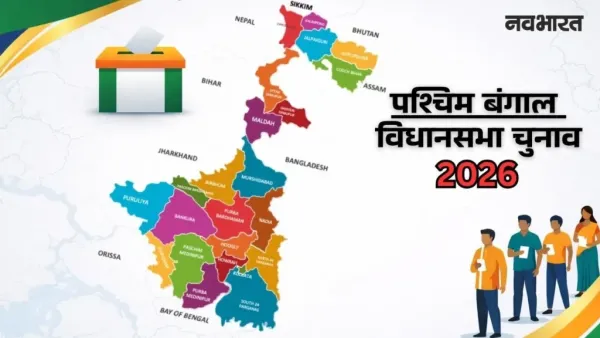
Anti-Incumbency @ West Bengal: The politics of West Bengal and the mood of the voters there has always been a subject of research for analysts. If we look at the state’s electoral history, a clear pattern emerges: Whenever there has been a record increase in voter turnout, there have been major changes in the corridors of power. Political experts believe that high turnout is often a symbol of public anger against the current government and desire for change.
Simply put, political continuity often depends on voter apathy, while regime change requires mass mobilization. In West Bengal, like other states in India, it has been observed that when voters are motivated for change, even those sections who usually prefer to stay away from the electoral process turn out to vote.
Historical figures from 1967
This pattern started in Bengal in the 1960s. In 1962, when the Congress was dominant, voting was only 53%. But in 1967, when the United Front emerged as an alternative, the voting percentage increased to 62.5%. As the voting percentage increased, the government also changed. Since then, more votes started being considered to mean change of power in Bengal.
Statistics of last assembly elections, source- ECI
However, the 1977 election is considered an exception. In this post-Emergency election, turnout was only 55.2%, yet the Left Front came to power. Experts believe that this low turnout was not due to political apathy, but due to the atmosphere of repression and fear during the Emergency. Subsequently, turnout reached 75.1% by 1982, cementing the Left Front’s three-decade-long rule.
When 84.5% voting created history in 2011
The strongest link between regime change and voting was seen in the 2011 assembly elections. There was huge discontent against the Left Front due to the land acquisition disputes of Singur and Nandigram. This resulted in a record 84.5% voter turnout in the state, ousting the 34-year-old Left rule and returning the Mamata Banerjee-led Trinamool Congress (AITC) to power.
Will the same trend be seen in 2026 also?
Since 2011, West Bengal has been a ‘hyper-engaged’ Has grown as a voter segment, with turnout above 80% in the 2016 and 2021 elections as well. There are also intense discussions regarding the upcoming 2026 assembly elections whether the Left Front or other opposition parties will be able to take advantage of this high participation and make a comeback. The current situation shows that high voting has now become a normal practice in Bengal, no matter what the result.
-
Sanju Samson, Akeal Hosein power CSK to massive 103-run win over MI in IPL
-
Wall Street Pauses As Iran Tensions Persist, Earnings Stir AI Concerns

-
10-Year-old rescues endangered Mexican Axolotl from Welsh river

-
Common egg myths every home cook should know

-
'Princess Diaries 3' is 'coming': Garry Marshall's daughter Kathleen Marshall shares update