
Listen to this article in summarized format
Loading...
××
Subscribe to

Unlock AI Briefing and Premium Content
New Year Offer 24 Hours Left
Subscribe NowAlready a member? Sign In
What's Included
- Exclusive Stories
- Daily ePaper Access
- Smart Market Tools
- Curated Investment Ideas
- Ad-lite Experience
Subscription

For decades, advances in battlefield medicine have focused on one goal: keep the wounded alive long enough to reach a surgical facility. Tourniquets, hemostatic dressings, rapid evacuation, and forward surgical teams dramatically improved survival in Iraq and Afghanistan. Yet one critical gap has persisted at the point of injury, the inability to carry and transfuse real blood outside the hospital “cold chain.”
A recent report and lab visit by Military Times spotlighted a breakthrough effort funded by Defense Advanced Research Projects Agency (DARPA) and developed by biotech firm Kalocyte in collaboration with researchers at the University of Maryland, Baltimore. Their work centers on an ambitious goal: freeze-dried, shelf-stable synthetic blood that can be carried into combat zones, disaster sites, and remote emergencies, and reconstituted for transfusion within minutes.
According to the report, the research is now "on the cusp of human trials" after more than a decade of research.
The ‘cold chain’ problem in blood transfusion
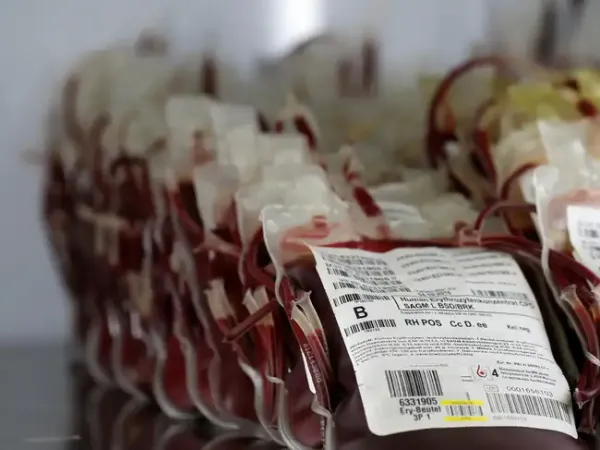
Modern transfusion medicine is sophisticated but fragile. Donor blood is a living tissue. Red blood cells remain metabolically active outside the body and must be stored between 1–6°C. If removed from refrigeration, they must be used within hours. This continuous refrigeration requirement, known as the cold chain, effectively ties blood transfusion to hospitals, ambulances with refrigeration, or field hospitals with power supply.
This creates a deadly gap.
Trauma remains the leading cause of death for people under 45 in the United States, and hemorrhage is the primary preventable cause of death in both civilian and military trauma.
Paramedics can deliver oxygen, perform CPR, and administer medications on scene, but they cannot give blood.
Why early ‘blood substitutes’ failed
Attempts to create artificial blood are not new. Between 2002 and 2008, several hemoglobin-based oxygen carriers entered human trials. The US FDA halted these studies after evidence showed increased rates of heart attack, stroke, organ injury, and death.
The core problem: free hemoglobin outside a red blood cell is toxic. Inside natural cells, hemoglobin is safely contained. When released into plasma, it causes blood vessel constriction, inflammation, and poor oxygen delivery.
This failure shaped the new approach.
A different strategy: Synthetic red cells, not free hemoglobin
Instead of modifying hemoglobin chemically, the Kalocyte team engineered artificial microscopic cells that mimic the structure and function of red blood cells. These synthetic cells ought to:
Crucially, the product can be freeze-dried into a powder, stored for years at room temperature, and packaged like a cold pack. When needed, water is released into the pouch, rehydrating the powder into transfusable synthetic blood in under two minutes.
This design was intentional from the start to meet battlefield needs.
Designed for combat, useful everywhere
DARPA’s mandate for the program, according to the report, required that the synthetic product perform equivalent to stored whole blood in three critical areas:
According to the researchers interviewed, the project has met nearly all of these benchmarks in preclinical testing.
The implications go far beyond combat medicine:
Because it is universal and immune-silent, no blood typing or cross-matching is required.
Where the research stands now
The Kalocyte team, after over 12 years of refining the technology under DARPA sponsorship, is entering the final program phase prior to human trials.
Blood is one of the few medical resources that cannot be manufactured, stockpiled easily, or transported without strict conditions. If successful, this innovation may ensure that the first person to reach a wounded patient is finally able to give the one thing that matters most: blood.
A recent report and lab visit by Military Times spotlighted a breakthrough effort funded by Defense Advanced Research Projects Agency (DARPA) and developed by biotech firm Kalocyte in collaboration with researchers at the University of Maryland, Baltimore. Their work centers on an ambitious goal: freeze-dried, shelf-stable synthetic blood that can be carried into combat zones, disaster sites, and remote emergencies, and reconstituted for transfusion within minutes.
According to the report, the research is now "on the cusp of human trials" after more than a decade of research.
The ‘cold chain’ problem in blood transfusion
Modern transfusion medicine is sophisticated but fragile. Donor blood is a living tissue. Red blood cells remain metabolically active outside the body and must be stored between 1–6°C. If removed from refrigeration, they must be used within hours. This continuous refrigeration requirement, known as the cold chain, effectively ties blood transfusion to hospitals, ambulances with refrigeration, or field hospitals with power supply.
This creates a deadly gap.
Trauma remains the leading cause of death for people under 45 in the United States, and hemorrhage is the primary preventable cause of death in both civilian and military trauma.
Paramedics can deliver oxygen, perform CPR, and administer medications on scene, but they cannot give blood.
Why early ‘blood substitutes’ failed
Attempts to create artificial blood are not new. Between 2002 and 2008, several hemoglobin-based oxygen carriers entered human trials. The US FDA halted these studies after evidence showed increased rates of heart attack, stroke, organ injury, and death.
The core problem: free hemoglobin outside a red blood cell is toxic. Inside natural cells, hemoglobin is safely contained. When released into plasma, it causes blood vessel constriction, inflammation, and poor oxygen delivery.
This failure shaped the new approach.
A different strategy: Synthetic red cells, not free hemoglobin
Instead of modifying hemoglobin chemically, the Kalocyte team engineered artificial microscopic cells that mimic the structure and function of red blood cells. These synthetic cells ought to:
- Carry oxygen effectively
- Maintain normal blood viscosity (flow properties)
- Avoid triggering off-target clotting in the brain, lungs, or veins
- Support clotting only at wound sites
- Remain immune-silent, meaning they do not trigger allergic or immune reactions
- Function as a universal donor, regardless of blood type
Crucially, the product can be freeze-dried into a powder, stored for years at room temperature, and packaged like a cold pack. When needed, water is released into the pouch, rehydrating the powder into transfusable synthetic blood in under two minutes.
This design was intentional from the start to meet battlefield needs.
Designed for combat, useful everywhere
DARPA’s mandate for the program, according to the report, required that the synthetic product perform equivalent to stored whole blood in three critical areas:
- Stabilizing blood pressure
- Delivering oxygen to tissues
- Supporting clotting function
According to the researchers interviewed, the project has met nearly all of these benchmarks in preclinical testing.
The implications go far beyond combat medicine:
- Rural ambulances without refrigeration
- Disaster zones without power
- Mass casualty events
- Air evacuation in extreme environments
- Veterinary emergency care (working dogs, pets)
- Civilian accident scenes where victims bleed out before hospital arrival
Because it is universal and immune-silent, no blood typing or cross-matching is required.
Where the research stands now
The Kalocyte team, after over 12 years of refining the technology under DARPA sponsorship, is entering the final program phase prior to human trials.
Blood is one of the few medical resources that cannot be manufactured, stockpiled easily, or transported without strict conditions. If successful, this innovation may ensure that the first person to reach a wounded patient is finally able to give the one thing that matters most: blood.