Anyone who’s ever dealt with it has a long list of complaints about the Indian state. They will point out that it rarely invests in long-term solutions, and doesn’t seem capable of world-class infrastructure or supporting cutting-edge scientific breakthroughs.
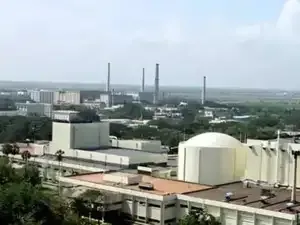
Sometimes, the doubters are wrong. This month, when Prime Minister Narendra Modi announced that a locally designed and built nuclear reactor had reached criticality — meaning that its internal chain reaction was now self-sustaining — he was right to say that it was a tremendous achievement.
India already has 25 nuclear reactors generating power for the grid. But this one, in the southern town of Kalpakkam, is different. It’s a fast-breeder reactor — a rare, more complicated variant that uses plutonium extracted from regular reactors’ spent fuel to produce electricity alongside more fissile material. A resource-starved country is naturally desperate for an energy source that, in effect, produces more usable fuel than it consumes.
Also read | Andhra Pradesh to issue power distribution licences to large data centres
Russia has a couple that are commercial-scale, and is helping China construct a few. Other countries — the US, Japan and France among them — also built fast-breeder reactors in the past.
For India, though, they’re a crucial step in a generations-long plan created before most of its citizens were born. Decades ago, a newly free country decided that it needed to achieve energy independence as well — although it had no oil or gas, and very little of the uranium used in regular reactors. But it did have one of the world’s largest reserves of the weakly radioactive element thorium.
And so the founders of India’s nuclear program — especially the Cambridge-educated physicist Homi Bhabha, a student of Enrico Fermi and Wolfgang Pauli, two of the most influential physicists of the 20th century — decided on a three-stage plan. In the first, India would build “normal,” water-cooled reactors that ran on natural uranium. When fast-breeder on were eventually erected in the second phase, they would use reprocessed waste from the first units to produce additional fissile material, which when combined India’s abundant thorium would feed the reactors in the third stage, years later.
By then, Bhabha promised, the country wouldn’t need to import resources or energy. The thorium it already had would be enough to power its growth for centuries to come.
In the heady, optimistic decade of the 1950s, implementing a generations-long strategy looked possible. History, as usual, had other plans. Bhabha died in a plane crash in the Swiss Alps when he was just 56. Then, because India refused to sign the 1968 nuclear non-proliferation treaty, the country was excluded from most nuclear supply chains following its first test in the 1970s. Kalpakkam itself went over-time and over-budget, partly because of a safety-oriented redesign after the town on the coast of the Bay of Bengal was hit by the devastating 2004 tsunami.
Also read | Adani Power incorporates nuclear arm to deepen atomic energy push
Generations of stubborn and persistent nuclear engineers somehow still got the second stage of Bhabha’s vision done. It’s quite an achievement. But the actual hard part starts now.
The reason that so few fast-breeder reactors still exist is that even countries with exceptional levels of expertise, such as France and Japan, struggled to keep them running. They’re hard to manage for the same reason they are so sought-after: Scarce, imported uranium is used far more efficiently when the fuel is bombarded by neutrons at a higher speed. But, to maintain that speed, fast-breeders can’t be cooled by water the way regular reactors are. Usually, they use liquid sodium, which is dangerous and difficult to handle.
Consider the Japan’s Monju reactor It reached criticality in 1995 and was eventually shut down in 2016. In that entire period, it generated electricity for only a few months. The installation was plagued by sodium leaks, accidents and cover-ups; the official in charge of investigating those committed suicide because, according to a 1996 New York Times report, he “was distressed by evidence he had unearthed.”
Can we do better? It’s hard to imagine. After all, another common complaint about the Indian state is that even if it builds something, it struggles with maintenance. Keeping reactors of this sort safe and operational for decades would be an achievement even greater than getting them off the ground. It will certainly require a vast expansion of supervisory and maintenance expertise as well as careful, independent regulation.
But it’s worth doing, and worth doing well. This new reactor might be 14 years late, but in terms of symbolism it has been completed at exactly the right time. It achieves criticality just as we are grappling with the consequences of losing access to oil and gas from the Gulf. Nobody in India needs to be reminded of the importance of energy independence, even if it takes a century to get there.
Views expressed here are the author's own