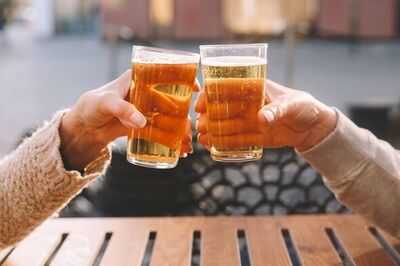
Drinkers of some of the UK's most popular beer brands may have noticed that their pints aren't as strong as they used to be. This is because breweries in the UK have been reducing the alcohol content of some of their most popular beers since 2023, and making huge tax savings as a result.
Known as "drinkflation" - a play on the world "shrinkflation", where companies reduce the size and quality of products but keep the prices the same - the last three years have seen a host of big brands lower the strength of their beers from up to 5% to as low as 3.4% ABV (alcohol by volume).
Campaigners have accused big breweries of taking advantage of government tax breaks and not passing the savings onto customers, following the UK's introduction of a new alcohol duty system with differents rates depending on strength in 2023.
Tim Webb, chair of the Campaign for Real Ale's (CAMRA) Beer and Cider Campaigns Committee, said: "Beer tax in the UK is absurdly high, and we support the principle that a lower ABV should mean a lower tax rate. Global brewing giants, however, have diluted their recipes to hit the lower tax band without reducing prices, and sometimes hiking them."
Mr Webb added: "We know that choices the Government has made on business rates and taxes are pushing up prices for consumers. But here, it's in the gift of the global brewers to keep prices steady for consumers, but they don't seem to care.
"The Government must use their Access to Market Review to significantly reform the stranglehold global giants have over the beer and pub trade so that independent brewers are allowed fairer access to pubs and can spark some real competition and consumer choice."
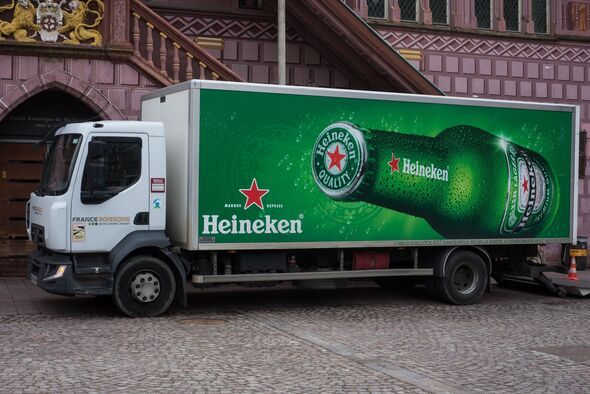
The Heineken Company, which is leading the way on "drinkflation", has cut ABV on popular beers including Fosters, John Smith's and Amstel to 3.4%, the threshold for the 2023 tax break, with lower-strength products qualifying for a reduced rate of alcohol duty.
Heineken has attributed the changes to changing customer trends, with "the move to a slightly lower ABV reflecting the continued shift towards moderation" in UK drinkers.
A spokesperson added: "[This] also supports our long-term responsibility agenda by reducing alcohol units in line with the UK Government's differential duty rates that encourage innovation at lower ABV, and enables us to offer more competitive pricing where possible, as inflationary pressures continue to affect the wider market."
Fosters
Before 2023: 4%
In 2023: 3.7%
In 2026: 3.4%
John Smith's
Before 2013: 3.8%
In 2013: 3.6%
In 2024: 3.4%
Amstel
Before 2025: 4.1%
In 2024: 3.4%
Sol
Before 2025: 4.2%
In 2025: 3.4%
Grosch
Before 2020: 5%
In 2020: 4%
In 2024: 3.4%
Coors
Before 2025: 4%
In 2025: 3.4%
Carlsberg Pilsner
Before 2023: 3.8%
In 2023: 3.4%
Kronenbourg
Before 2024: 5%
In 2024: 4.6%
Stella Artois
Before 2008: 5.2%
In 2008: 4.8%
In 2020: 4.6%
-
People Who Aren’t Afraid To Make Mistakes Usually Have A Major Advantage In Life

-
The Luckiest Day Of The Week For Each Zodiac Sign From April 27 – May 3, 2026

-
US urges travelers to complete declaration before arriving in Ho Chi Minh City
-
Office or home, spend a long time in AC? Do these things to avoid lung damage

-
Vaibhav Sooryavanshi: Whatever happened to Vaibhav Sooryavanshi increased the coach’s desperation, said- something big will happen on 25th April