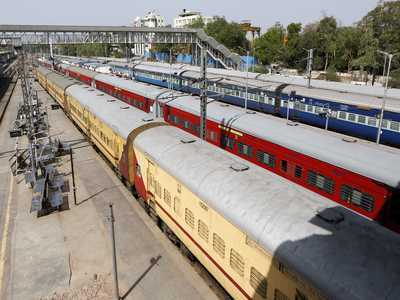
New Delhi [India], April 22 (ANI): As the world observes World Earth Day 2026 under the global theme "Our Power, Our Planet," Indian Railways reaffirms its commitment to environmental stewardship. Carrying over two crore passengers daily across a vast and diverse geography, Railways is not merely a mode of transport; it is an institution with the scale, reach, and will to drive India's transition towards a greener tomorrow.
Over the past decade, Indian Railways has systematically transformed its operations, embedding environmental accountability into infrastructure planning, station management, rolling stock, and land use. Today, it stands as one of the world's most consequential actors in sustainable transportation.
Indian Railways' tree plantation drive is being implemented across all zones, reflecting a coordinated nationwide effort towards environmental sustainability. Out of the total 81.59 lakh trees planted during the year 2025-26 across all zones, significant contributions have come from leading zones such as Northeast Frontier Railway (9.3 lakh trees), South Central Railway (9 lakh trees), Northeast Railway (8.7 lakh trees) and Northern Railway (8.5 lakh trees).
Extensive plantation along railway tracks, station premises, and available railway land is enhancing green cover across diverse regions. This initiative is reducing carbon footprint, supporting biodiversity and improving environmental conditions, making rail travel greener and healthier for passengers.
The large-scale plantation effort is also strengthening climate resilience by acting as a natural carbon sink, while helping in noise and dust mitigation. Improved green cover contributes to better microclimatic conditions at stations and along railway routes, enhancing passenger comfort during travel.
Additionally, plantation along railway tracks plays a vital role in improving infrastructure safety. Tree roots help bind soil, reducing erosion and preventing landslides, especially in hilly and high-rainfall areas. Vegetation cover further regulates surface runoff and enhances water absorption, minimising risks of track destabilisation. These nature-based interventions not only protect railway assets but also ensure safer and more reliable journeys for passengers.
Water scarcity is one of the defining crises of our century. Indian Railways, as an institution that operates hundreds of washing lines, maintenance depots, catering facilities, and passenger amenities consuming millions of litres daily, has taken deliberate and measurable steps to de-stress its water footprint across all zones. The approach is comprehensive: harvest rainwater before it is lost to runoff, recycle wastewater for non-potable reuse, audit water consumption to identify waste, and restore degraded water bodies within railway land.
Since 2016-17, Indian Railways has installed a cumulative total of 8,313 Rooftop Rainwater Harvesting (RWH) structures across all railway zones. The two years alone saw the commissioning of 2,915 new structures, including 1,215 units installed under the Jal Sanchay Jan Bhagidari (JSJB) campaign in 2024-25, underscoring active convergence with national water conservation missions. South Central Railway leads the initiative by a significant margin, having installed 3,128 RWH structures.
Indian Railways' rainwater harvesting infrastructure serves a dual purpose that becomes especially visible during extreme weather events. The rooftop harvesting systems installed at stations and yards collect and channel monsoon runoff, preventing waterlogging on platforms and adjacent tracks on one hand, and replenishing underground aquifers on the other.
In water-stressed regions of Rajasthan, or along the rain-shadow zones of the Deccan, these systems are an operational lifeline. The harvested water feeds into station utilities like toilets, cleaning, and gardening, reducing dependence on tanker supply and municipal water connections that are often unavailable or unreliable at remote stations.
Across all zones, Indian Railways has commissioned a total of 185 Water Recycling Plants (WRPs). From a base of 21 plants that existed prior to 2015-16, commissioning has continued steadily, with last financial year emerging as the strongest year yet with 26 new plants commissioned. Northern Railway leads all zones with 27 plants, followed by Central Railway (21) and Southern Railway (20). These plants treat wastewater from coach washing and yard operations for reuse in non-potable applications like station cleaning, gardening, and industrial processes, reducing fresh water drawl from scarce aquifers and municipal systems.
When Chennai faced its severe water crisis in 2019, railway stations serving millions of passengers faced acute shortages. Southern Railway's water recycling plants at Basin Bridge and Egmore became critical assets, enabling coach washing and platform cleaning to continue even as the broader civic water supply faltered.
Beyond internal operations, Indian Railways has restored 109 water bodies within or adjacent to railway land like ponds, tanks, and wetlands that had fallen into disuse, encroachment, or degradation. South Central Railway (34), SECR (44), and Western Railway (11) have been leading contributors. These restored water bodies recharge local aquifers, create biodiversity habitats, and serve as natural stormwater management systems, a benefit that extends well beyond the railway boundary to surrounding communities. The restoration of water bodies transforms idle or degraded parcels into ecological assets. It serves as a natural stormwater buffer, making adjacent communities more resilient to both flood and drought.
The Kankaria Coaching Depot under Western Railway in Ahmedabad has achieved a landmark that few industrial facilities anywhere in India can claim: complete water neutrality. The depot treats and reuses virtually all wastewater generated during coach washing and maintenance, eliminating dependence on external freshwater sources.
Indian Railways has made a significant contribution towards environmental sustainability and passenger hygiene through large-scale deployment of bio-toilets, with over 3.66 lakh bio-toilets fitted in passenger coaches since 2014. This initiative has effectively eliminated the direct discharge of human waste onto railway tracks, ensuring cleaner stations, improved on-board sanitation and a more hygienic travel experience for millions of passengers. The bio-toilet system uses indigenous technology based on microbial action to decompose human waste into water and gases, significantly reducing environmental pollution and foul odour while maintaining cleanliness across the network.
This initiative plays a vital role in protecting the environment by preventing soil and track contamination, reducing corrosion of railway assets and promoting eco-friendly waste management. By ensuring zero direct discharge and supporting sustainable sanitation practices, Indian Railways is improving passenger comfort while contributing to a cleaner ecosystem and a greener future.
Indian Railways has made renewable energy a cornerstone of its long-term operational strategy. As of December 2025, approximately 909 MW of solar plants and 103 MW of wind power plants have been commissioned across the network. Beyond what is already operational, Railways has tied up a further 3,300 MW of renewable capacity, encompassing solar, wind, and hybrid round-the-clock (RTC) arrangements with developers across Rajasthan, Gujarat, Karnataka, Maharashtra, and Uttar Pradesh, ensuring a sustained pipeline of clean power to support long-term energy security. This reflects a deliberate shift towards long-term, price-stable green procurement.
Indian Railways' commitment to energy efficiency extends beyond individual measures to a systemic culture of conservation embedded across its operations. The procurement of BEE 5-Star rated appliances, BLDC fans, Variable Frequency Drives, and energy-efficient motors and pumps has steadily reduced the energy intensity of railway buildings, depots, and yards. This commitment has received formal recognition at the highest level. Indian Railways bagged 7 National Energy Conservation Awards in 2025, across 3 categories. These awards are not merely symbolic; they mark Railways as a benchmark institution in India's broader energy efficiency landscape, setting standards that other large public-sector organisations are now measured against. (ANI)
-
Persian proverb of the day: ‘I say, 'It's a bull’; he says, 'Milk it!’ – a lesson on practicality and common sense

-
India's mistakes exposed at right time before T20 World Cup, says Harmanpreet Kaur

-
Quote of the day by Chris Rock: 'Only women, children, and dogs are loved unconditionally. A man is...'- controversial quote on love and relationship by famous comedian

-
2006 Malegaon blasts case reached dead end: High Court; raps NIA for overlooking evidence
-
Badrinath temple portals reopen for devotees