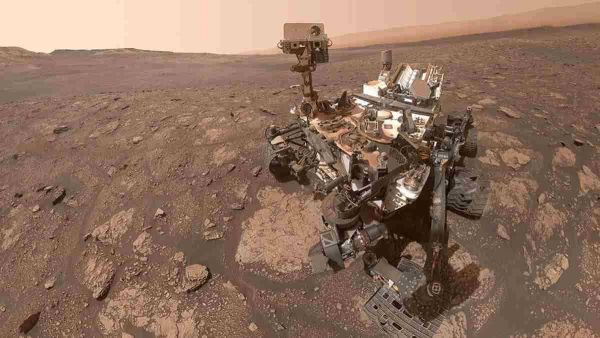
In a major breakthrough in the search for life beyond Earth, NASA has revealed that its Curiosity rover has detected the most diverse set of organic molecules ever found on Mars, including several never seen there before.
The discovery comes from a rock sample drilled by Curiosity in 2020, which scientists say contains 21 carbon-based molecules, seven of which have been identified on Mars for the first time. The findings, published in the journal Nature Communications, are being hailed as a significant step forward in understanding the planet’s ancient chemistry.
While scientists caution that these molecules do not confirm the existence of life, they reinforce the idea that Mars once had conditions suitable for it.
Ancient Mars May Have Supported Life
The sample, nicknamed “Mary Anning 3”, was collected from the slopes of Mount Sharp, a region believed to have hosted lakes and streams billions of years ago. These environments are key, as water-rich areas are considered prime locations for preserving organic material.
Among the most intriguing discoveries is a nitrogen-containing molecular structure known as a nitrogen heterocycle, a compound linked to the building blocks of RNA and DNA.
Scientists say this is the first time such a structure has been detected on Mars, marking a potentially crucial clue in the long-standing question of whether life ever existed on the planet.
Complex Chemistry Detected
Another molecule identified is benzothiophene, which contains both carbon and sulfur and is commonly found in meteorites. Some researchers believe such compounds may have helped seed early life chemistry across the solar system.
The findings build on earlier discoveries by Curiosity, including long-chain hydrocarbons, among the largest organic molecules ever detected on Mars.
“These discoveries increase the possibility that ancient Mars could have supported life,” researchers noted, while stressing that both biological and non-biological processes could explain the presence of these compounds.
How The Discovery Was Made
The analysis was carried out using Curiosity’s onboard mini-laboratory, known as Sample Analysis at Mars (SAM). The instrument heats powdered rock samples to release gases, allowing scientists to identify their chemical composition.
For the first time, researchers also used a special chemical technique involving a solvent to break down complex molecules into detectable forms, a method validated using the famous Murchison meteorite on Earth.
Our Curiosity Mars rover has been studying the Red Planet since it first touched down on Gale Crater back in 2012.
— NASA (@NASA) April 21, 2026
Now, a new analysis has revealed the most diverse collection of organic molecules ever found on Mars—informing our search for ancient life: https://t.co/Du8qqkk179 pic.twitter.com/W83Wsgq1l3
What’s Next
The breakthrough not only sheds light on Mars’ past but also paves the way for future missions. Advanced versions of Curiosity’s instruments are already being developed for upcoming explorations, including missions targeting Mars and even Saturn’s moon Titan.
As scientists continue to analyse new samples, the Red Planet is steadily revealing more secrets, bringing humanity closer to answering one of its biggest questions: Are we alone in the universe?
-
Books are not only effective in providing entertainment and knowledge but also in curing diseases.

-
Make the white sauce pasta available in the cafe at home now, it will taste better than the 400 rupees pasta

-
Range Rover Sport Autobiography Launched In India: Advance Tech, Luxury Interior, And Multiple Engine Options—Check All Details And Price

-
Jio Recharge Plan: One plan and many benefits! Gamers will get these special facilities, the price is special

-
This amazing feature of Facebook is coming in WhatsApp, chatting will happen without opening the app