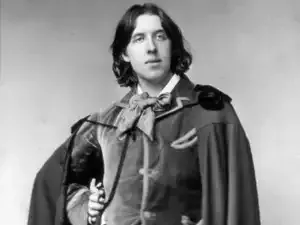
Oscar Wilde
This provocative quote by Oscar Wilde captures his signature style—sharp, paradoxical, and layered with meaning. At first glance, it may sound exaggerated or even shocking, but like much of Wilde’s wit, it reveals a deeper commentary on human behavior, society, and the forces that drive our actions.
When Wilde says, “Everything in the world is about sex,” he isn’t referring to sex in a purely physical sense. Instead, he is pointing toward desire, attraction, and the human instinct to seek pleasure, validation, and connection. Much of what people do—whether it’s building careers, accumulating wealth, creating art, or striving for status—can be linked to a fundamental desire to attract attention, admiration, or affection. In that sense, “sex” becomes a metaphor for motivation and desire, the underlying force that shapes human ambition and interaction.
The second part of the quote flips the idea: “except sex. Sex is about power.” Here, Wilde suggests that when it comes to the act of sex itself, the driving force often shifts from desire to control, dominance, and influence. This doesn’t necessarily mean power in a purely negative or manipulative sense, but rather the complex dynamics that can exist between individuals—issues of vulnerability, authority, emotional leverage, and even societal roles. In relationships, intimacy can sometimes become intertwined with questions of who holds control, who yields, and how power is negotiated.
Taken together, the quote highlights a fascinating contradiction:
In life, people are often driven by desire (symbolized by sex).
But in sex itself, people may be driven by power dynamics.
This duality reflects Wilde’s keen observation of human nature. He understood that people are rarely motivated by just one simple factor; instead, emotions, desires, and social structures overlap in complicated ways.
Who was Oscar Wilde?
Oscar Wilde (1854–1900) was an Irish playwright, novelist, and poet, widely regarded as one of the most brilliant literary figures of the late 19th century. He is best known for works like The Picture of Dorian Gray and plays such as The Importance of Being Earnest. Wilde was famous not only for his writing but also for his flamboyant personality, razor-sharp wit, and fearless critique of Victorian society.
His life, however, was as dramatic as his works. Wilde faced imprisonment due to his personal relationships, which were considered scandalous at the time. Despite this, his legacy endures, and his quotes continue to resonate because they cut through social pretenses and expose deeper truths about human behavior.
In essence, this quote reflects Wilde’s ability to turn a simple idea into a profound insight: human actions are often driven by desire, but power quietly shapes how those desires are expressed.
When Wilde says, “Everything in the world is about sex,” he isn’t referring to sex in a purely physical sense. Instead, he is pointing toward desire, attraction, and the human instinct to seek pleasure, validation, and connection. Much of what people do—whether it’s building careers, accumulating wealth, creating art, or striving for status—can be linked to a fundamental desire to attract attention, admiration, or affection. In that sense, “sex” becomes a metaphor for motivation and desire, the underlying force that shapes human ambition and interaction.
The second part of the quote flips the idea: “except sex. Sex is about power.” Here, Wilde suggests that when it comes to the act of sex itself, the driving force often shifts from desire to control, dominance, and influence. This doesn’t necessarily mean power in a purely negative or manipulative sense, but rather the complex dynamics that can exist between individuals—issues of vulnerability, authority, emotional leverage, and even societal roles. In relationships, intimacy can sometimes become intertwined with questions of who holds control, who yields, and how power is negotiated.
Taken together, the quote highlights a fascinating contradiction:
In life, people are often driven by desire (symbolized by sex).
But in sex itself, people may be driven by power dynamics.
This duality reflects Wilde’s keen observation of human nature. He understood that people are rarely motivated by just one simple factor; instead, emotions, desires, and social structures overlap in complicated ways.
Who was Oscar Wilde?
Oscar Wilde (1854–1900) was an Irish playwright, novelist, and poet, widely regarded as one of the most brilliant literary figures of the late 19th century. He is best known for works like The Picture of Dorian Gray and plays such as The Importance of Being Earnest. Wilde was famous not only for his writing but also for his flamboyant personality, razor-sharp wit, and fearless critique of Victorian society.His life, however, was as dramatic as his works. Wilde faced imprisonment due to his personal relationships, which were considered scandalous at the time. Despite this, his legacy endures, and his quotes continue to resonate because they cut through social pretenses and expose deeper truths about human behavior.
In essence, this quote reflects Wilde’s ability to turn a simple idea into a profound insight: human actions are often driven by desire, but power quietly shapes how those desires are expressed.