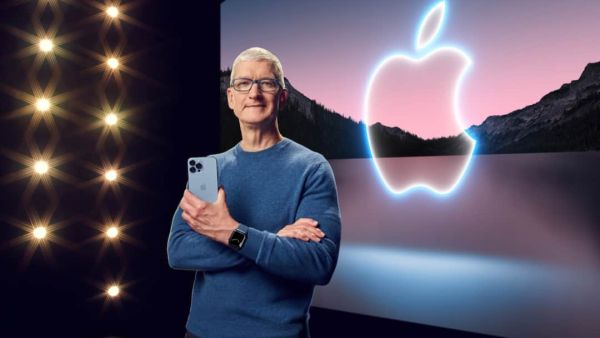
Tim Cook Exits Apple: Apple is entering a new leadership chapter as Tim Cook prepares to step down as chief executive after nearly 15 years at the helm. The announcement, confirmed in an internal memo to employees and later shared publicly, marks one of the most significant transitions in the company’s modern history.
Cook, 65, will move into the role of executive chairman in September, while John Ternus, currently Apple’s head of hardware engineering, will take over as CEO.
A Planned Transition, Not An Exit
In his communication to employees, as reported by Bloomberg, Cook framed the decision as a natural transition rather than a departure driven by crisis. “Fifteen years ago, my friend and mentor Steve Jobs asked me to step into the role of CEO… I hoped I’d be up for the awesome responsibility,” Cook wrote.
He added that Apple is now in a strong position with a “truly extraordinary road map”, explaining why “now is the right time” to move into a new role.
Cook reiterated this message in a public note, saying, “This is not goodbye,” while describing the move as a “moment of transition.” The emphasis suggests that the leadership change has been planned internally and is intended to ensure continuity rather than signal disruption.
The End Of A Defining Era At Apple
Cook’s tenure has been one of the most transformative periods in Apple’s history.
When he took over in 2011 from co-founder Steve Jobs, the company was already a global technology leader. However, under Cook, Apple scaled new heights, becoming one of the world’s most valuable companies and expanding its ecosystem across devices, services and global markets.
Peter Oppenheimer, Apple’s former chief financial officer, has previously noted that Cook managed the transition after Jobs “impressively”, especially given the expectations placed on him at the time.
Yet, Cook’s leadership has also faced scrutiny in recent years.
Why Now? Strategic Pressures And Changing Tech Landscape
While Apple remains highly profitable, the company has encountered several challenges that may have influenced the timing of this transition.
One of the key concerns has been the absence of a breakthrough mainstream product in recent years. The Vision Pro headset, launched in 2024 as Apple’s entry into augmented reality, did not meet market expectations.
Growth in key segments such as wearables, including the Apple Watch and AirPods, has slowed, while performance in China has been uneven.
According to The New York Times, Apple has also faced criticism for moving cautiously in artificial intelligence, even as competitors have invested aggressively in the space.
In addition, the company has seen a number of senior executive departures in recent months, raising questions among investors about succession planning and leadership depth, reported The Financial Express.
Cook has also had to navigate complex geopolitical challenges, particularly tensions between the United States and China, a critical market and supply chain hub for Apple.
Against this backdrop, the leadership change appears to be a forward-looking move aimed at positioning the company for its next phase.
Meet John Ternus, Apple’s Next CEO
John Ternus, 50, will become Apple’s eighth CEO since its founding and only the third since Steve Jobs returned to the company in 1997.
Ternus joined Apple in 2001 and has spent more than two decades within the organisation. He initially worked on Mac displays before taking on broader responsibilities across Mac and iPad product lines.
In a statement, Ternus said, “Having spent almost my entire career at Apple… it has been a privilege to help shape the products and experiences that have changed so much of how we interact with the world.”
Cook, in his memo, strongly endorsed Ternus’s appointment, describing him as “a visionary” and “the right person to lead Apple into the future.”
Continuity In Leadership And Strategy
Cook’s move to executive chairman ensures that he will remain closely involved in Apple’s strategic direction.
Apple said he will continue to assist with key aspects of the business, including engagement with policymakers globally, an increasingly important role given the regulatory and geopolitical complexities facing big technology companies.