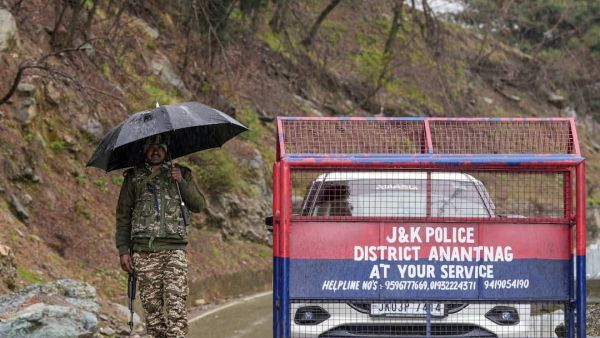
Pahalgam Terror Attack Anniversary: The serene Baisaran meadow near Pahalgam, often described as “Mini Switzerland” for its breathtaking landscapes, turned into a site of horror on April 22, 2025. Armed militants stormed the area and opened fire on tourists, killing 26 people — including 25 visitors and a local pony handler who attempted to confront the attackers.
One year on, the site still holds the same weight, carrying with it the memories of the people and the tragedy that unfolded.
The Pahalgam Attack
The Pahalgam assault, attributed to Lashkar-e-Taiba operatives, is now counted among the deadliest civilian attacks in recent years.
Eyewitness accounts painted a chilling picture. Victims were reportedly forced to identify their faith before being shot, with attackers deliberately targeting Hindu tourists. A Christian visitor and a Muslim pony operator were also among those killed.
On 22 April 2025, between 1:00 p.m. and 2:45 p.m., armed men entered Baisaran Valley, a meadow about 7 km (4.3 miles) from Pahalgam in Anantnag district. The valley, encircled by thick pine forests, is a well-known tourist destination that can only be reached on foot or horseback. Measuring roughly 200 meters across and 800 meters in length, the site had no armed security presence.
The assailants carried M4 carbines and AK-47 rifles, dressed in military-style clothing, with one wearing a traditional Kashmiri pheran. They were equipped with modern communication devices, cameras, and reportedly took selfies. Gunfire first erupted near the exit gate. Amid the chaos, an army officer who was vacationing in the area guided around 35–40 tourists to safety and managed to contact both the local army unit and Army Headquarters in Srinagar.
A tourist from Ahmedabad, ziplining at the time, unintentionally recorded the incident. The footage captured scenes of panic, injured people crying out for help, and bodies lying on the ground. According to survivors, the militants told some Hindu women they were spared so they could recount the killings of their husbands to Prime Minister Narendra Modi. One witness stated that the attackers even posed for selfies with the victims’ bodies.
Survivors recalled that women were spared so they could recount the brutality, while several men, including newlyweds, were executed in front of their spouses.
Operation Mahadev: The Hunt For Perpetrators
Within hours of the attack, Indian security forces initiated Operation Mahadev, a sweeping counter-terror mission aimed at ensuring the attackers did not escape across the Line of Control. Dense forest regions around Dachigam and Mahadev Ridge became the focus of an extensive manhunt, supported by intelligence agencies.
After months of tracking, a breakthrough came on July 28, 2025. A joint team of the Army, CRPF, and Jammu and Kashmir Police cornered three key operatives — Suleman Shah (alias Faizal Jatt), Abu Hamza, and Yasir — in the Harwan forests. All three were killed in an encounter, marking a critical milestone in delivering justice for the victims.
Operation Sindoor: Strategic Retaliation Beyond Borders
While Operation Mahadev targeted those directly responsible, Operation Sindoor signaled a broader strategic response. Conducted between May 7 and May 10, 2025, the tri-services offensive involved coordinated airstrikes on terror infrastructure in Pakistan-Occupied Kashmir and beyond.
Nine major camps were identified and destroyed using precision strikes based on multi-agency intelligence inputs. The operation was calibrated to avoid civilian harm, underlining India’s emphasis on targeted action. Alongside military efforts, India undertook a diplomatic campaign, briefing envoys from 45 countries and dispatching delegations to 33 global capitals, reinforcing its stance against cross-border terrorism.
Aftermath: Community Resilience Amid Loss
In the immediate aftermath, local residents stepped in to assist survivors, offering shelter and aiding rescue efforts. The injured were transported to hospitals in Anantnag and nearby areas. Authorities announced a ₹20 lakh reward for information on the attackers, assuring anonymity to informants.
The impact on tourism was swift and severe, with around 50 tourist destinations across Jammu and Kashmir temporarily shut for security reviews. Over time, these locations reopened under tighter surveillance, reflecting a cautious return to normalcy.
Life After Loss: Stories That Endure
A year on, visitors have gradually returned to Pahalgam, but the scars of the tragedy remain deeply etched for affected families. Among them is Gulnaz Akhtar, widow of pony operator Adil Hussain Shah, who died while trying to protect tourists.
Having already faced personal tragedy in the past, Gulnaz now grapples with the loss of her husband, the family’s sole provider. She returned to her parents’ home and began working to support herself. “Life feels impossible without a partner,” she said. Despite the grief, she holds onto pride in his courage: “Adil died saving tourists. I miss him deeply.”
-
Tim Cook to step down as Apple CEO after nearly 15 years

-
WATCH: Cricketers In Bollywood! Virat, Rohit & Dhoni Reimagined In 3 Idiots

-
Bengal Elections: TMC Leader Arrested For 'Influencing' Voters; BJP Alleges Cash Distribution

-
World Heritage Day 2026: What is the history of these mysterious places in India? Know why UNESCO gave special status

-
Make natural face toner from rice and get glowing skin