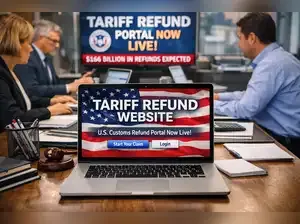
Tariff refund website goes live today: How the U.S. tariff refund portal works and who qualifies - The U.S. government's long-awaited tariff refund portal is officially launching today, April 20, 2026 — and for American businesses, it's one of the most consequential websites to come online in years. U.S. Customs and Border Protection (CBP) is opening the first phase of its new Consolidated Administration and Processing of Entries (CAPE) system, which will let businesses file refund claims for tariffs the Supreme Court declared unconstitutional back in February.
The Supreme Court ruled that President Trump's use of the International Emergency Economic Powers Act (IEEPA) to impose tariffs was unconstitutional — specifically because it was being used to generate revenue, which the Court found exceeded IEEPA's authority. That triggered an estimated $166 billion in refund obligations. CBP has since shifted tariff justification to Section 122 of the Trade Act of 1974 for new duties, but the old ones must be paid back.
The initial phase is limited to unliquidated entries and entries within 80 days of liquidation. In plain terms, that means tariff payments that are still technically under customs review, rather than fully finalized. CBP told a federal judge that the majority of eligible importers have already signed up for the required electronic payments, and that group alone is owed roughly $127 billion.
ALSO READ: Tariff refund: Trump to begin refunding $166 billion in tariffs starting Monday - check who is on the list
Even after a claim is approved, CBP says it could take 60 to 90 days for the money to land. The agency initially flagged serious logistical concerns — 53 million entries from 330,000 importers is a staggering volume — which is why the phased rollout exists at all. More phases will follow to handle older, finalized payments.
Phase one limits access to “unliquidated entries” or those within 80 days of final processing. This restriction helps the agency manage scale while prioritizing claims easiest to reverse. According to official estimates, this phase alone could cover the majority of the $166 billion owed.
The tariff refund website requires businesses to submit claims electronically, with most importers already enrolled in digital payment systems. This automation is crucial because CBP previously warned courts it could not manually process tens of millions of entries efficiently.
Companies involved in lawsuits filed in late 2025, including major retailers and logistics firms, are among the first expected beneficiaries. More than 50 companies challenged the tariffs, seeking refunds contingent on a favorable court ruling, which ultimately arrived in February 2026.
However, finalized entries will not be processed immediately. These require additional system expansion under future CAPE phases. That means many businesses will need to wait longer, even if they clearly qualify under the Supreme Court decision.
The turning point for the tariff refund website came when the Supreme Court ruled that tariffs imposed under the International Emergency Economic Powers Act exceeded presidential authority. This decision invalidated a major legal foundation used during Trump’s trade policy expansion.
Although the administration shifted to Section 122 of the Trade Act of 1974 to justify new tariffs, it could not retroactively legitimize earlier collections. That created a legal obligation for refunds, triggering one of the largest reimbursement processes in U.S. trade history.
The tariff refund website exists because the Court did not specify how refunds should occur. That left federal agencies scrambling to build a workable system, resulting in CAPE’s phased rollout rather than an immediate universal payout.
In reality, tariff costs were distributed across supply chains. Manufacturers, wholesalers, retailers, and consumers all absorbed portions of the burden. This makes it difficult to trace and return costs directly to individual shoppers.
Some companies, however, have signaled indirect benefits. Large retailers may pass refunds through lower prices or improved value offerings. Others may renegotiate supplier costs. Still, there is no guarantee that savings will fully reach end consumers.
The approval timeline also requires patience. Even after successful submission, payments may take up to 90 days. Given the sheer scale of claims, delays remain possible despite automation efforts.
Finally, companies should understand that this is only phase one. The tariff refund website will evolve, gradually including older and more complex entries. For many importers, today marks the beginning of a longer recovery process, not the end.
The Supreme Court ruled that President Trump's use of the International Emergency Economic Powers Act (IEEPA) to impose tariffs was unconstitutional — specifically because it was being used to generate revenue, which the Court found exceeded IEEPA's authority. That triggered an estimated $166 billion in refund obligations. CBP has since shifted tariff justification to Section 122 of the Trade Act of 1974 for new duties, but the old ones must be paid back.
The initial phase is limited to unliquidated entries and entries within 80 days of liquidation. In plain terms, that means tariff payments that are still technically under customs review, rather than fully finalized. CBP told a federal judge that the majority of eligible importers have already signed up for the required electronic payments, and that group alone is owed roughly $127 billion.
ALSO READ: Tariff refund: Trump to begin refunding $166 billion in tariffs starting Monday - check who is on the list
Even after a claim is approved, CBP says it could take 60 to 90 days for the money to land. The agency initially flagged serious logistical concerns — 53 million entries from 330,000 importers is a staggering volume — which is why the phased rollout exists at all. More phases will follow to handle older, finalized payments.
What is the tariff refund website and how does the CAPE system operate?
The tariff refund website operates through the CAPE system, a phased digital infrastructure built by U.S. Customs to manage an unprecedented refund volume. At its core, CAPE processes claims tied to tariffs invalidated by the Supreme Court ruling, focusing first on entries still under review.Phase one limits access to “unliquidated entries” or those within 80 days of final processing. This restriction helps the agency manage scale while prioritizing claims easiest to reverse. According to official estimates, this phase alone could cover the majority of the $166 billion owed.
The tariff refund website requires businesses to submit claims electronically, with most importers already enrolled in digital payment systems. This automation is crucial because CBP previously warned courts it could not manually process tens of millions of entries efficiently.
Who qualifies for the tariff refund website payouts in phase one?
Eligibility for the tariff refund website depends heavily on timing and classification of import entries. Businesses that paid tariffs but whose entries are still under federal review stand the best chance in phase one.Companies involved in lawsuits filed in late 2025, including major retailers and logistics firms, are among the first expected beneficiaries. More than 50 companies challenged the tariffs, seeking refunds contingent on a favorable court ruling, which ultimately arrived in February 2026.
However, finalized entries will not be processed immediately. These require additional system expansion under future CAPE phases. That means many businesses will need to wait longer, even if they clearly qualify under the Supreme Court decision.
The turning point for the tariff refund website came when the Supreme Court ruled that tariffs imposed under the International Emergency Economic Powers Act exceeded presidential authority. This decision invalidated a major legal foundation used during Trump’s trade policy expansion.
Although the administration shifted to Section 122 of the Trade Act of 1974 to justify new tariffs, it could not retroactively legitimize earlier collections. That created a legal obligation for refunds, triggering one of the largest reimbursement processes in U.S. trade history.
The tariff refund website exists because the Court did not specify how refunds should occur. That left federal agencies scrambling to build a workable system, resulting in CAPE’s phased rollout rather than an immediate universal payout.
Will consumers benefit from the tariff refund website payouts?
Despite the scale of the tariff refund website, most consumers will not receive direct payments. Refunds go to the entities that originally paid customs duties, primarily importers and large businesses.In reality, tariff costs were distributed across supply chains. Manufacturers, wholesalers, retailers, and consumers all absorbed portions of the burden. This makes it difficult to trace and return costs directly to individual shoppers.
Some companies, however, have signaled indirect benefits. Large retailers may pass refunds through lower prices or improved value offerings. Others may renegotiate supplier costs. Still, there is no guarantee that savings will fully reach end consumers.
What businesses should know before using the tariff refund website
Businesses planning to use the tariff refund website must prepare detailed documentation tied to import entries. Accuracy matters because the system prioritizes verifiable claims linked to eligible tariff categories.The approval timeline also requires patience. Even after successful submission, payments may take up to 90 days. Given the sheer scale of claims, delays remain possible despite automation efforts.
Finally, companies should understand that this is only phase one. The tariff refund website will evolve, gradually including older and more complex entries. For many importers, today marks the beginning of a longer recovery process, not the end.