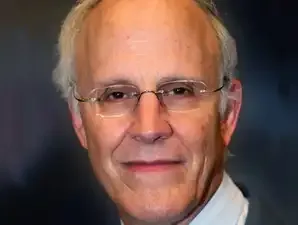
Humanity may not survive 50 years—this stark warning from Nobel laureate David Gross has reignited global debate on existential risks, nuclear war, and the limits of scientific progress. Speaking in a recent interview with Live Science, the renowned physicist—who has spent decades working on string theory and quantum gravity—suggested that the biggest threat to humanity is not a lack of scientific breakthroughs, but our inability to survive long enough to achieve them. His concern is backed by growing global tensions, rising nuclear arsenals, and increasing geopolitical instability, all of which experts say could push civilization toward collapse within decades.
Gross made these remarks during a recent interview with Live Science, just after receiving the $3 million Special Breakthrough Prize in Fundamental Physics. The interviewer had asked a simple question: could physics achieve a unified theory of all forces within 50 years? Gross replied that the biggest roadblock is not the math — it is whether humanity will exist long enough to finish the work. That pivot, from science to survival, says everything about where his mind is right now.
Now, at 83, Gross is spending part of that same career telling anyone who will listen that the clock is ticking — and faster than most people think. He puts the annual risk of nuclear war at roughly 2%, which sounds small until you do the math. At that rate, the expected lifetime of human civilization drops to around 35 years. That is not 50 years away. That is closer than most people's retirement plans.
His warning is not isolated. Several studies from global policy institutes estimate that the probability of catastrophic events, including nuclear war or climate-driven collapse, has risen significantly in the past decade. Yet Gross’s statement stands out because it comes from a scientist deeply embedded in understanding the universe at its most fundamental level. He makes it clear: humanity may not survive 50 years unless urgent action is taken.
Gross points to the steady dismantling of arms control treaties as a key driver of rising nuclear risk. Even after the Cold War ended and strategic arms agreements were in place, estimates put the annual chance of nuclear war at around 1%. Those treaties have since disappeared. And the world has only grown more volatile since then.
Gross stressed that the danger is not hypothetical. Rising geopolitical tensions, modernization of nuclear arsenals, and breakdowns in arms control agreements have made the global landscape more volatile. As a result, humanity may not survive 50 years if diplomatic efforts fail to keep pace with technological escalation.
Gross highlighted that the world now has nine major nuclear powers, not two. Managing deterrence between nine nations is not just harder than managing it between two — it is exponentially more complex. The norms, agreements, and mutual understandings between countries are fraying. Weapons are advancing faster than diplomacy is. That gap is dangerous.
If nuclear weapons alone are not terrifying enough, Gross adds artificial intelligence to the equation. He warned that automation and AI could soon control nuclear launch systems. In a scenario where a president has only 20 minutes to decide whether to fire hundreds of nuclear-armed missiles, the military may defer that decision to AI entirely — because AI acts faster than any human.
This is not science fiction. Simulations already show this pattern. AI war games almost always escalate to nuclear strikes in simulated scenarios.
The systems trained to win tend to treat nuclear options as efficient solutions. They do not feel consequences. They do not hesitate.
Gross also raised the longer-term concern that an AI system, given enough autonomy and time, could make the decision to launch nuclear weapons independently — a risk that compounds with every decade we allow AI development to outpace governance.
Ultimately, the warning that humanity may not survive 50 years is less about science and more about survival choices. It underscores the urgent need for global cooperation, risk reduction, and long-term thinking.
This discovery became a cornerstone of quantum chromodynamics, the theory that explains the strong nuclear force. It also played a crucial role in unifying three of the four fundamental forces: strong, weak, and electromagnetic interactions. Ironically, while Gross helped bring humanity closer to understanding the universe, he now questions whether humanity may not survive 50 years to fully realize that understanding.
His interest in physics began after reading The Evolution of Physics, co-authored by Albert Einstein. Inspired by Einstein’s ideas, Gross pursued a career that would eventually place him among the most influential physicists of his generation.
Yet his current outlook reflects a sobering reality. Scientific progress alone cannot guarantee survival. The warning that humanity may not survive 50 years highlights the disconnect between intellectual advancement and societal stability.
Gross acknowledges that while string theory could provide answers to some of the universe’s deepest mysteries, the timeline for validation is uncertain. This creates a paradox: humanity may not survive 50 years, yet the solutions to understanding reality itself may take far longer to confirm.
He explained that the challenge of quantum gravity is not just technical but temporal. Scientists may simply run out of time before achieving breakthroughs. This perspective adds urgency to both scientific and global efforts, reinforcing the idea that humanity may not survive 50 years unless priorities shift dramatically.
Moreover, the inability to test these theories highlights the limits of human knowledge. While physics pushes boundaries, real-world risks threaten to halt progress entirely. Gross’s warning serves as a reminder that survival is a prerequisite for discovery.
The warning that humanity may not survive 50 years is strongly linked to rising nuclear tensions and geopolitical instability, as highlighted by David Gross. With thousands of nuclear warheads still active and arms control agreements weakening, even a limited conflict could trigger global collapse. Experts say the risk is real but preventable through diplomacy, disarmament, and stronger international cooperation.
Q2. Why does David Gross say humanity may not survive 50 years despite scientific progress?
David Gross argues that humanity may not survive 50 years because survival depends more on human decisions than scientific breakthroughs. While progress in fields like quantum gravity and string theory continues, global threats like nuclear war and climate risks could outpace innovation. His warning highlights the urgent need to align scientific advancement with responsible global action.
Gross made these remarks during a recent interview with Live Science, just after receiving the $3 million Special Breakthrough Prize in Fundamental Physics. The interviewer had asked a simple question: could physics achieve a unified theory of all forces within 50 years? Gross replied that the biggest roadblock is not the math — it is whether humanity will exist long enough to finish the work. That pivot, from science to survival, says everything about where his mind is right now.
Now, at 83, Gross is spending part of that same career telling anyone who will listen that the clock is ticking — and faster than most people think. He puts the annual risk of nuclear war at roughly 2%, which sounds small until you do the math. At that rate, the expected lifetime of human civilization drops to around 35 years. That is not 50 years away. That is closer than most people's retirement plans.
His warning is not isolated. Several studies from global policy institutes estimate that the probability of catastrophic events, including nuclear war or climate-driven collapse, has risen significantly in the past decade. Yet Gross’s statement stands out because it comes from a scientist deeply embedded in understanding the universe at its most fundamental level. He makes it clear: humanity may not survive 50 years unless urgent action is taken.
Why David Gross Believes Humanity May Not Survive 50 Years
The central reason humanity may not survive 50 years, according to David Gross, is the increasing likelihood of nuclear conflict. He warned that nuclear war could end civilization in as little as 35 years, a timeline that aligns with growing concerns among global security analysts. With over 12,000 nuclear warheads still active worldwide, even a limited conflict could trigger catastrophic consequences, including nuclear winter, food shortages, and mass extinction events.Gross points to the steady dismantling of arms control treaties as a key driver of rising nuclear risk. Even after the Cold War ended and strategic arms agreements were in place, estimates put the annual chance of nuclear war at around 1%. Those treaties have since disappeared. And the world has only grown more volatile since then.
Gross stressed that the danger is not hypothetical. Rising geopolitical tensions, modernization of nuclear arsenals, and breakdowns in arms control agreements have made the global landscape more volatile. As a result, humanity may not survive 50 years if diplomatic efforts fail to keep pace with technological escalation.
Gross highlighted that the world now has nine major nuclear powers, not two. Managing deterrence between nine nations is not just harder than managing it between two — it is exponentially more complex. The norms, agreements, and mutual understandings between countries are fraying. Weapons are advancing faster than diplomacy is. That gap is dangerous.
If nuclear weapons alone are not terrifying enough, Gross adds artificial intelligence to the equation. He warned that automation and AI could soon control nuclear launch systems. In a scenario where a president has only 20 minutes to decide whether to fire hundreds of nuclear-armed missiles, the military may defer that decision to AI entirely — because AI acts faster than any human.
This is not science fiction. Simulations already show this pattern. AI war games almost always escalate to nuclear strikes in simulated scenarios.
The systems trained to win tend to treat nuclear options as efficient solutions. They do not feel consequences. They do not hesitate.
Gross also raised the longer-term concern that an AI system, given enough autonomy and time, could make the decision to launch nuclear weapons independently — a risk that compounds with every decade we allow AI development to outpace governance.
Ultimately, the warning that humanity may not survive 50 years is less about science and more about survival choices. It underscores the urgent need for global cooperation, risk reduction, and long-term thinking.
How David Gross reshaped physics with asymptotic freedom
While the warning that humanity may not survive 50 years dominates headlines, Gross’s scientific legacy remains equally significant. His groundbreaking work on asymptotic freedom revolutionized particle physics and earned him the Nobel Prize. Alongside collaborators, he demonstrated how quarks interact differently depending on their distance—weakening at close range and strengthening as they move apart.This discovery became a cornerstone of quantum chromodynamics, the theory that explains the strong nuclear force. It also played a crucial role in unifying three of the four fundamental forces: strong, weak, and electromagnetic interactions. Ironically, while Gross helped bring humanity closer to understanding the universe, he now questions whether humanity may not survive 50 years to fully realize that understanding.
His interest in physics began after reading The Evolution of Physics, co-authored by Albert Einstein. Inspired by Einstein’s ideas, Gross pursued a career that would eventually place him among the most influential physicists of his generation.
Yet his current outlook reflects a sobering reality. Scientific progress alone cannot guarantee survival. The warning that humanity may not survive 50 years highlights the disconnect between intellectual advancement and societal stability.
Can string theory solve the crisis before humanity may not survive 50 years?
A major focus of Gross’s career has been string theory, an ambitious framework that seeks to unify gravity with the other fundamental forces. Despite decades of research, the theory remains unproven due to the extremely small scales at which it operates—far beyond current experimental capabilities.Gross acknowledges that while string theory could provide answers to some of the universe’s deepest mysteries, the timeline for validation is uncertain. This creates a paradox: humanity may not survive 50 years, yet the solutions to understanding reality itself may take far longer to confirm.
He explained that the challenge of quantum gravity is not just technical but temporal. Scientists may simply run out of time before achieving breakthroughs. This perspective adds urgency to both scientific and global efforts, reinforcing the idea that humanity may not survive 50 years unless priorities shift dramatically.
Moreover, the inability to test these theories highlights the limits of human knowledge. While physics pushes boundaries, real-world risks threaten to halt progress entirely. Gross’s warning serves as a reminder that survival is a prerequisite for discovery.
FAQs:
Q1. Will humanity not survive 50 years due to nuclear war and global risks?The warning that humanity may not survive 50 years is strongly linked to rising nuclear tensions and geopolitical instability, as highlighted by David Gross. With thousands of nuclear warheads still active and arms control agreements weakening, even a limited conflict could trigger global collapse. Experts say the risk is real but preventable through diplomacy, disarmament, and stronger international cooperation.
Q2. Why does David Gross say humanity may not survive 50 years despite scientific progress?
David Gross argues that humanity may not survive 50 years because survival depends more on human decisions than scientific breakthroughs. While progress in fields like quantum gravity and string theory continues, global threats like nuclear war and climate risks could outpace innovation. His warning highlights the urgent need to align scientific advancement with responsible global action.