
Listen to this article in summarized format
Loading...
××
Subscribe to

Unlock AI Briefing and Premium Content
New Year Offer 24 Hours Left
Subscribe NowAlready a member? Sign In
What's Included
- Exclusive Stories
- Daily ePaper Access
- Smart Market Tools
- Curated Investment Ideas
- Ad-lite Experience
Subscription

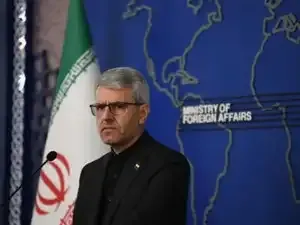
Iran has said its relevant institutions are investigating whether Indian vessels were targeted by Iranian armed forces after reports of firing in the Strait of Hormuz, as tensions rise over maritime activity in the region. “Iranian institutions are investigating whether Indian vessels were targeted by Iranian armed forces,” said Esmaeil Baghaei, spokesperson for Iran’s Foreign Ministry.
The development comes after India on Saturday summoned Iranian envoy Mohammad Fathali following reports that two Indian vessels had to reverse course in the strategic waterway after alleged firing involving Iran’s Revolutionary Guards, according to authoritative sources cited by PTI. A formal protest was lodged with the ambassador.
The incident unfolded in the Strait of Hormuz, where commercial ships had attempted passage after Iran briefly announced the waterway was open for navigation. Tehran later reversed course, saying it had closed the strait again and accusing the United States of violating understandings between the two sides.
A vessel tracking report said two Indian ships, including an Indian-flagged super tanker carrying around 2 million barrels of Iraqi oil, turned back after reports of gunfire involving Iran’s Revolutionary Guard.
“The United States has not shown seriousness in pursuing the diplomatic process and has carried out aggressive actions and violated ceasefire provisions,” he said.
Tehran’s position, he added, remains unchanged, with no flexibility on its core demands. “Iran has clearly stated its demands and will not change them. US proposals have been unserious and its demands are unrealistic.”
On negotiations, he said Iran does not accept external pressure or artificial timelines. “We do not believe in deadlines or ultimatums when it comes to safeguarding our national interests.”
On the nuclear issue, he reiterated that Iran’s nuclear capabilities would remain within its territory. “Removing nuclear stockpiles from Iran was never an option in negotiations,” he said, adding that preserving nuclear achievements remains a firm position.
In a separate post on X, Baghaei described US actions affecting Iran’s maritime access as unlawful. “The blockade of Iran’s ports and coastline is a violation of ceasefire understandings and is unlawful and criminal.”
The development comes after India on Saturday summoned Iranian envoy Mohammad Fathali following reports that two Indian vessels had to reverse course in the strategic waterway after alleged firing involving Iran’s Revolutionary Guards, according to authoritative sources cited by PTI. A formal protest was lodged with the ambassador.
The incident unfolded in the Strait of Hormuz, where commercial ships had attempted passage after Iran briefly announced the waterway was open for navigation. Tehran later reversed course, saying it had closed the strait again and accusing the United States of violating understandings between the two sides.
A vessel tracking report said two Indian ships, including an Indian-flagged super tanker carrying around 2 million barrels of Iraqi oil, turned back after reports of gunfire involving Iran’s Revolutionary Guard.
Iran targets US over talks and sanctions
Additionally, amid the diplomatic fallout, Baghaei accused Washington of undermining diplomacy and escalating tensions, and said that there is also no plan yet for a second round of talks with the United States.“The United States has not shown seriousness in pursuing the diplomatic process and has carried out aggressive actions and violated ceasefire provisions,” he said.
Tehran’s position, he added, remains unchanged, with no flexibility on its core demands. “Iran has clearly stated its demands and will not change them. US proposals have been unserious and its demands are unrealistic.”
On negotiations, he said Iran does not accept external pressure or artificial timelines. “We do not believe in deadlines or ultimatums when it comes to safeguarding our national interests.”
On the nuclear issue, he reiterated that Iran’s nuclear capabilities would remain within its territory. “Removing nuclear stockpiles from Iran was never an option in negotiations,” he said, adding that preserving nuclear achievements remains a firm position.
In a separate post on X, Baghaei described US actions affecting Iran’s maritime access as unlawful. “The blockade of Iran’s ports and coastline is a violation of ceasefire understandings and is unlawful and criminal.”