New Delhi: Indian people have been wearing jewellery for many centuries, and it has never been about only ornamentation. It is rooted in geography, local traditions and inherited skill. Across regions, distinctive designs evolved within communities, shaped by local materials and royal patronage. Today, several of these traditional jewellery carry Geographical Indication status, formally recognising their origin and safeguarding their identity. These crafts were not born in factories. They developed inside homes and workshops, refined over centuries through patient handwork.
Silver wires twisted into lace in Odisha, enamel painted in delicate pink in Varanasi, gold fused onto coloured glass in Rajasthan, and lacquer moulded near Charminar all carry local traditions. Some date back to the 9th century, others to the 13th century, while a few trace their lineage to 4,000-year-old techniques. Each piece reflects cultural continuity and regional pride. Here are the 10 GI-tagged jewellery traditions that continue to represent India’s living craftsmanship.
GI-tagged traditional Indian jewellery
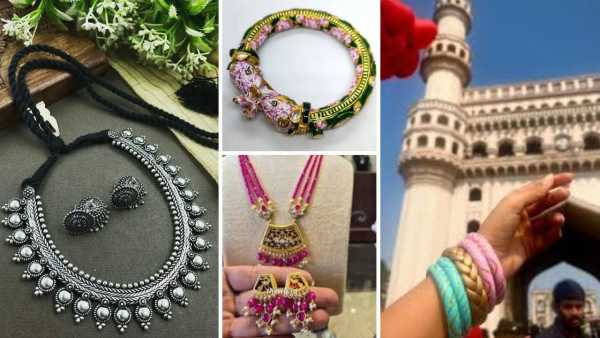
Silver filigree, Cuttack, Odisha
Known locally as Tarakasi, this 13th-century-old craft transforms pure silver wires into lace-like jewellery. Artisans melt, draw and weave threads into detailed motifs inspired by lotus forms and the Konark Wheel, preserving Odisha’s heritage in every piece.
Gulabi meenakari, Varanasi, Uttar Pradesh
Dating to the early 17th century, this enamel art is recognised for its signature pink hues on white enamel. Crafted on gold or silver, designs feature delicate floral and faunal patterns seen in jhumkas, necklaces and decorative objects.
Thewa, Pratapgarh, Rajasthan
Originating around 1707, Thewa involves fusing intricately carved gold sheets onto coloured glass. Often portraying royal hunts and folklore, this 400-year-old craft has been displayed at the Metropolitan Museum in New York and the Victoria and Albert.
Hupari silver jewellery, Kolhapur, Maharashtra
With roots in the early 20th century, Hupari’s artisan cluster produces handcrafted silver anklets, bangles and seamless ghungroos. Motifs such as pipal, champak and ambi reflect Maharashtrian design traditions.
Karimnagar silver filigree, Telangana
A 400-450 year-old art form centred near Elgandal Fort, this intricate silver craft earned GI status in 2007. Floral and geometric patterns define its lace-like aesthetic.
Hyderabad lac bangles, Telangana
Dating back 300-350 years to the Qutub Shahi era, these lacquer bangles are moulded over heat and embellished with stones. Laad Bazaar remains central to this GI-recognised bridal adornment.
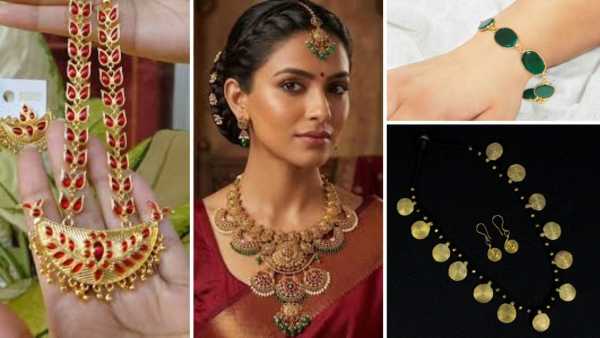
Traditional Indian jewellery with GI tag and stories across centuries. (Picture credit: Instagram and gitagged)
Akhomiya gohona, Assam
GI-tagged Axomiya Gohona reflects Ahom-era influence through motifs like joonbiri and lokaparo. Crafted by Assamese artisans, it symbolises cultural pride and continuity.
Temple jewellery of Nagercoil, Tamil Nadu
Tracing its origin to the 9th-century Chola dynasty, this jewellery once adorned temple idols. Featuring depictions of deities and architecture, it remains integral to Bharatanatyam and bridal wear.
Agates of Cambay, Gujarat
A 4,000-year-old lapidary tradition linked to the Harappan era, these GI-recognised stones were refined in Khambhat. Techniques associated with Baba Ghor around 1500 AD shaped modern craftsmanship.
Odisha brass and bell metal tribal jewellery
Using the 4,000-year-old Dhokra lost-wax casting method, Kansari artisans create bold ornaments in brass and bell metal. Each piece carries tribal identity and ritual significance.
These GI-tagged traditions stand as reminders that Indian jewellery is not merely decorative. It is a regional memory cast in metal, enamel and stone, sustained through centuries of skill.
-
Tragic Parking Dispute Leads to Fatal Shooting in Delhi
-
Tragic Suicide of American Express Manager Highlights Marital Strain

-
Mysterious Disappearance of Woman Leaves 6-Year-Old Daughter in Distress
-
Fun science: How the research that wins the Ig Nobel Prize makes us laugh before teaching us
-
Tragic Bus Accident in Udhampur Claims Lives of 20