
Listen to this article in summarized format
Loading...
××
Subscribe to

Unlock AI Briefing and Premium Content
New Year Offer 24 Hours Left
Subscribe NowAlready a member? Sign In
What's Included
- Exclusive Stories
- Daily ePaper Access
- Smart Market Tools
- Curated Investment Ideas
- Ad-lite Experience
Subscription

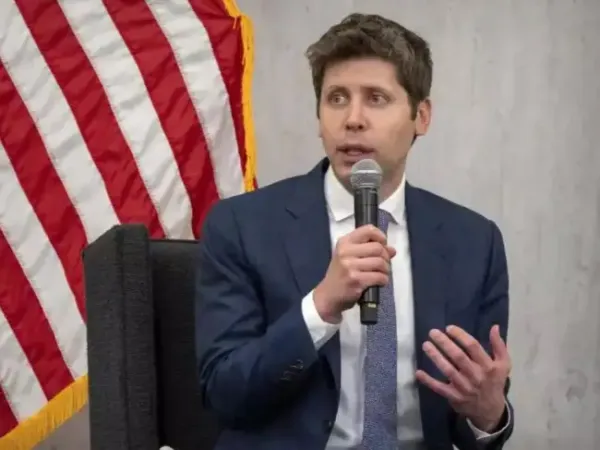
Tools for Humanity cofounder and OpenAI CEO Sam Altman unveiled on Friday an expanded vision for his verification project with the launch of World ID 4.0.
What is World ID 4.0?
It’s a more scalable, open-source version of Tools for Humanity’s human verification protocol, World ID. The protocol is a ‘proof of human’ system designed to verify that a real person is online, while safeguarding privacy, in an increasingly bot-driven internet.
A biometric device called the Orb scans a user’s iris, which the World ID protocol then translates into a unique identifier and stores only a digital credential on their phone, helping verify they are human and not a bot without revealing the person’s identity.
The Orb was rolled out in July 2023 and remains central to the system. Since then, the hardware has evolved, with the company launching its smartphone-like compact version, Orb Mini, in 2025.
In simple terms, it replaces traditional captchas by using biometric verification to prove humanness online. Per the startup’s chief product officer, Tiago Sada, the platform has reported 18 million verified users since 2023, who have used World ID authentication 450 million times.
With the latest upgrade, the startup brings enhancements such as key rotation, multiparty entropy, and improved credential control, alongside the launch of Agent Kit, which enables interactions between verified users and AI agents. Key rotation means that if a user’s secret key, a randomly generated locally-stored identity proof, is compromised, it can be replaced with a new one, limiting damage by preventing attackers from accessing or linking past activity. Multiparty entropy means that an individual’s biometric data is split into encrypted pieces across different parties so no single entity, including the company’s devices, can access the full data, offering improved privacy to users.
To address adoption challenges, the system now also operates on a tiered verification model. At the highest level is Orb-based authentication. This is complemented by a mid-tier verification using government IDs via NFC (near field communication), and a low-friction selfie-based option processed on user devices, introduced as part of the new Selfie Check feature.
The company also rolled out a redesigned World ID app, currently in beta, which allows users to store credentials and manage how their identity is used, including delegating actions to AI agents.
What’s Tools for Humanity and is it related to OpenAI?
Tools for Humanity is the startup behind World ID, which was originally launched as Worldcoin, founded in 2019 by Altman, Alex Blania, and Max Novendstern. Altman currently serves as the chairman of the company. It operates independently of OpenAI, with the only link being Altman’s role as co-founder in both organisations. While the project continues to scale its hardware and verification network, questions remain around its long-term direction, including potential overlaps with OpenAI and the role of AI within its ecosystem.
World ID, Tinder, and Zoom
The company announced the integration of World ID with dating platform Tinder and enterprise platform Zoom, thus adding a layer of verified human identity.
On Tinder, users who complete the World ID verification will now be able to display a badge on their profiles, signalling that they are real individuals and not bots or fake accounts. This builds on earlier pilots and is aimed at increasing trust and authenticity in online dating, where concerns around impersonation and AI-generated profiles are rising. Initially started as a pilot in Japan to verify users above 18 years of age, the integration will now be extended to the US.
On Zoom, World ID introduces the ability for hosts to require participants to verify their identity before joining meetings. This is designed to reduce risks such as impersonation, deepfakes, or unauthorised access, making virtual interactions more secure and reliable.
These integrations signal the startup's broader push to bring human verification to daily digital interactions to expand its user base, with pilots underway on additional social media platforms and earlier deployments extending to gaming apps.
What is World ID 4.0?
It’s a more scalable, open-source version of Tools for Humanity’s human verification protocol, World ID. The protocol is a ‘proof of human’ system designed to verify that a real person is online, while safeguarding privacy, in an increasingly bot-driven internet.
A biometric device called the Orb scans a user’s iris, which the World ID protocol then translates into a unique identifier and stores only a digital credential on their phone, helping verify they are human and not a bot without revealing the person’s identity.
The Orb was rolled out in July 2023 and remains central to the system. Since then, the hardware has evolved, with the company launching its smartphone-like compact version, Orb Mini, in 2025.
In simple terms, it replaces traditional captchas by using biometric verification to prove humanness online. Per the startup’s chief product officer, Tiago Sada, the platform has reported 18 million verified users since 2023, who have used World ID authentication 450 million times.
With the latest upgrade, the startup brings enhancements such as key rotation, multiparty entropy, and improved credential control, alongside the launch of Agent Kit, which enables interactions between verified users and AI agents. Key rotation means that if a user’s secret key, a randomly generated locally-stored identity proof, is compromised, it can be replaced with a new one, limiting damage by preventing attackers from accessing or linking past activity. Multiparty entropy means that an individual’s biometric data is split into encrypted pieces across different parties so no single entity, including the company’s devices, can access the full data, offering improved privacy to users.
To address adoption challenges, the system now also operates on a tiered verification model. At the highest level is Orb-based authentication. This is complemented by a mid-tier verification using government IDs via NFC (near field communication), and a low-friction selfie-based option processed on user devices, introduced as part of the new Selfie Check feature.
The company also rolled out a redesigned World ID app, currently in beta, which allows users to store credentials and manage how their identity is used, including delegating actions to AI agents.
What’s Tools for Humanity and is it related to OpenAI?
Tools for Humanity is the startup behind World ID, which was originally launched as Worldcoin, founded in 2019 by Altman, Alex Blania, and Max Novendstern. Altman currently serves as the chairman of the company. It operates independently of OpenAI, with the only link being Altman’s role as co-founder in both organisations. While the project continues to scale its hardware and verification network, questions remain around its long-term direction, including potential overlaps with OpenAI and the role of AI within its ecosystem.
World ID, Tinder, and Zoom
The company announced the integration of World ID with dating platform Tinder and enterprise platform Zoom, thus adding a layer of verified human identity.
On Tinder, users who complete the World ID verification will now be able to display a badge on their profiles, signalling that they are real individuals and not bots or fake accounts. This builds on earlier pilots and is aimed at increasing trust and authenticity in online dating, where concerns around impersonation and AI-generated profiles are rising. Initially started as a pilot in Japan to verify users above 18 years of age, the integration will now be extended to the US.
On Zoom, World ID introduces the ability for hosts to require participants to verify their identity before joining meetings. This is designed to reduce risks such as impersonation, deepfakes, or unauthorised access, making virtual interactions more secure and reliable.
These integrations signal the startup's broader push to bring human verification to daily digital interactions to expand its user base, with pilots underway on additional social media platforms and earlier deployments extending to gaming apps.