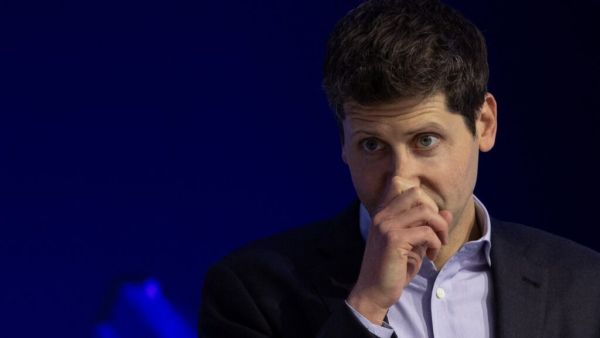
Three senior leaders at OpenAI left the company on April 17, 2026. The exits of Kevin Weil, Bill Peebles, and Srinivas Narayanan came on the same day. The timing signals a clear shift in how the company plans to operate.
Kevin Weil served as chief product officer and led OpenAI for Science. Bill Peebles led Sora, the company’s video generation system. Srinivas Narayanan worked as CTO for enterprise applications. Each played a key role in shaping OpenAI’s recent work. Their departure marks more than routine turnover.
The reasons behind the exits point to a larger change. OpenAI has started to scale back projects that do not tie closely to its main business. These include OpenAI for Science and Sora. Both projects aimed to push boundaries, but they came with high costs. Sora alone reportedly cost about $1 million per day to run. That level of spending is hard to justify when the focus shifts to stable revenue.
The company now plans to focus on enterprise AI products. These are tools that businesses use every day. They bring steady income and clearer use cases. This shift puts more weight on execution and less on exploration. It also aligns with the role of applications CEO Fidji Simo, who has pushed for tighter product focus. However, Simo is on medical leave, which adds some uncertainty to the transition.
Unpacking OpenAI’s Leadership Exodus and Strategic Shift
Narayanan said he left to spend more time with family. That reason sounds personal, but it fits a pattern seen across the company. Many leaders who joined during the research-heavy phase now find themselves in a different environment. The pace, goals, and culture have changed.
Peebles spoke about responsible deployment of Sora. His comments suggest that the project reached a point where scaling it further raised practical and ethical questions. Shutting down its web and app versions, along with a later API shutdown, shows that OpenAI wants to limit exposure while it reassesses priorities.
The exits also reflect pressure from competitors. Anthropic has grown fast and now reports higher annualized revenue than OpenAI. That gap matters. OpenAI still has strong user numbers, with more than 900 million ChatGPT users, but revenue and costs tell a different story. The company is expected to post large losses despite its scale.
Leadership changes have built up over the past two years. Of the original co-founders, only Sam Altman and Greg Brockman remain. Others, such as Ilya Sutskever and Mira Murati, have left. Many former staff have joined rivals or started their own firms. This trend shows a shift in what the company offers its top talent.
In its early years, OpenAI attracted people who wanted to work on bold, long-term research. Projects like Sora fit that mold. Now the company needs leaders who can build, ship, and manage products at scale. That calls for a different skill set. Not everyone wants to make that switch.
The Corporate Pivot of OpenAI is Streamlining for Maturity Amidst Leadership Exodus
The internal structure has also changed. Weil’s team will not be replaced as a single unit. Instead, its work will spread across other groups. This move reduces overlap and cuts costs, but it may slow down projects that need a clear owner. It also shows a move away from centralized innovation hubs.
At the same time, other leaders have shifted roles. COO Brad Lightcap has moved to special projects. Moves like this suggest that OpenAI is still adjusting its leadership model. The company is trying to balance growth with control, which is not easy at its size.
The broader impact of these exits is still unclear. On one hand, a tighter focus could help OpenAI improve margins and compete better in the enterprise space. On the other, it may lose some of the creative edge that helped it stand out. Research-driven culture often fuels breakthrough ideas, and scaling back that side carries risk.
For now, the message is clear. OpenAI wants to act like a mature tech company. It will invest in products that bring steady returns. It will cut projects that do not fit that goal. The departure of three senior leaders on the same day makes that shift hard to miss.
-
Big announcement! Played cricket against Gill-Abhishek, now suddenly retired at the age of 27
-
Viral Wedding Moment: Bride Collapses After Drinks, Wakes Up With No Memory

-
Shah Rukh Khan to Begin Jawan 2 Shoot With Atlee Post King Release? Read On
-
IREDA Share becomes money printing machine! 27% return in 1 month, is there still a chance? Know expert advice. Ireda Share Price Target After 27 Percent Return In 1 Month Experts Advice

-
If hair is falling, stop this mistake immediately, 90% people do this every day – News Himachali News Himachali