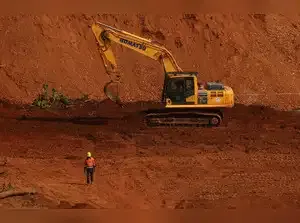
Andhra Pradesh is set to host India’s first large-scale private gold mine since Independence, with the Jonnagiri project in Kurnool district preparing to begin operations in early May. Developed by Geomysore Services India Pvt Ltd, the project signals a possible shift in India’s gold import pattern, as the country looks to strengthen domestic production.
India currently imports over 800 tonnes of gold each year, placing pressure on foreign exchange reserves. Domestic output has remained limited, with Hutti Gold Mines producing about 1.5 tonnes annually. The closure of Kolar Gold Fields in 2000 left a gap in large-scale mining, while public sector firms such as NMDC Ltd have focused on overseas gold assets.
The Jonnagiri project spans nearly 598 hectares across Jonnagiri, Erragudi and Pagidirayi villages and has drawn investments of over ₹400 crore. Andhra Pradesh chief minister Chandrababu Naidu is expected to dedicate the mine to the nation. Mukesh Kumar Meena, principal secretary, mines and geology, Andhra Pradesh, told TOI's Samdani MN, "This is a landmark moment —not just for Andhra Pradesh, but also for India's broader (gold) mining ambitions."
The processing plant was commissioned in 13 months. B Prabhakaran, founder and managing director of Thriveni Earthmovers, said, "Jonnagiri reflects what India is capable of when vision, technology and execution come together. We are not just building a mine, but creating a model for responsible, efficient and globally competitive mining in the country."
The project has certified gold resources of 13.1 tonnes, with exploration indicating a potential increase to 42.5 tonnes. At peak capacity, it is expected to produce up to 1,000 kg of refined gold annually over the next 15 years.
Industry experts say the project could encourage more investment in the sector. Dr Hanuma Prasad Modali, director of Geomysore and managing director of Deccan Gold, said, "Success of this project should encourage many investors to come into the gold and critical mineral sector, which is the need of the hour for India, both commercially and strategically." He added, "India should aim at producing at least 50 to 100 tonnes of gold per annum in the next decade."
The project also includes local development initiatives in education, healthcare, sanitation, drinking water and skill training. Government support has helped align it with industrial goals and secure clearances.
Experts say the mine may not immediately reduce imports but marks a structural shift as India begins to tap its own gold resources.
Demand softens briefly even as investment interest stays firm
Gold demand remained muted in early March due to seasonal factors, financial year-end pressures and price volatility, the World Gold Council said. Purchases were delayed during price spikes, though festival demand offered some support. Exchange of old jewellery made up 40–50% of sales, while demand for bars and coins stayed strong.
Despite this, jewellery retailers reported strong growth in the January–March quarter, with revenues rising 32% to 124% year-on-year, driven by the wedding season and higher spending per purchase. Store expansion also continued, reflecting confidence in demand.
Gold ETFs recorded net inflows of ₹22.7 billion in March, marking the 11th straight month of inflows, though lower due to profit-booking. Total holdings rose to 115 tonnes. Inflows picked up again in early April, while Q1 saw record inflows of ₹316 billion, indicating sustained investor interest.
India currently imports over 800 tonnes of gold each year, placing pressure on foreign exchange reserves. Domestic output has remained limited, with Hutti Gold Mines producing about 1.5 tonnes annually. The closure of Kolar Gold Fields in 2000 left a gap in large-scale mining, while public sector firms such as NMDC Ltd have focused on overseas gold assets.
The Jonnagiri project spans nearly 598 hectares across Jonnagiri, Erragudi and Pagidirayi villages and has drawn investments of over ₹400 crore. Andhra Pradesh chief minister Chandrababu Naidu is expected to dedicate the mine to the nation. Mukesh Kumar Meena, principal secretary, mines and geology, Andhra Pradesh, told TOI's Samdani MN, "This is a landmark moment —not just for Andhra Pradesh, but also for India's broader (gold) mining ambitions."
The processing plant was commissioned in 13 months. B Prabhakaran, founder and managing director of Thriveni Earthmovers, said, "Jonnagiri reflects what India is capable of when vision, technology and execution come together. We are not just building a mine, but creating a model for responsible, efficient and globally competitive mining in the country."
The project has certified gold resources of 13.1 tonnes, with exploration indicating a potential increase to 42.5 tonnes. At peak capacity, it is expected to produce up to 1,000 kg of refined gold annually over the next 15 years.
Industry experts say the project could encourage more investment in the sector. Dr Hanuma Prasad Modali, director of Geomysore and managing director of Deccan Gold, said, "Success of this project should encourage many investors to come into the gold and critical mineral sector, which is the need of the hour for India, both commercially and strategically." He added, "India should aim at producing at least 50 to 100 tonnes of gold per annum in the next decade."
The project also includes local development initiatives in education, healthcare, sanitation, drinking water and skill training. Government support has helped align it with industrial goals and secure clearances.
Experts say the mine may not immediately reduce imports but marks a structural shift as India begins to tap its own gold resources.
Demand softens briefly even as investment interest stays firm
Gold demand remained muted in early March due to seasonal factors, financial year-end pressures and price volatility, the World Gold Council said. Purchases were delayed during price spikes, though festival demand offered some support. Exchange of old jewellery made up 40–50% of sales, while demand for bars and coins stayed strong.
Despite this, jewellery retailers reported strong growth in the January–March quarter, with revenues rising 32% to 124% year-on-year, driven by the wedding season and higher spending per purchase. Store expansion also continued, reflecting confidence in demand.
Gold ETFs recorded net inflows of ₹22.7 billion in March, marking the 11th straight month of inflows, though lower due to profit-booking. Total holdings rose to 115 tonnes. Inflows picked up again in early April, while Q1 saw record inflows of ₹316 billion, indicating sustained investor interest.