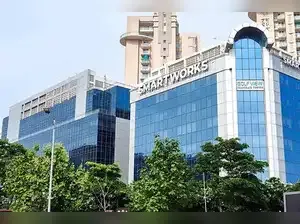
India’s managed office sector is entering a structural growth phase, led by rising enterprise adoption and a persistent shortage of Grade A office supply. Smartworks, the country’s largest listed managed workspace platform by area under management, is scaling rapidly with a focus on large-campus formats and annuity-led contracts. In a conversation with Sobia Khan of The Economic Times, Co-founder Harsh Binani details growth visibility, client demand trends, financial resilience, and how flexible workspaces are evolving into a core pillar of corporate real estate strategy.
Also read: Panasonic Partners with ANACITY to Co-Create Next-Gen Smart Community Solutions in India
Q1. How is Smartworks positioned in terms of growth and the broader sector outlook?
We believe the shift towards managed offices is now structural rather than cyclical. Over the last 3–4 years, especially post-COVID, enterprises have fundamentally re-evaluated how they consume office space. What started as a flexible, short-term solution has evolved into a long-term outsourcing strategy. Large GCCs and Fortune 500 firms are increasingly moving away from conventional leases to managed campuses.
At a macro level, India’s office market still has significant headroom. The demand continues to grow from both domestic firms and global corporations expanding into India. At the same time, Grade A supply remains constrained, creating a strong demand-supply mismatch. This positions the managed office model, particularly at scale, as a key beneficiary over the next decade.
Q2. What is your current portfolio size and near-term expansion pipeline?
Currently, we have a footprint of over 15 million sq. ft., including both operational and upcoming developments, giving us strong visibility over the next two years. Our expansion strategy is calibrated and predictable—we aim to add roughly 3 million sq. ft. annually, translating into 8–10 large campuses each year.
What differentiates us is our focus on large-format developments rather than fragmented co-working floors. Many of our campuses exceed 500,000 sq ft, and this scale allows us to drive efficiencies, secure better lease terms, and cater to large enterprise requirements. Importantly, we typically ensure 20–25% pre-commitments before taking on new supply, which significantly mitigates risk.
Also read: Adani Properties to invest Rs 1 lakh cr to redevelop Mumbai’s 143-acre Motilal Nagar
Q3. Which cities are driving demand, and how diversified is your footprint?
We have built a strong pan-India presence across 14 cities, with concentration in seven key markets—Mumbai, Pune, Bengaluru, Hyderabad, Gurugram, Chennai and Noida. Each of these markets plays a distinct role. For instance, Bengaluru and Hyderabad continue to be driven by GCC expansion, while Mumbai and Pune are seeing strong traction from BFSI, GCCs,and enterprise occupiers.
This multi-city presence is a critical differentiator. Today, large clients are not looking at office space city by city—they want a partner who can deliver a consistent, standardized experience across India. That is where we come in as an infrastructure platform, managing their workspace needs end-to-end across locations.
Q4. Who are your key clients, and how is enterprise demand evolving?
Our client base is anchored in large enterprises, GCCs, and high-growth companies. We have clients such as Google, Bridgestone, Philips and Wolters Kluwer, along with new-age firms like Zepto and Groww. The nature of demand has clearly shifted upwards—today, a significant portion of our revenue comes from mandates exceeding 1,000 seats.
We are also seeing a rise in strategic, multi-city contracts. For example, a client may start with a single campus and then expand across five or six cities with us. This creates stickiness and long-term visibility. ~31% of our revenue comes from multi-city clients, which reflects strong repeat demand and embedded relationships.
Q5. How does your business model ensure revenue visibility and profitability?
Our model is fundamentally annuity driven. We typically sign long-term enterprise contracts of five years or more, which ensures stable and predictable cash flows. As on December 31, 2025, we had INR ~4700 crore of committed revenue against our operational portfolio of 9.2 Mn sq ft.
From a financial standpoint, one of our key strengths is cash flow generation. Our operating cash flows consistently exceed EBITDA, and we operate with negative working capital due to efficient collections from enterprise clients. This has enabled us to scale without requiring significant external capital.
Earlier, our growth was accompanied by some margin dilution due to upfront investments. As the portfolio matured, the business has transitioned into a ‘cash compounding phase’ with growth and margins improving simultaneously.
Q6. What are the typical deal sizes, tenures, and client retention trends?
Our typical enterprise mandates are in the range of 1,000 seats often spread across key cities. Increasingly, we are also signing pan-India mandates, where clients scale across multiple locations with us.
Our average tenure today for a 300+ seats client is ~49 monthsand because these offices become integral to client operations, renewal rates are very high. Our reported client retention rate is around 93%.
This stickiness is driven by three factors—large deal sizes, strategic importance of these offices, and our ability to deliver consistent value through cost efficiency and service quality.
Q7. How do you view the evolution of the flexible workspace industry in India?
The industry has reached an inflection point. Flexible workspaces are no longer an alternative—they are becoming a core component of enterprise real estate strategy. Today, 60–70% of companies are either adopting or actively evaluating flex solutions.
There is still significant under penetration, which presents a large opportunity. Many large enterprises in India have yet to fully adopt this model. At the same time, among existing clients, we are seeing a “farming” effect, where a growing share of their portfolios is shifting towards managed spaces.
What makes this model compelling is the combination of flexibility and predictability. It offers the agility of flex with the stability of long-term contracts, effectively creating an annuity-like income stream. In a world shaped by AI, evolving workforce models, and economic uncertainty, this balance is becoming increasingly valuable for enterprises.
Also read: Panasonic Partners with ANACITY to Co-Create Next-Gen Smart Community Solutions in India
Q1. How is Smartworks positioned in terms of growth and the broader sector outlook?
We believe the shift towards managed offices is now structural rather than cyclical. Over the last 3–4 years, especially post-COVID, enterprises have fundamentally re-evaluated how they consume office space. What started as a flexible, short-term solution has evolved into a long-term outsourcing strategy. Large GCCs and Fortune 500 firms are increasingly moving away from conventional leases to managed campuses.
At a macro level, India’s office market still has significant headroom. The demand continues to grow from both domestic firms and global corporations expanding into India. At the same time, Grade A supply remains constrained, creating a strong demand-supply mismatch. This positions the managed office model, particularly at scale, as a key beneficiary over the next decade.
Q2. What is your current portfolio size and near-term expansion pipeline?
Currently, we have a footprint of over 15 million sq. ft., including both operational and upcoming developments, giving us strong visibility over the next two years. Our expansion strategy is calibrated and predictable—we aim to add roughly 3 million sq. ft. annually, translating into 8–10 large campuses each year.
What differentiates us is our focus on large-format developments rather than fragmented co-working floors. Many of our campuses exceed 500,000 sq ft, and this scale allows us to drive efficiencies, secure better lease terms, and cater to large enterprise requirements. Importantly, we typically ensure 20–25% pre-commitments before taking on new supply, which significantly mitigates risk.
Also read: Adani Properties to invest Rs 1 lakh cr to redevelop Mumbai’s 143-acre Motilal Nagar
Q3. Which cities are driving demand, and how diversified is your footprint?
We have built a strong pan-India presence across 14 cities, with concentration in seven key markets—Mumbai, Pune, Bengaluru, Hyderabad, Gurugram, Chennai and Noida. Each of these markets plays a distinct role. For instance, Bengaluru and Hyderabad continue to be driven by GCC expansion, while Mumbai and Pune are seeing strong traction from BFSI, GCCs,and enterprise occupiers.
This multi-city presence is a critical differentiator. Today, large clients are not looking at office space city by city—they want a partner who can deliver a consistent, standardized experience across India. That is where we come in as an infrastructure platform, managing their workspace needs end-to-end across locations.
Q4. Who are your key clients, and how is enterprise demand evolving?
Our client base is anchored in large enterprises, GCCs, and high-growth companies. We have clients such as Google, Bridgestone, Philips and Wolters Kluwer, along with new-age firms like Zepto and Groww. The nature of demand has clearly shifted upwards—today, a significant portion of our revenue comes from mandates exceeding 1,000 seats.
We are also seeing a rise in strategic, multi-city contracts. For example, a client may start with a single campus and then expand across five or six cities with us. This creates stickiness and long-term visibility. ~31% of our revenue comes from multi-city clients, which reflects strong repeat demand and embedded relationships.
Q5. How does your business model ensure revenue visibility and profitability?
Our model is fundamentally annuity driven. We typically sign long-term enterprise contracts of five years or more, which ensures stable and predictable cash flows. As on December 31, 2025, we had INR ~4700 crore of committed revenue against our operational portfolio of 9.2 Mn sq ft.
From a financial standpoint, one of our key strengths is cash flow generation. Our operating cash flows consistently exceed EBITDA, and we operate with negative working capital due to efficient collections from enterprise clients. This has enabled us to scale without requiring significant external capital.
Earlier, our growth was accompanied by some margin dilution due to upfront investments. As the portfolio matured, the business has transitioned into a ‘cash compounding phase’ with growth and margins improving simultaneously.
Q6. What are the typical deal sizes, tenures, and client retention trends?
Our typical enterprise mandates are in the range of 1,000 seats often spread across key cities. Increasingly, we are also signing pan-India mandates, where clients scale across multiple locations with us.
Our average tenure today for a 300+ seats client is ~49 monthsand because these offices become integral to client operations, renewal rates are very high. Our reported client retention rate is around 93%.
This stickiness is driven by three factors—large deal sizes, strategic importance of these offices, and our ability to deliver consistent value through cost efficiency and service quality.
Q7. How do you view the evolution of the flexible workspace industry in India?
The industry has reached an inflection point. Flexible workspaces are no longer an alternative—they are becoming a core component of enterprise real estate strategy. Today, 60–70% of companies are either adopting or actively evaluating flex solutions.
There is still significant under penetration, which presents a large opportunity. Many large enterprises in India have yet to fully adopt this model. At the same time, among existing clients, we are seeing a “farming” effect, where a growing share of their portfolios is shifting towards managed spaces.
What makes this model compelling is the combination of flexibility and predictability. It offers the agility of flex with the stability of long-term contracts, effectively creating an annuity-like income stream. In a world shaped by AI, evolving workforce models, and economic uncertainty, this balance is becoming increasingly valuable for enterprises.