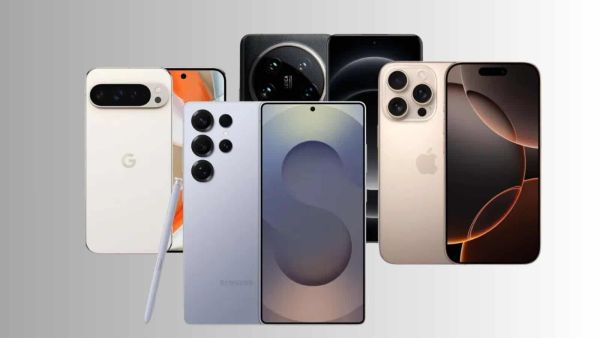
New Delhi: Supply-side cost pressures and weak demand took a toll on India’s smartphone shipments, which fell 3 per cent year-on-year in Q1 2026, suffering its weakest quarter in the last six years, according to Counterpoint Research’s Monthly India Smartphone Tracker.
On the outlook, Research Director Tarun Pathak said India’s smartphone market is expected to remain under pressure in the near term, with Q2 2026 likely to see a double-digit decline, as elevated memory prices and weak entry-level demand continue to weigh on overall volumes.
“For the full year, the market is projected to decline by 10 per cent YoY, as sustained component cost inflation, particularly in memory, which has already increased 4x over the past three quarters, continues to impact affordability and lengthen replacement cycles,” Pathak said.

Brands, he observed, are expected to stay disciplined, focusing on premium-led growth, tighter portfolio execution and channel efficiency. While premium segment should remain relatively resilient, ongoing weakness in the mass segment is likely to keep the recovery gradual and uneven, he said.
“India’s smartphone shipments declined 3 per cent YoY in Q1 2026, marking their weakest quarter in the last six years,” Counterpoint Research’s Monthly India Smartphone Tracker said.
It said this was a result of a mix of supply-side cost pressures, OEM-led price hikes and weak consumer demand, which weighed on retail conversions across channels despite higher launch activity.
As per Counterpoint’s latest tracker, nearly one-third of model launches were advanced to Q1 to primarily offset rising component costs, as OEMs aimed to mitigate further BOM (Bill of Materials) inflation, particularly due to memory prices and currency fluctuations.
“The market is facing a clear affordability squeeze, driven by sharp memory-led cost inflation and currency pressures that have forced OEMs to raise prices across key models,” Senior Analyst Prachir Singh said.
With average hikes exceeding Rs 1,500, the sub-Rs 15,000 segment has been hit the hardest, given its high price sensitivity.
“Rising energy costs amid ongoing geopolitical tensions in the Middle East are further straining household budgets, pushing consumers to prioritise essentials over discretionary purchases like smartphones. As a result, upgrade cycles are stretching, and a meaningful recovery in the mass segment is likely to remain gradual,” Singh noted.
Apple saw its shipment share reaching 9 per cent in Q1 2026, driven by sustained strong momentum of the iPhone 17 series, supported by aggressive offers such as long-term EMI schemes and exchange offers. Apple is better positioned to navigate memory price pressures, supported by its premium portfolio and efficient supply chain management, Counterpoint pointed out.
In terms of the India smartphone market volume share, vivo (excluding iQOO) led the charts with a 21 per cent share of India’s smartphone market in Q1 2026, driven by an expanded product portfolio with a higher number of launches, strong traction in the mid-premium segment and well-executed channel discipline.
Samsung was at the second spot, supported by strong traction in its mass-market portfolio, driven by attractive offers on key A-series models (A07, A36 and A56), alongside a positive early response to the Galaxy S26 series.
The quarter also reflected a phased flagship rollout and continued portfolio optimisation across price segments. Samsung clinched its highest shipment contribution from the Rs 15,000-Rs 20,000 segment during the quarter, supported by a well-balanced portfolio across tiers.
OPPO (excluding OnePlus) retained its third position in Q1, 2026 with a 14 per cent share. It registered an 8 per cent year-on-year growth to become the fastest-growing brand among the top five.
Xiaomi (including POCO) ranked fourth in Q1 2026, with its Rs 10,000-Rs 20,000 segment registering double-digit year-on-year growth. This was backed by improved channel execution (dual-channel approach) and a sharper portfolio focus on hero models, enabling better returns and retail traction.
According to the Q1 snapshot, realme saw strong traction in the Rs 10,000-Rs 20,000 segment in online channels, ranking among the top two brands.
Nothing (including CMF) kept its strong growth momentum, emerging as the fastest-growing brand in Q1 2026 with 47 per cent growth.
Google was the fastest-growing brand in the premium segment (over Rs 45,000), growing 39 per cent during the quarter, driven by its focus on AI-led features.
OnePlus emerged as the leading brand in the affordable premium segment (Rs 30,000-Rs 45,000) on Amazon, with its Nord series continuing to see steady consumer traction, the report added.
-
Gautam Adani Overtakes Mukesh Ambani Again To Become Asia’s Richest, Here’s What Changed
-
Opposition 'Solely Against Women's Reservation': Home Minister Amit Shah's Sharp Attack In Lok Sabha
-
IPL 2026: PBKS Bowling Coach Sairaj Bahutule Credits Arshdeep Singh’s ‘Back-To-Basics’ Approach, Praises Shreyas Iyer’s Leadership

-
Fact Check: Did Hardik Pandya's GF Mahieka Sharma Keep Mumbai Indians' Team Bus Waiting For 2 Hrs After MI vs PBKS IPL 2026 Match?

-
'Unbelievable Awareness, Timing And Fitness': Sachin Tendulkar Hails Shreyas Iyer's Stunning Relay Catch During MI vs PBKS IPL 2026 Match