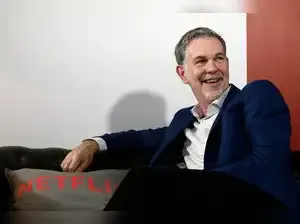
Netflix Chairman Reed Hastings is quitting the streaming service he co-founded 29 years ago.
The departure of Hastings, 65, comes at an inopportune time. The company is searching for new avenues of growth as sales slow due to competition, and after a potentially transformative merger with Warner Bros Discovery fell through in February.
Netflix on Thursday forecast earnings per share in the current quarter below analysts' expectations and quarterly revenue growth that is the slowest in a year, according to LSEG.
The company's stock plunged around 9% on the news of Hastings' departure.
Netflix doubled down on its existing strategy to entertain the world, providing movies and series for many tastes, cultures and languages, in a 14-page shareholder letter released on Thursday. The company's full-year outlook remained unchanged.
The company's co-chief executive, Greg Peters, said that Netflix ended last year with more than 325 million paid members and is entertaining an audience approaching a billion people. "But even given that number, we still have plenty of room to grow into our addressable market," he said.
In the letter to investors, Netflix said Hastings will not stand for re-election at its annual meeting in June and plans to focus on philanthropy and other pursuits.
FROM DVD RENTALS TO STREAMING GIANT
Hastings transformed Netflix from a DVDs-by-mail business to a global streaming goliath that revolutionized the distribution of movies and television series. He led the company through missteps like the short-lived decision, in 2011, to spin off the DVD business into a service called Qwikster. He also steered it through a pandemic, which led to a surge of growth at Netflix even as other entertainment companies struggled.
The entrepreneur forged Netflix's unique performance culture in a moment of crisis, when funding for internet startups had dried up, and Hastings was forced to lay off one-third of his employees. This culling of everyone but the "keepers" led to a surge of productivity that laid the foundation for the Netflix Way, Hastings wrote in his book, "No Rules Rules."
"My real contribution at Netflix wasn't a single decision," Hastings wrote on Thursday, but rather, "building a company that others could inherit and improve."
Netflix Co-CEO Ted Sarandos lauded Hastings' leadership and his desire to build a company that would survive him.
"He built a company of risk-takers and a culture where character matters, and nobody rests in the pursuit of excellence," said Sarandos. "I have loved working with and for Reed through amazing twists and turns in our business, and he has modeled what it is to be a leader and a friend."
LightShed Partners media analyst Richard Greenfield said "the departure of Reed Hastings has spooked investors."
WARNER BROS TERMINATION FEE BOOST
The company did not say how it plans to spend the $2.8 billion termination fee it received after losing the Warner Bros movie studio and HBO, and lifted its earnings per share to $1.23 in the first quarter compared with 66 cents per share in the same quarter last year.
Revenue rose to $12.25 billion, an increase of 16% from the year-ago period, modestly exceeding analyst forecasts of $12.18 billion.
Netflix, which long told investors that a Warner Bros acquisition was a "nice to have, not need to have" proposition, highlighted areas of future growth.
The company said its investment in expanding its entertainment offerings with video podcasts, and live entertainment - such as the World Baseball Classic in Japan - is fuelling engagement. It plans to use technology to enhance the user experience and improve monetization, as advertising revenue remains on track to reach $3 billion in 2026 - a twofold increase from a year ago.
The departure of Hastings, 65, comes at an inopportune time. The company is searching for new avenues of growth as sales slow due to competition, and after a potentially transformative merger with Warner Bros Discovery fell through in February.
Netflix on Thursday forecast earnings per share in the current quarter below analysts' expectations and quarterly revenue growth that is the slowest in a year, according to LSEG.
The company's stock plunged around 9% on the news of Hastings' departure.
Netflix doubled down on its existing strategy to entertain the world, providing movies and series for many tastes, cultures and languages, in a 14-page shareholder letter released on Thursday. The company's full-year outlook remained unchanged.
The company's co-chief executive, Greg Peters, said that Netflix ended last year with more than 325 million paid members and is entertaining an audience approaching a billion people. "But even given that number, we still have plenty of room to grow into our addressable market," he said.
In the letter to investors, Netflix said Hastings will not stand for re-election at its annual meeting in June and plans to focus on philanthropy and other pursuits.
FROM DVD RENTALS TO STREAMING GIANT
Hastings transformed Netflix from a DVDs-by-mail business to a global streaming goliath that revolutionized the distribution of movies and television series. He led the company through missteps like the short-lived decision, in 2011, to spin off the DVD business into a service called Qwikster. He also steered it through a pandemic, which led to a surge of growth at Netflix even as other entertainment companies struggled.
The entrepreneur forged Netflix's unique performance culture in a moment of crisis, when funding for internet startups had dried up, and Hastings was forced to lay off one-third of his employees. This culling of everyone but the "keepers" led to a surge of productivity that laid the foundation for the Netflix Way, Hastings wrote in his book, "No Rules Rules."
"My real contribution at Netflix wasn't a single decision," Hastings wrote on Thursday, but rather, "building a company that others could inherit and improve."
Netflix Co-CEO Ted Sarandos lauded Hastings' leadership and his desire to build a company that would survive him.
"He built a company of risk-takers and a culture where character matters, and nobody rests in the pursuit of excellence," said Sarandos. "I have loved working with and for Reed through amazing twists and turns in our business, and he has modeled what it is to be a leader and a friend."
LightShed Partners media analyst Richard Greenfield said "the departure of Reed Hastings has spooked investors."
WARNER BROS TERMINATION FEE BOOST
The company did not say how it plans to spend the $2.8 billion termination fee it received after losing the Warner Bros movie studio and HBO, and lifted its earnings per share to $1.23 in the first quarter compared with 66 cents per share in the same quarter last year.
Revenue rose to $12.25 billion, an increase of 16% from the year-ago period, modestly exceeding analyst forecasts of $12.18 billion.
Netflix, which long told investors that a Warner Bros acquisition was a "nice to have, not need to have" proposition, highlighted areas of future growth.
The company said its investment in expanding its entertainment offerings with video podcasts, and live entertainment - such as the World Baseball Classic in Japan - is fuelling engagement. It plans to use technology to enhance the user experience and improve monetization, as advertising revenue remains on track to reach $3 billion in 2026 - a twofold increase from a year ago.