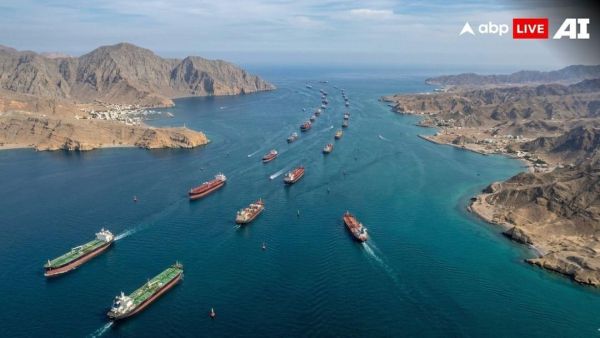
As the United States has started clearing naval mines from the strategically vital Strait of Hormuz after announcing the blockade, it is turning to advanced technologies, including drones, robotic systems, and helicopters, to reduce risks to personnel. Despite these innovations, mine-clearing crews remain exposed to potential Iranian attacks.
The operation is part of broader efforts to restore secure shipping routes after disruptions linked to recent US and Israeli strikes on Iran in late February, which significantly impacted global energy supplies.
While modern tools allow remote detection and neutralization of mines, experts caution that clearing a major waterway like the Strait of Hormuz will be a slow and complex process. The US military confirmed it has already initiated operations, deploying warships through the strait and planning to add underwater drones in the coming days, though details remain limited, Reuters reported.
Iran is believed to have deployed around a dozen mines in the area, though their exact locations are unknown. Even limited mining can have outsized effects. As retired British Rear Admiral Jon Pentreath notes, “the mere threat of a minefield is enough to halt commercial shipping.”
From Traditional Minesweepers to Autonomous Systems
Historically, the US Navy relied on manned minesweeping ships that entered minefields directly, using sonar and mechanical systems—often supported by divers—to locate and clear explosives. Much of this aging fleet has now been retired.
In its place, the Navy is deploying lighter, more advanced vessels such as littoral combat ships equipped with semi-autonomous surface and underwater drones, as well as remotely operated robots. These systems allow crews to operate at a safer distance while maintaining effectiveness.
Current US mine-clearing assets in the region include unmanned underwater vehicles, helicopters, divers, and some legacy vessels. However, overall capacity remains limited and partially constrained by maintenance cycles.
Varied Threats and Complex Detection
Iran is thought to possess multiple types of maritime mines, including seabed “bottom” mines, tethered mines floating below the surface, drifting mines, and limpet mines that attach directly to ships.
To counter these threats, US forces are likely using unmanned vehicles equipped with sonar and sensors to scan for mine-like objects. Once detected, data is relayed to operators outside the danger zone for identification and decision-making. Mines can then be neutralized using remotely operated devices such as the torpedo-shaped “Archerfish,” which carries an explosive charge and transmits live video.
Helicopters may also assist in spotting near-surface mines, while unmanned boats can tow equipment designed to trigger or collect explosive devices.
A Slow and Risky Operation
Despite technological advances, mine clearance remains time-intensive. Experts estimate that securing the strait could take several weeks, with ongoing risks of further Iranian deployments or direct attacks on clearing crews.
“Finding and destroying mines is very time consuming,” said US Admiral Daryl Caudle, highlighting the vulnerability of such operations.
To mitigate these risks, the US is expected to deploy defensive assets, including warships and aerial drones, to protect personnel and equipment.
Future of Mine Warfare
New technologies aim to accelerate mine detection and removal. Innovations in sonar now allow multi-angle scanning in a single pass, while artificial intelligence is improving onboard data analysis for unmanned systems.
The long-term goal is to develop fully autonomous systems capable of detecting, identifying, and destroying mines without human intervention. While that capability does not yet exist, it represents a key focus for naval forces worldwide.
-
Kyunki Saas Bhi Kabhi Bahu Thi 2 Written Update, April 16: Tulsi Discusses Pari's Re-Marriage

-
Bhooth Bangla First Half Review: Akshay Kumar-Priyadarshan Combo Delivers A Laugh Riot

-
Watch: Ball Goes Out Of Stadium As Mitchell Marsh Slams Veteran India Pacer For 102-Metre Six

-
Mohammed Shami More Than Just A Great Bowler For LSG, Tom Moody Explains How

-
Israel-Lebanon ceasefire takes effect as Trump says Iran war ‘going swimmingly’