
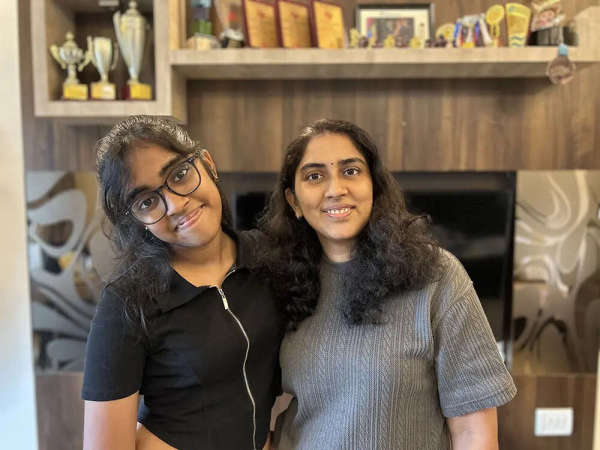
When Sujatha Ravi Iyer, mother of two daughters (now 12 and 18), moved from Chennai to Mumbai eight years ago, social media seemed like a bridge into a new world. "I felt pressure from other parents in colonies and society groups. People thought South Indians were too traditional and didn't want to be active on social media. That's when I started using Instagram to fit in," says the 43-year-old former banker who works from home with an online travel company. She recalls how her own Instagram use began to rub off on her children. "I saw how mindless scrolling became a reflex reaction for me. When my elder daughter was in Class 10, we told her to leave Instagram so she could focus on studies. But I realised if she had to quit, then I couldn't stay on it either. So, I deleted Instagram. For about three years, while she prepared for engineering entrance exams, I stayed off social media," she says.
For Iyer, it is all about conscious modelling. She and her husband avoid Instagram and Facebook; devices are shared at home, including one laptop that is used by both her and her younger daughter. The family has also shifted their news habit to television. "In the evenings, instead of scrolling on our phones, we watch TV news together. At least then we can discuss what is happening in the world. On phones, everyone is updated individually, but they don't interact with each other. Social media only shows you what the algorithm thinks you like; TV gives a wider view," says Iyer about her screen management philosophy. "My parents once thought TV was bad, but now we feel it's better than phones."
Twenty years ago, parenting meant chasing scraped knees and bedtime stories. Today, it is negotiating screen curfews between back-to-back video calls. With smartphones in hand, parents juggle Zoom meetings while policing Snapchat streaks and Instagram updates, fighting their own screen urges even as they teach kids to 'look up.'
"When parents frequently check phones during meals, or keep them close while unwinding, adolescents perceive it as the normal way to live. Research shows that over 70% of teenagers say they have seen their parents use devices during family time, which directly influences how they set their own boundaries," says Delhi-based clinical psychologist Rachna K Singh. The Vivo Switch Off 2024 study, India's sixth annual survey on parent-child smartphone relationships covering 1,543 smartphone owners across eight major cities, found that Indian parents spend over 5 hours daily on smartphones, while children spend over 4 hours. Remarkably, 69% of children identify excessive smartphone usage as a source of conflict between them and their parents, and 73% of parents acknowledge the same. Interestingly, when asked to design a phone for their parents, 94% of Indian children emphasised only calling, camera and messaging features, deliberately excluding social media, entertainment and gaming apps, suggesting that children do recognise that parents often spend the majority of their smartphone time on social media, entertainment and gaming apps, which frequently become a source of conflict at home.
A 45-year-old Delhi-based businessman (who wishes to stay anonymous) and father to two boys, 12 and 14, admits that screens play a large role in his life as well. Much of his phone time is work-related. For entertainment, he turns to gaming. "I play a lot of PlayStation and role-playing games. So, it's not just phones and social media, but TV that gets hijacked for my entertainment. I have tried to break the cycle, but I am still struggling," he says. Looking back, he contrasts his own childhood with his sons' experience: "By the time I was their age, we didn't have this kind of content on TV. But I had a computer and games, and I could be endlessly on it. Parenting was different then. If you were told not to do something beyond a certain time, it was at least partially respected. Today, that's a very debatable topic," he says. Both his sons, unsurprisingly, have their own phones.
But some parents have managed to transcend this downward spiral of distraction. Their own hobbies have come to the rescue. Delhi-based Bindiya Reddy, a mother of two children-a 12-year-old son and an 8-year-old daughter - remembers the tug of her phone's endless notifications during the pandemic when she worked in a healthcare company. "During Covid, everything was online - work calls, Zoom, Teams, while the kids were on online classes. That phase really shaped our relationship with gadgets. And with time, it's scary how easy everything has become. With apps like Blinkit, it's not just gadgets; it's instant access to anything. Kids today have too much, too easily, and I feel bad they'll never know that sense of waiting or looking forward to things," says Bindiya, who soon realised scrolling had become a reflex reaction for her. Constant arguments with her children over gadgets echoed her own struggle to unplug. "My son is 12, and I have refused to give him a phone, even though all his classmates have one. There have been a lot of fights and crying and tears between us over this issue," admits Bindiya.
But she managed to break the cycle when she rediscovered crochet, a hobby from quieter days. "I'm not active on social media apart from LinkedIn and Pinterest for my crafting and crochet hobbies. The dining table is always filled with coloured pencils and bits of wool. My advice to parents struggling with their own tech addiction is to find an activity they love. This does encourage children to pick up a hobby or sport. It really helps pull them away from gadgets. My daughter now does more crafts and drawing, maybe because she sees me crocheting. My son plays sports and is building a fishpond," she says with a note of pride.

-
Ken Karunas' 'Youth' Receives Rave Reviews After Netflix Release

-
Tamil Nadu polls: Over 400 candidates face serious criminal cases, 25% contesting are crorepatis

-
New Influx of Myanmar Refugees in Mizoram Amid Ongoing Conflict

-
Hojai District Faces Growing Health Crisis Due to Noise and Air Pollution

-
Rishabh Pant's Leadership Under Scrutiny After IPL 2026 Loss