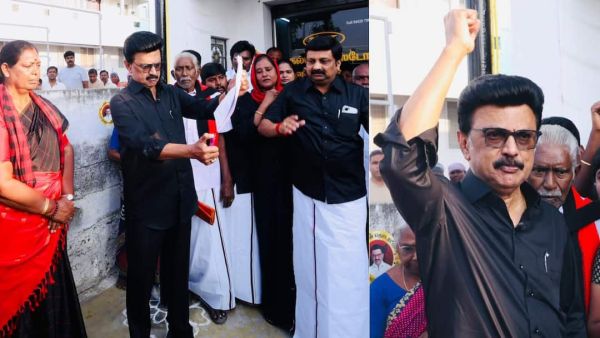
Tamil Nadu Delimitation Protest: Tamil Nadu Chief Minister and DMK president M. K. Stalin on Thursday led a sweeping black flag protest across the state, intensifying his opposition to the Union Government’s proposed delimitation legislation. Clad in black, Stalin personally hoisted a black flag, turning the demonstration into a symbolic show of resistance and cautioning the Centre that “the price you will pay will be heavy” if the proposal moves forward.
The protest quickly gained momentum beyond Chennai, with coordinated demonstrations reported across districts. In Tiruchirappalli’s Thennur, black flags were raised at the residence of State Minister and DMK leader Anbil Mahesh Poyyamozhi, underscoring the party’s organized mobilisation.
Tamil Nadu Statewide Protest Over Delimitation
Currently on the campaign trail in Dharmapuri, Stalin reinforced the scale of the agitation following a virtual meeting with DMK Members of Parliament. He declared that “across Tamil Nadu, black flags will rise from homes and public spaces tomorrow in protest against delimitation,” framing the movement as a people-driven response rather than a party-led exercise.
#WATCH | Namakkal | DMK President and Tamil Nadu CM MK Stalin wearing black attire hoists a black flag in protest against the Centre's delimitation move. He also burns a copy of the Delimitation bill. pic.twitter.com/1bWdXiymsI
— ANI (@ANI) April 16, 2026
Importantly, the escalation of this protest comes at a politically sensitive moment, with Tamil Nadu set to vote in Assembly elections on April 23, adding further weight to the DMK’s aggressive stance against the Centre.
The Chief Minister stressed that the DMK would firmly oppose the Centre’s legislative push, positioning the protest as the beginning of a broader resistance. The visual imagery of black flags across homes and streets was intended to send a unified message of dissent from Tamil Nadu.
Delimitation Row Becomes Key Political Flashpoint
The ruling DMK is gearing up for a sustained political battle with the BJP, with delimitation emerging as a central issue ahead of upcoming elections. Stalin has taken an early and vocal stand against the proposal, reaching out to leaders in other states in an attempt to build a wider coalition against the move.
At the heart of the controversy is the proposed expansion of Lok Sabha seats—from 543 to a potential 850—under the Constitution (One Hundred and Thirty-First Amendment) Bill, 2026, along with the Delimitation Bill, 2026 and the Union Territories Laws (Amendment) Bill, 2026. These measures are slated for introduction by Law Minister Arjun Ram Meghwal, while Home Minister Amit Shah will table the Union Territories amendment.
Parliament Session Adds Urgency To Debate
The Centre has convened a special session of Parliament from April 16 to 18, during which it plans to push key legislative changes, including amendments linked to the Nari Shakti Vandan Adhiniyam. The reforms aim to operationalise women’s reservation in the Lok Sabha starting from the 2029 general elections.
However, opposition parties have raised concerns over the criteria for redrawing constituencies and the potential political implications of increasing parliamentary seats. Critics argue that such changes could significantly reshape representation across states.
Against this backdrop, Stalin’s black flag campaign is being positioned as both a regional assertion and a national signal—one that highlights growing resistance to the Centre’s plans and calls for broader consultation before any structural overhaul of India’s electoral map.
-
I made salmon using 3 simple methods - one was juicer, tastier and cooked the quickest

-
Moment Prince Harry forced to step in to protect Meghan Markle as they're 'ambushed'

-
The Tale of Lord Parshuram: A Story of Devotion and Sacrifice
-
Anyone with a bird feeder should hang everyday item in garden before summer arrives

-
Philippines VP Sara Duterte refutes accusations she was a 'poor student'