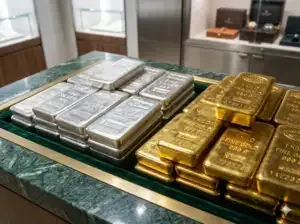
Gold silver crash alert shows a 16% silver fall and 8% gold drop as oil above $120 may trigger another 10% downside soon
Gold, silver rates crash risk is back in focus as crude oil flirts with the $120 mark and geopolitical tensions escalate. Gold prices have already corrected over 8% since the start of the US–Iran war, while silver has plunged more than 16%, raising a critical question for investors—can bullion fall another 10% in the near term? The short answer is yes, but only under specific macro conditions. Rising oil prices, a stronger dollar, and persistently high interest rates are combining to pressure gold and silver rates.
If crude sustains above $120, experts warn that inflation expectations could spike again, forcing central banks like the Federal Reserve to keep rates higher for longer, a scenario that historically weighs on non-yielding assets like gold and silver. This shift is already visible as COMEX gold hovers near $4,800 per ounce while silver struggles around $77, reflecting cautious investor sentiment and reduced safe-haven demand despite ongoing conflict signals.
In the current market, even though geopolitical tensions like the blockade of the Strait of Hormuz would typically support gold, the narrative has flipped. Inflation fears are dominating safe-haven demand. Analysts highlight that if crude sustains above $120, gold could slip below $4,400 while silver may drop under $67. This aligns with historical patterns where inflation-led rate hikes suppress bullion rallies instead of supporting them.
Market strategist views suggest that if oil remains elevated and the dollar index continues to strengthen, gold could test lower support levels quickly. On MCX, a break below ₹1,49,650 may accelerate selling pressure toward ₹1,44,930 and even ₹1,39,200. These levels indicate that technical weakness is aligning with macroeconomic headwinds. Investors should understand that this is not a panic-driven crash but a structured correction driven by global liquidity conditions and policy expectations.
The Federal Reserve is now expected to keep rates elevated, with less than a 20% probability of rate cuts by year-end. This “higher for longer” stance is a major bearish factor for gold and silver. Higher interest rates increase the opportunity cost of holding bullion, making yield-bearing assets more attractive.
At the same time, the US dollar remains firm, further capping upside in gold. When the dollar strengthens, gold typically weakens due to inverse correlation. This explains why even amid geopolitical uncertainty, gold has struggled to sustain rallies. The combination of strong dollar, high yields, and elevated oil prices creates a perfect storm for continued downside pressure on bullion markets.
Experts suggest that if oil cools down, gold could rebound above $5,000 while silver may climb past $80. This highlights how sensitive bullion markets are to energy prices and monetary policy shifts. A cooling oil market would restore the traditional role of gold as a hedge against uncertainty rather than inflation-driven policy tightening.
However, as long as geopolitical tensions persist and supply disruptions remain a risk, oil prices may stay elevated. This keeps downside risks intact for gold and silver in the near term, making volatility the dominant theme for investors.
Gold, silver rates crash risks rise sharply when crude oil sustains above $120 because it fuels inflation and keeps interest rates higher for longer. This strengthens the US dollar and reduces demand for non-yielding assets like gold and silver. If this trend continues, bullion prices can see another 10% downside as macro pressure outweighs safe-haven demand.
Q2. Will falling oil below $90 reverse gold, silver rates crash trend?
Gold price outlook improves significantly if crude oil drops below $90 as inflation cools and central banks may ease rate hikes. This weakens the dollar and restores gold’s appeal as a safe-haven asset, supporting price recovery. In such a scenario, gold and silver can rebound strongly, reversing the ongoing correction trend.
If crude sustains above $120, experts warn that inflation expectations could spike again, forcing central banks like the Federal Reserve to keep rates higher for longer, a scenario that historically weighs on non-yielding assets like gold and silver. This shift is already visible as COMEX gold hovers near $4,800 per ounce while silver struggles around $77, reflecting cautious investor sentiment and reduced safe-haven demand despite ongoing conflict signals.
Gold, silver rates crash: Why crude oil above $120 could trigger further fall
Gold, silver rates crash scenarios are closely tied to crude oil movements, especially when prices surge beyond $120 per barrel. Higher oil prices directly fuel inflation, increasing input costs across global economies. This creates pressure on central banks to maintain tight monetary policy, which boosts bond yields and strengthens the US dollar. A strong dollar makes gold and silver more expensive for global buyers, reducing demand and pushing prices lower.In the current market, even though geopolitical tensions like the blockade of the Strait of Hormuz would typically support gold, the narrative has flipped. Inflation fears are dominating safe-haven demand. Analysts highlight that if crude sustains above $120, gold could slip below $4,400 while silver may drop under $67. This aligns with historical patterns where inflation-led rate hikes suppress bullion rallies instead of supporting them.
Can gold and silver rates crash another 10% in 2026?
Gold, silver rates crash potential of another 10% is not just speculation but a data-backed possibility under current macro trends. Since the beginning of the conflict, gold has already corrected significantly, and silver has shown even sharper volatility due to its industrial demand component. Experts note that silver tends to amplify market moves, meaning any downside in gold could translate into deeper losses in silver.Market strategist views suggest that if oil remains elevated and the dollar index continues to strengthen, gold could test lower support levels quickly. On MCX, a break below ₹1,49,650 may accelerate selling pressure toward ₹1,44,930 and even ₹1,39,200. These levels indicate that technical weakness is aligning with macroeconomic headwinds. Investors should understand that this is not a panic-driven crash but a structured correction driven by global liquidity conditions and policy expectations.
US-Iran war, dollar strength, and interest rates: what’s driving gold price outlook
Gold, silver rates crash dynamics are being shaped by a complex interplay of geopolitics and monetary policy. The ongoing tensions involving Donald Trump and Iran initially created a safe-haven rush, but that momentum faded as oil prices surged. Inflation expectations rose sharply, prompting markets to reassess interest rate trajectories.The Federal Reserve is now expected to keep rates elevated, with less than a 20% probability of rate cuts by year-end. This “higher for longer” stance is a major bearish factor for gold and silver. Higher interest rates increase the opportunity cost of holding bullion, making yield-bearing assets more attractive.
At the same time, the US dollar remains firm, further capping upside in gold. When the dollar strengthens, gold typically weakens due to inverse correlation. This explains why even amid geopolitical uncertainty, gold has struggled to sustain rallies. The combination of strong dollar, high yields, and elevated oil prices creates a perfect storm for continued downside pressure on bullion markets.
Gold price outlook 2026: Will lower oil below $90 reverse the trend?
Gold, silver rates crash risks could ease significantly if crude oil prices fall below $90 per barrel. This scenario would reduce inflation pressures and allow central banks to adopt a more accommodative stance. Lower interest rates would weaken the dollar and revive demand for gold as a safe-haven and inflation hedge.Experts suggest that if oil cools down, gold could rebound above $5,000 while silver may climb past $80. This highlights how sensitive bullion markets are to energy prices and monetary policy shifts. A cooling oil market would restore the traditional role of gold as a hedge against uncertainty rather than inflation-driven policy tightening.
However, as long as geopolitical tensions persist and supply disruptions remain a risk, oil prices may stay elevated. This keeps downside risks intact for gold and silver in the near term, making volatility the dominant theme for investors.
FAQs:
Q1. Can crude oil above $120 trigger deeper fall in bullion prices?Gold, silver rates crash risks rise sharply when crude oil sustains above $120 because it fuels inflation and keeps interest rates higher for longer. This strengthens the US dollar and reduces demand for non-yielding assets like gold and silver. If this trend continues, bullion prices can see another 10% downside as macro pressure outweighs safe-haven demand.
Q2. Will falling oil below $90 reverse gold, silver rates crash trend?
Gold price outlook improves significantly if crude oil drops below $90 as inflation cools and central banks may ease rate hikes. This weakens the dollar and restores gold’s appeal as a safe-haven asset, supporting price recovery. In such a scenario, gold and silver can rebound strongly, reversing the ongoing correction trend.