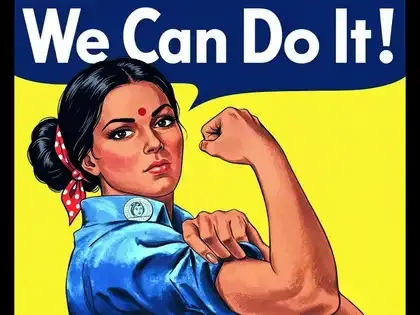
It's been a week of protests. Not just by factory workers demanding a wage hike in Noida, but also by women working as domestic help gig workers for Urban Company (UC), a platform that provides a range of at-home services. The protesters called for an 8-hr workday, weekly offs, and mandatory access to drinking water and toilets.
While these are critical demands and must be looked into, there's also a need to focus on giving them options to increase their incomes and unlock better opportunities that such aggregator service platforms provide.
The gig workforce is estimated at 12 mn in FY25, up from 7.7 mn in FY21, and is projected to almost double to 23.5 mn by FY30. Women account for roughly 30% of this workforce - 2.3-3.4 mn workers. This growth reflects a broader rise in women's economic engagement, with female labour force participation rate (FLFPR) reaching 41.7% in FY24.
Yet, these gains mask deep structural challenges. Women remain concentrated in traditionally gendered jobs - beauty services, domestic work and healthcare - that account for only a fraction of total gig opportunities. Women's representation in beauty and grooming services can reach 46%, compared with only 1-6% in ride- hailing and delivery platforms, where safety concerns and lack of vehicle ownership remain major barriers.
Even within beauty and wellness, growth potential for women is curtailed by poor transport infrastructure and safety risks. Female professionals in 2025 earned more per hour (₹444.7) than men (₹322.4). But their net monthly earnings were nearly the same (₹26,547 for men, ₹26,117 for women).
Gig workers in these sectors spend an estimated ₹9,000-12,000 a month on public transport. Seasonal disruptions exacerbate income volatility, while evening jobs - often more lucrative - are often avoided due to safety concerns. These factors underscore the need for gender-responsive interventions to unlock women's economic potential in the gig economy.
Limited access to digital tools, persistent safety concerns and low rates of vehicle ownership reinforce these constraints. Only 26% of Indian households report female vehicle ownership, compared to 44% for men, leaving many women unable to access higher-paying opportunities without affordable mobility finance.
In a pilot programme targeting gig workers to enable access to 2-wheeler loans, a combination of down payment support, financial coaching and awareness interventions was deployed to address mobility constraints. It found that in-person engagement was critical to driving uptake. Interventions such as driving training sessions and 'bike melas' - where women could interact with vehicles, purchase directly from dealers and access financing options - led to significantly higher adoption.
Similarly, a pilot of a digital savings product highlighted design and usability barriers, underscoring the need for simple, intuitive interfaces aligned with women's preferences and levels of digital fluency. Notably, 25% of participants expressed strong interest in learning to save, and beginning their savings journey.
Women who purchased 2-wheelers increased their monthly jobs from 41 to 45 on average, and raised their monthly income by an average of nearly ₹6,000. Spa service workers saw the largest gains. With greater control over mobility, women reduced income volatility, accepted more evening jobs, and better-balanced household and work responsibilities.
These outcomes align with broader evidence. When female gig workers gain asset ownership and financial tools, they not only earn more but also report higher satisfaction and resilience. Importantly, the pilot improved women's budgeting skills and financial awareness, suggesting that mobility finance - coupled with financial capability interventions - creates a multiplier effect on financial security.
This provides a blueprint for scalable solutions. Trusted platform partners, financial institutions and policymakers can work together to provide affordable asset finance, savings products tailored for women, and targeted support that addresses barriers such as safety and digital usability.
When women gain access to mobility finance, they do more than move across a city - they move closer to financial independence, asset ownership and long-term economic security for themselves and their families. Scaling such initiatives can unlock the untapped potential of India's 3 mn female gig workers and help ensure that the future of work is truly inclusive.
The writer is regional head, South Asia, Women's World Banking.
While these are critical demands and must be looked into, there's also a need to focus on giving them options to increase their incomes and unlock better opportunities that such aggregator service platforms provide.
The gig workforce is estimated at 12 mn in FY25, up from 7.7 mn in FY21, and is projected to almost double to 23.5 mn by FY30. Women account for roughly 30% of this workforce - 2.3-3.4 mn workers. This growth reflects a broader rise in women's economic engagement, with female labour force participation rate (FLFPR) reaching 41.7% in FY24.
Yet, these gains mask deep structural challenges. Women remain concentrated in traditionally gendered jobs - beauty services, domestic work and healthcare - that account for only a fraction of total gig opportunities. Women's representation in beauty and grooming services can reach 46%, compared with only 1-6% in ride- hailing and delivery platforms, where safety concerns and lack of vehicle ownership remain major barriers.
Even within beauty and wellness, growth potential for women is curtailed by poor transport infrastructure and safety risks. Female professionals in 2025 earned more per hour (₹444.7) than men (₹322.4). But their net monthly earnings were nearly the same (₹26,547 for men, ₹26,117 for women).
Gig workers in these sectors spend an estimated ₹9,000-12,000 a month on public transport. Seasonal disruptions exacerbate income volatility, while evening jobs - often more lucrative - are often avoided due to safety concerns. These factors underscore the need for gender-responsive interventions to unlock women's economic potential in the gig economy.
Limited access to digital tools, persistent safety concerns and low rates of vehicle ownership reinforce these constraints. Only 26% of Indian households report female vehicle ownership, compared to 44% for men, leaving many women unable to access higher-paying opportunities without affordable mobility finance.
In a pilot programme targeting gig workers to enable access to 2-wheeler loans, a combination of down payment support, financial coaching and awareness interventions was deployed to address mobility constraints. It found that in-person engagement was critical to driving uptake. Interventions such as driving training sessions and 'bike melas' - where women could interact with vehicles, purchase directly from dealers and access financing options - led to significantly higher adoption.
Similarly, a pilot of a digital savings product highlighted design and usability barriers, underscoring the need for simple, intuitive interfaces aligned with women's preferences and levels of digital fluency. Notably, 25% of participants expressed strong interest in learning to save, and beginning their savings journey.
Women who purchased 2-wheelers increased their monthly jobs from 41 to 45 on average, and raised their monthly income by an average of nearly ₹6,000. Spa service workers saw the largest gains. With greater control over mobility, women reduced income volatility, accepted more evening jobs, and better-balanced household and work responsibilities.
These outcomes align with broader evidence. When female gig workers gain asset ownership and financial tools, they not only earn more but also report higher satisfaction and resilience. Importantly, the pilot improved women's budgeting skills and financial awareness, suggesting that mobility finance - coupled with financial capability interventions - creates a multiplier effect on financial security.
This provides a blueprint for scalable solutions. Trusted platform partners, financial institutions and policymakers can work together to provide affordable asset finance, savings products tailored for women, and targeted support that addresses barriers such as safety and digital usability.
When women gain access to mobility finance, they do more than move across a city - they move closer to financial independence, asset ownership and long-term economic security for themselves and their families. Scaling such initiatives can unlock the untapped potential of India's 3 mn female gig workers and help ensure that the future of work is truly inclusive.
The writer is regional head, South Asia, Women's World Banking.
(Disclaimer: The opinions expressed in this column are that of the writer. The facts and opinions expressed here do not reflect the views of www.economictimes.com.)





Kalpana Ajayan