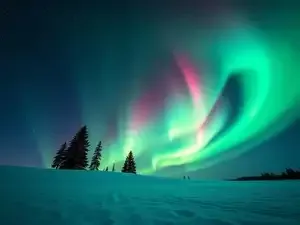
Northern Lights tonight visible across 18 states in April 2026 with aurora borealis peak timing, NOAA forecast insights, and best viewing guide
The Northern Lights tonight are expected to light up skies across as many as 18 U.S. states, according to the NOAA Space Weather Prediction Center. Forecast data shows geomagnetic activity intensifying due to shifting solar wind patterns, increasing the chances of spotting the aurora borealis farther south than usual. This rare visibility window, driven by charged solar particles colliding with Earth’s atmosphere, could peak between 10 p.m. and 2 a.m. local time.
For skywatchers wondering how to watch the Northern Lights tonight, the answer is simple: head to a dark location, face north, and track real-time aurora forecasts. The Northern Lights tonight are not just a visual treat but a scientifically driven phenomenon tied to geomagnetic storms. With solar activity building midweek, experts suggest that visibility may extend beyond traditional northern zones, making this one of the most accessible aurora events in recent months.
The aurora borealis tonight offers a unique opportunity for millions who rarely witness this phenomenon. As geomagnetic conditions strengthen, colors ranging from green to purple may shimmer across the horizon. This surge aligns with increased solar wind interactions, making the Northern Lights tonight both a spectacle and a reminder of space weather’s impact on Earth. If conditions hold, this could become one of April 2026’s most talked-about celestial events.
According to the NOAA Space Weather Prediction Center, subtle changes in solar wind speed and magnetic alignment are pushing aurora visibility farther south. This means the Northern Lights tonight could appear in regions that rarely experience such displays.
This expansion is significant because aurora visibility typically stays confined to high-latitude areas like Alaska. However, during stronger geomagnetic events, the auroral oval widens. As a result, the aurora borealis tonight may stretch deep into the northern United States, offering a rare viewing chance for millions.
Additionally, the aurora borealis tonight could reach areas such as Maine, Washington, Idaho, Oregon, Vermont, New Hampshire, New York, Pennsylvania, South Dakota, Iowa, Illinois, and Nebraska. These locations fall within the predicted auroral boundary, depending on real-time geomagnetic intensity.
Visibility depends heavily on local conditions. Clear skies, low light pollution, and strong geomagnetic activity all increase your chances. Even if the aurora appears faint to the naked eye, cameras may capture brighter colors, making the Northern Lights tonight more visible through photography.
Experts recommend checking real-time updates from the NOAA Space Weather Prediction Center. Aurora forecasts update every 30 minutes, helping viewers track changes in geomagnetic activity. Apps and space-weather tools can also guide you to the best viewing times.
Patience plays a key role. The aurora borealis tonight may appear as faint glows before intensifying into vibrant waves. Give your eyes time to adjust to darkness, and avoid bright screens. With the right conditions, the Northern Lights tonight can transform the sky into a moving canvas of color.
Smartphones with night mode or pro mode can capture the aurora borealis tonight effectively. Increase exposure time, lower ISO noise, and keep the camera steady for best results. Even basic devices can produce stunning images if conditions are right.
For DSLR or mirrorless cameras, manual settings offer better control. A wide aperture and longer shutter speed help capture more light. The Northern Lights tonight may appear brighter in photos than to the naked eye, making photography an essential part of the experience.
The Northern Lights tonight may be visible across northern and midwestern U.S. states including Montana, Minnesota, Wisconsin, and New York, depending on geomagnetic strength and sky clarity. Dark, rural areas far from city lights significantly improve visibility, especially with a clear northern horizon and minimal cloud cover. For the best experience, experts recommend tracking live forecasts from the NOAA Space Weather Prediction Center and heading outdoors during peak nighttime hours.
Q2. When will Aurora Borealis peak and how long will it last?
The Northern Lights tonight are expected to peak between 10 p.m. and 2 a.m., with the strongest activity often occurring around midnight when geomagnetic intensity rises. Visibility may last several hours, but brightness and movement can fluctuate quickly based on solar wind conditions and magnetic field changes. Regular updates from the NOAA Space Weather Prediction Center help viewers catch the most active periods.
For skywatchers wondering how to watch the Northern Lights tonight, the answer is simple: head to a dark location, face north, and track real-time aurora forecasts. The Northern Lights tonight are not just a visual treat but a scientifically driven phenomenon tied to geomagnetic storms. With solar activity building midweek, experts suggest that visibility may extend beyond traditional northern zones, making this one of the most accessible aurora events in recent months.
The aurora borealis tonight offers a unique opportunity for millions who rarely witness this phenomenon. As geomagnetic conditions strengthen, colors ranging from green to purple may shimmer across the horizon. This surge aligns with increased solar wind interactions, making the Northern Lights tonight both a spectacle and a reminder of space weather’s impact on Earth. If conditions hold, this could become one of April 2026’s most talked-about celestial events.
What is causing the Northern Lights tonight and why visibility is expanding south?
The Northern Lights tonight are caused by geomagnetic storms triggered when solar particles hit Earth’s magnetic field. These particles interact with atmospheric gases, releasing energy in the form of glowing light. Oxygen produces green and red hues, while nitrogen creates blue and purple shades, forming the iconic aurora borealis.According to the NOAA Space Weather Prediction Center, subtle changes in solar wind speed and magnetic alignment are pushing aurora visibility farther south. This means the Northern Lights tonight could appear in regions that rarely experience such displays.
This expansion is significant because aurora visibility typically stays confined to high-latitude areas like Alaska. However, during stronger geomagnetic events, the auroral oval widens. As a result, the aurora borealis tonight may stretch deep into the northern United States, offering a rare viewing chance for millions.
Where will the Northern Lights tonight be visible across 18 states?
The Northern Lights tonight are expected to be visible across a wide geographic range. Forecast models indicate strong visibility in Alaska and northern regions, with possible sightings extending into states like Montana, North Dakota, Minnesota, Wisconsin, and Michigan.Additionally, the aurora borealis tonight could reach areas such as Maine, Washington, Idaho, Oregon, Vermont, New Hampshire, New York, Pennsylvania, South Dakota, Iowa, Illinois, and Nebraska. These locations fall within the predicted auroral boundary, depending on real-time geomagnetic intensity.
Visibility depends heavily on local conditions. Clear skies, low light pollution, and strong geomagnetic activity all increase your chances. Even if the aurora appears faint to the naked eye, cameras may capture brighter colors, making the Northern Lights tonight more visible through photography.
How to watch the Northern Lights tonight for the best experience?
To watch the Northern Lights tonight, location matters more than equipment. Choose a dark area far from city lights, such as rural fields or elevated terrain. A clear northern horizon improves visibility, especially during peak hours between 10 p.m. and 2 a.m.Experts recommend checking real-time updates from the NOAA Space Weather Prediction Center. Aurora forecasts update every 30 minutes, helping viewers track changes in geomagnetic activity. Apps and space-weather tools can also guide you to the best viewing times.
Patience plays a key role. The aurora borealis tonight may appear as faint glows before intensifying into vibrant waves. Give your eyes time to adjust to darkness, and avoid bright screens. With the right conditions, the Northern Lights tonight can transform the sky into a moving canvas of color.
How to photograph the Northern Lights tonight using smartphones or cameras?
Capturing the Northern Lights tonight does not require professional gear, but technique matters. Use a tripod or stable surface to avoid blur, as auroras are best photographed with long exposure settings.Smartphones with night mode or pro mode can capture the aurora borealis tonight effectively. Increase exposure time, lower ISO noise, and keep the camera steady for best results. Even basic devices can produce stunning images if conditions are right.
For DSLR or mirrorless cameras, manual settings offer better control. A wide aperture and longer shutter speed help capture more light. The Northern Lights tonight may appear brighter in photos than to the naked eye, making photography an essential part of the experience.
FAQs:
Q1. Which 18 states can see Aurora Borealis and what are the best locations?The Northern Lights tonight may be visible across northern and midwestern U.S. states including Montana, Minnesota, Wisconsin, and New York, depending on geomagnetic strength and sky clarity. Dark, rural areas far from city lights significantly improve visibility, especially with a clear northern horizon and minimal cloud cover. For the best experience, experts recommend tracking live forecasts from the NOAA Space Weather Prediction Center and heading outdoors during peak nighttime hours.
Q2. When will Aurora Borealis peak and how long will it last?
The Northern Lights tonight are expected to peak between 10 p.m. and 2 a.m., with the strongest activity often occurring around midnight when geomagnetic intensity rises. Visibility may last several hours, but brightness and movement can fluctuate quickly based on solar wind conditions and magnetic field changes. Regular updates from the NOAA Space Weather Prediction Center help viewers catch the most active periods.