
Listen to this article in summarized format
Loading...
××
Subscribe to

Unlock AI Briefing and Premium Content
New Year Offer 24 Hours Left
Subscribe NowAlready a member? Sign In
What's Included
- Exclusive Stories
- Daily ePaper Access
- Smart Market Tools
- Curated Investment Ideas
- Ad-lite Experience
Subscription

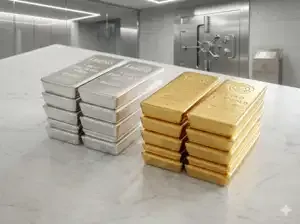
Why are gold and silver prices down today, and will precious metals continue to drop or rise again? Precious metals slipped after reaching a one-month peak earlier in the session. Investors tracked signals about possible US-Iran talks and watched oil prices and global shares. Markets reacted as expectations about interest rate cuts shifted. Gold has dropped since the start of the Middle East conflict in February. Silver and platinum also moved lower after earlier gains. Analysts say markets are waiting for more clarity on geopolitics, oil supply risks, and interest rate direction. These factors continue to guide bullion demand and price trends.
Why are gold and silver prices down today, and will precious metals continue to drop or rise again?
Gold fell from a one-month peak on April 15 as investors assessed new developments around US-Iran negotiations. Spot gold dropped 0.9% to $4,798.89 per ounce after reaching its highest level since March 18 earlier in the session. US gold futures for June delivery declined 0.6% to $4,821.30.
Silver also moved lower. Spot silver fell 1.1% to $78.68 per ounce after touching a one-month high earlier. Platinum slipped 0.2% to $2,099.42. Palladium edged down 0.1% to $1,585.53. Markets reacted as investors monitored global events and waited for clarity about future economic and geopolitical developments.
Why are gold and silver prices down today?
Investors tracked comments about possible talks between the United States and Iran. Statements suggested that negotiations could resume in Pakistan within two days. At the same time, the United States said its military halted trade going in and out of Iran by sea. These developments affected global markets. World shares moved closer to record highs. Oil prices rose over 1% as exports remained constrained due to the closure of the Strait of Hormuz.
Analysts said investors shifted toward risk assets such as equities. When investors feel more confident about markets and economic growth, demand for safe-haven assets such as gold often weakens. Gold has dropped close to 10% since the start of the US and Israel conflict with Iran on February 28. Rising oil prices and shifting rate expectations have influenced market sentiment.
Will precious metals continue to drop or rise again?
The outlook depends on interest rate expectations and inflation trends. Gold is often seen as a hedge against inflation. However, higher interest rates reduce the appeal of non-yielding assets such as gold. Investors now see a 32% chance of at least one 25-basis-point rate cut this year, according to the CME FedWatch Tool. This probability fell from 34% the previous day. The change shows that expectations for rate cuts have eased slightly.
Lower expectations for rate cuts can put pressure on gold prices. If central banks delay rate cuts, bond yields may stay higher. This reduces the attractiveness of gold compared with interest-bearing assets. Still, any signals of economic slowdown or renewed geopolitical tension could support gold again.
Analysts insights and market outlook
Analysts said the current market mood reflects a wait-and-see approach. Investors are watching oil price movements, geopolitical developments, and interest rate signals. A UBS analyst said gold and equities often react to oil price changes. Lower oil prices can support economic growth and equities. At the same time, lower oil prices can reduce inflation and support gold because central banks may cut rates.
Markets are currently balancing several forces. Rising oil prices signal supply risks. Strong equity markets signal investor confidence. Shifting rate expectations affect gold demand. Because these forces move in different directions, markets are moving slowly as investors wait for clarity.
What should investors do now?
Investors are monitoring negotiations between the United States and Iran. They are also watching central bank signals about interest rates. Precious metals often move based on inflation expectations, geopolitical tensions, and economic growth. Short-term price changes may continue as new information emerges.
Some investors may see price dips as buying opportunities. Others may wait for clearer signals from central banks and global politics before making decisions. The near-term trend will likely depend on progress in negotiations, oil price movements, and future interest rate expectations.
FAQs
Q1. How do US-Iran talks affect gold and silver prices?
US-Iran talks can reduce geopolitical risk and increase investor confidence in equities. This may lower demand for safe-haven assets like gold and silver, causing short-term price declines.
Q2. Do interest rate cuts help gold and silver prices rise?
Lower interest rates reduce bond yields and the opportunity cost of holding non-yielding assets. This often supports demand for gold and silver and can push precious metal prices higher.
Why are gold and silver prices down today, and will precious metals continue to drop or rise again?
Gold fell from a one-month peak on April 15 as investors assessed new developments around US-Iran negotiations. Spot gold dropped 0.9% to $4,798.89 per ounce after reaching its highest level since March 18 earlier in the session. US gold futures for June delivery declined 0.6% to $4,821.30.Silver also moved lower. Spot silver fell 1.1% to $78.68 per ounce after touching a one-month high earlier. Platinum slipped 0.2% to $2,099.42. Palladium edged down 0.1% to $1,585.53. Markets reacted as investors monitored global events and waited for clarity about future economic and geopolitical developments.
Why are gold and silver prices down today?
Investors tracked comments about possible talks between the United States and Iran. Statements suggested that negotiations could resume in Pakistan within two days. At the same time, the United States said its military halted trade going in and out of Iran by sea. These developments affected global markets. World shares moved closer to record highs. Oil prices rose over 1% as exports remained constrained due to the closure of the Strait of Hormuz.Analysts said investors shifted toward risk assets such as equities. When investors feel more confident about markets and economic growth, demand for safe-haven assets such as gold often weakens. Gold has dropped close to 10% since the start of the US and Israel conflict with Iran on February 28. Rising oil prices and shifting rate expectations have influenced market sentiment.
Will precious metals continue to drop or rise again?
The outlook depends on interest rate expectations and inflation trends. Gold is often seen as a hedge against inflation. However, higher interest rates reduce the appeal of non-yielding assets such as gold. Investors now see a 32% chance of at least one 25-basis-point rate cut this year, according to the CME FedWatch Tool. This probability fell from 34% the previous day. The change shows that expectations for rate cuts have eased slightly.Lower expectations for rate cuts can put pressure on gold prices. If central banks delay rate cuts, bond yields may stay higher. This reduces the attractiveness of gold compared with interest-bearing assets. Still, any signals of economic slowdown or renewed geopolitical tension could support gold again.
Analysts insights and market outlook
Analysts said the current market mood reflects a wait-and-see approach. Investors are watching oil price movements, geopolitical developments, and interest rate signals. A UBS analyst said gold and equities often react to oil price changes. Lower oil prices can support economic growth and equities. At the same time, lower oil prices can reduce inflation and support gold because central banks may cut rates.Markets are currently balancing several forces. Rising oil prices signal supply risks. Strong equity markets signal investor confidence. Shifting rate expectations affect gold demand. Because these forces move in different directions, markets are moving slowly as investors wait for clarity.
What should investors do now?
Investors are monitoring negotiations between the United States and Iran. They are also watching central bank signals about interest rates. Precious metals often move based on inflation expectations, geopolitical tensions, and economic growth. Short-term price changes may continue as new information emerges.Some investors may see price dips as buying opportunities. Others may wait for clearer signals from central banks and global politics before making decisions. The near-term trend will likely depend on progress in negotiations, oil price movements, and future interest rate expectations.
FAQs
Q1. How do US-Iran talks affect gold and silver prices?
US-Iran talks can reduce geopolitical risk and increase investor confidence in equities. This may lower demand for safe-haven assets like gold and silver, causing short-term price declines.
Q2. Do interest rate cuts help gold and silver prices rise?
Lower interest rates reduce bond yields and the opportunity cost of holding non-yielding assets. This often supports demand for gold and silver and can push precious metal prices higher.