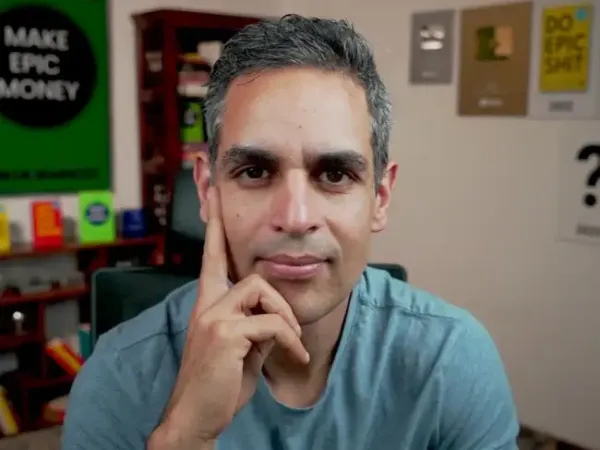
Success stories often look smooth from the outside, but the reality behind them is usually slow, uncertain, and full of moments where giving up feels easier. Entrepreneur and content creator Ankur Warikoo recently spoke about one such phase in his own journey, recalling how close he came to quitting, right before things finally started working. In a post shared on LinkedIn, he laid out how persistence, more than anything else, changed the outcome for him.
Warikoo revealed that it took his team 41 months to reach their first 1 million views on YouTube. For nearly three and a half years, the growth was slow, uncertain, and not very encouraging. At that point, stopping would not have raised eyebrows. As he put it, “It took us 41 months to hit 1 million views on YouTube. Today, we average 70 million views every MONTH.”
He also admitted that quitting around the 40th month would have felt completely justified. The effort had been long, results were limited, and moving on might have seemed practical. “But imagine if we quit in the 40th month - right before it took off,” he wrote, pointing to how close they were to missing a breakthrough moment.
This consistency, even when motivation was low, became the turning point. Over time, the numbers began to climb, eventually reaching an average of 70 million monthly views.
He wrote, “That's the thing about any meaningful achievement. It almost never comes without hurdles.” Expanding on that, he added, “A dream job is on the other side of 100 rejections. A strong body is on the other side of 100 workouts. A great skill is on the other side of 100 bad attempts.”
According to him, these struggles are not exceptions but part of the process. He described them as the “tax” that growth demands, suggesting that the effort and setbacks are simply the price one has to pay.
The idea, he hinted, is to look at rejection differently, not as a stop sign, but as a step forward. When seen this way, even setbacks begin to feel like progress.
Warikoo revealed that it took his team 41 months to reach their first 1 million views on YouTube. For nearly three and a half years, the growth was slow, uncertain, and not very encouraging. At that point, stopping would not have raised eyebrows. As he put it, “It took us 41 months to hit 1 million views on YouTube. Today, we average 70 million views every MONTH.”
He also admitted that quitting around the 40th month would have felt completely justified. The effort had been long, results were limited, and moving on might have seemed practical. “But imagine if we quit in the 40th month - right before it took off,” he wrote, pointing to how close they were to missing a breakthrough moment.
Decision to stay consistent
What changed things, according to Warikoo, was not a sudden viral hit or a shift in strategy, but a simple commitment. He stuck to posting one video every week, regardless of how he felt or how the previous content performed. “Committing to one video every week, no matter the views, my mood, or motivation - it paid off!” he shared.This consistency, even when motivation was low, became the turning point. Over time, the numbers began to climb, eventually reaching an average of 70 million monthly views.
Lesson behind the numbers
Warikoo used this experience to underline a larger idea about growth and success. He explained that meaningful achievements rarely come quickly or easily. Instead, they are often built on repeated failures and effort that may not show immediate results.He wrote, “That's the thing about any meaningful achievement. It almost never comes without hurdles.” Expanding on that, he added, “A dream job is on the other side of 100 rejections. A strong body is on the other side of 100 workouts. A great skill is on the other side of 100 bad attempts.”
According to him, these struggles are not exceptions but part of the process. He described them as the “tax” that growth demands, suggesting that the effort and setbacks are simply the price one has to pay.
A mindset shift about rejection
Along with his post, Warikoo shared a line that summed up his thinking: “If you knew you were 100 rejections away from your dream, think how excited you would be every time someone told you no.”The idea, he hinted, is to look at rejection differently, not as a stop sign, but as a step forward. When seen this way, even setbacks begin to feel like progress.