Nutritionist’s Simple ₹1,000-a-Week Grocery List Promises to Help You Meet Your Protein Goals
Sanjeev Kumar | April 13, 2026 4:23 AM CST
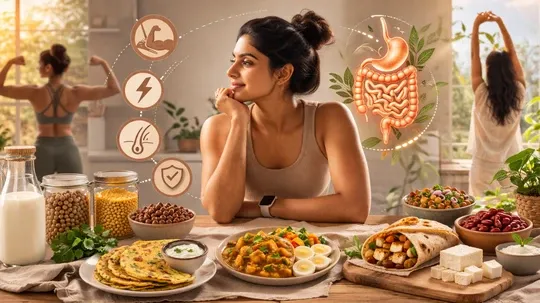
If you find yourself grappling with constant hunger, slow recovery from workouts, muscle loss with weakness as a byproduct, hair loss, brittle nails, dry skin, fatigue and frequent illnesses - chances are you aren't meeting your protein intake goals.
Like most bodily issues, the solution to this halt too, starts at the gut. We asked Dr. Nisha, Dietary & Nutrition expert at Motherhood Hospital Gurgaon, to share a clean eating plan to help people meet their protein intake goals, working on a budget of ₹1,000 a week.
Weekly Grocery List
1. Soya chunks (200 to 250g)
Soya Chunks are among the most economical and concentrated protein sources giving 50 grams of protein per 100 grams and is deal for curries, pulao or cutlets.
2. Mixed dals - moong dal and chana dal (1 to 1.5 kg total)
These provide good quality plant protein and can be rotated across meals as dal, cheelas or even khichdis.
3. Whole legumes - black chana or rajma (500g)
These are excellent for curries, salads and snacks also adding fiber and satiety.
4. Milk (3 to 4 litres per week)
A practical daily protein source, milk can be consumed as is, or even as curd or buttermilk.
5. Curd (500g to 1 kg)
Curd supports both protein intake and gut health, improving nutrient absorption.
6. Paneer (200g)
Paneer is useful as a concentrated protein addition for 2 to 3 meals in the week.
7. Eggs (10 to 12, if non-vegetarian)
Eggs have high biological value protein and are one of the most efficient sources of protein nutritionally.
Dr. Nisha suggests moong dal cheela with curd, soya chunk masala with sauteed egg whites (or an egg wrap roti), black chana chaat, paneer wraps, paneer curries and rajma tacos as some exciting ways to get your protein fill for the day. For weeks when money is tight, she still suggests not skimping on at least 2 bowls of dal a day, soya preparations 2 to 3 times a week, paneer preparations 1 to 2 times a week, eggs on alternate days and a glass of milk or bowl of curd daily.
Preparation Cues
Food items may come with their set protein intake, but certain cooking practices and traditional techniques can significantly improve how well the body utilizes that protein. Dr. Nisha explains: "From a preparation standpoint, soaking, sprouting, and fermenting foods like dals, legumes and batters are highly beneficial. These processes reduce anti-nutrients such as phytates, thereby enhancing protein digestibility and amino acid absorption. Similarly, pressure cooking is preferable to prolonged open boiling, as it minimizes nutrient loss and preserves protein structure more effectively."
Not just this, how you prepare your protein-forward meal also plays a role. She adds: "Excessive heat, over-frying, or repeated reheating can reduce protein quality and make it harder to digest. Opting for gentle cooking methods like steaming, sautéing, or light cooking helps retain nutritional value." Finally, just because you're focusing on your protein goals, doesn't really mean your food has to be tasteless. Dr. Nisha says: "While spices like turmeric, cumin, ginger, and hing don't directly impact protein levels, they play a supportive role by improving digestion and reducing bloating, especially when consuming high-protein plant foods like dals and legumes. Better digestion ultimately translates to better nutrient utilisation."
Progress Check
While the stated plan and tips will definitively nudge you in the right direction, check-ins with your body is the next important step of the journey. If you feel fewer energy crashes between meals, improved satiety, reduced cravings, a gradual improvement in muscle firmness, strength and physical endurance, a noticeable decrease in hair shedding over weeks, healthier skin and quicker recovery from tense workouts or illnesses - it's likely you're on the right track, lists Dr. Nisha. However, if fatigue is persistent, hunger pangs refuse to die, hair and skin don't show improvement, body composition feels lose, recovery of any kind is long-drawn out and your body typically bloats after high-protein meals, your protein intake may still be low. she clears.
READ NEXT
-
Dolly Martinez dead: My 600lb Life star dies aged 30 as family left 'heartbroken'

-
Olivier Awards fans say same thing as awards show returns to BBC for 50th anniversary

-
Princess Kate's special tribute to Prince William - 'sneaky little message'

-
The gorgeous 'new Amalfi Coast' of Europe with £2 beers - 17C in April

-
Horror as pensioner, 75, stomped on in neighbour row over dog poo