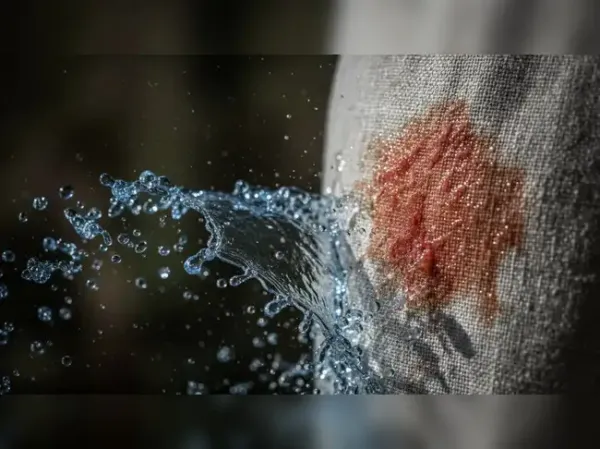
At first, the stain might not appear to be much trouble, but how you handle it in the next few minutes will decide whether you'll be able to easily eliminate it or whether it will leave a permanent stain on your clothes. Here, cold water plays a vital role in ensuring that the stain does not stick to the cloth. According to J-STAGE, this is because when the fabric is exposed to heat, the particles that cause staining will fasten themselves to the molecules of the fibers in the cloth. However, if cold water is used, the particles remain loosely stuck to the cloth molecules and can, therefore, be removed by rinsing. If the fabric being used includes cotton, the need for urgent action cannot be overstressed.
Heat can actually make things worse!
Although it might appear that the hotter the water used, the better it will be at stain removal, using hot water might have the reverse effect during the first stage of the procedure. According to research conducted into how fabrics behave when heated, it can be said that heat has a negative impact on both the fabric and the dyes used. Consequently, the likelihood of stains being removed and colors fading becomes higher. However, high temperatures are ideal for sterilizing fabric and should be considered when washing fabrics. Therefore, what we learn from the above discussion is that cold water must be used in the first stage to prevent stains from being embedded, while warm water is used in the second stage.Image Credit: Gemini