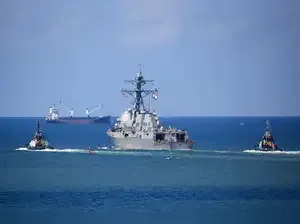
Is US military really clearing Strait of Hormuz, and were Donald Trump's naval ships not allowed to pass the water passageway? This question emerged after new claims, denials, and warnings between the United States and Iran. Donald Trump said the US military had started clearing the Strait of Hormuz and that Iranian mine-laying boats were sunk. Iran warned it would attack US vessels entering the waterway. A US warship later turned back. At the same time, peace talks began in Islamabad during a ceasefire. Global oil markets reacted as tanker movements and supply fears increased. This explainer covers the full timeline, the claims, and the impact on global energy and diplomacy.
Is US military really clearing Strait of Hormuz, and were Donald Trump's naval ships not allowed to pass the water passageway?
Recent developments show a mixed and confusing picture. US President Donald Trump claimed on social media that US forces had begun clearing the Strait of Hormuz and destroyed Iranian mine-laying boats. However, reports at the same time showed conflicting claims from both sides. A US official said several naval ships crossed the strait, while Iranian state media denied any crossing. Reports also said a US destroyer moved toward the waterway but turned back after Iran warned it would attack any US vessel within 30 minutes. These events show that military movement, warnings, and diplomacy are happening at the same time, creating uncertainty about what is actually happening in the strait.
Is US military really clearing Strait of Hormuz?
Trump publicly said US forces had started clearing the strait and claimed Iran’s mine-laying boats had been destroyed. However, experts say the shipping situation remains slow and uncertain. Even after a ceasefire, only a small number of ships are moving through the waterway and hundreds remain stuck. Analysts say Iran still holds strong leverage over the strait and traffic is moving only in small numbers with approval systems still in place. This means that while the US says operations have begun, the strait is not fully open yet and the real situation remains unclear.
Were Donald Trump's naval ships not allowed to pass the water passageway?
Reports suggest US warships did attempt movement through the strait, but the situation remains disputed. A US official said several warships crossed the strait for the first time since the war began, showing a change in military posture. However, Iran denied that any US ships passed and warned it would attack any vessel entering the waterway. The fact that a US destroyer reportedly turned back after the warning shows how tense the situation remains. The conflicting claims from Washington and Tehran highlight that freedom of navigation in the strait is still contested.
Timeline of reports and claims about the Strait
The issue began when Donald Trump posted on social media that the United States had started clearing the Strait of Hormuz. He claimed all 28 Iranian mine-dropper boats were sunk. Minutes before this post, reports appeared that several US naval ships were present in the Strait. A journalist cited an unnamed US official who said multiple ships crossed the passage. Iranian state television quickly denied that any US vessel had passed through the narrow waterway. These conflicting statements created uncertainty about the real situation at sea.
Why the Strait of Hormuz matters to global oil?
The Strait of Hormuz is a critical oil transport route. A large share of global oil flows through this passage. Fear of attacks on ships in recent weeks had already reduced movement through the Strait.
The disruption affected global energy markets. Oil tanker movement slowed and prices reacted. US gasoline prices rose even though much of the oil does not go to the United States. The market responded to supply risks and shipping uncertainty.
Warning from Iran and the US destroyer turning back
Reports said a US destroyer moved from Fujairah port in the UAE toward the Strait of Hormuz. Iran issued a warning through its state media. It said any US vessel crossing the Strait would be attacked within 30 minutes.
Iran also informed mediators in Islamabad about the warning. The move increased tensions during ongoing peace talks. Soon after the warning, the US vessel returned. This marked the first time since the ceasefire began that tensions rose at sea.
Peace talks in Islamabad during ceasefire
Talks between US and Iranian officials began in Islamabad. Pakistan hosted the talks after mediating a ceasefire earlier in the week. This meeting was the highest level contact between the two countries in more than five decades. Vice President JD Vance represented the US delegation. The talks aimed to end the six-week conflict. Naval movement and threats occurred at the same time as the diplomatic effort.
Donald Trump’s statements about Iran and naval operations
Donald Trump continued posting statements during the talks. He said Iran was losing and criticised media coverage. He also repeated claims that Iran’s navy and air force were destroyed.
Trump said the US was clearing the Strait as a favor to global countries including China, Japan, South Korea, France, and Germany. He said other countries lacked the will to carry out such work themselves. He also promoted US oil and gas exports. He said empty oil tankers were heading to the United States to load oil. He claimed the US had more oil than the next two largest producers combined.
Oil markets and tanker movements
Oil and gas became a central theme in the statements. Trump framed energy supply as a strategic tool. He said oil would flow with or without Iran’s cooperation. Tanker movements increased attention on global supply. The Strait of Hormuz remained a key factor in pricing and market stability. The situation showed how military risk and energy trade are linked.
What remains unclear now?
Claims and denials continue. The US said ships crossed the Strait. Iran denied it and issued warnings. A US destroyer turned back after threats. Peace talks continued under a ceasefire. The situation remained uncertain with mixed signals from military, diplomatic, and political sides.
FAQs
Q1: Is US military really clearing Strait of Hormuz and were Donald Trump's naval ships blocked?
Reports showed US ships near the Strait and Trump claimed clearing operations started. Iran denied passage and warned of attacks. A US destroyer later turned back, creating uncertainty.
Q2: Why is the Strait of Hormuz important for oil and global markets?
The Strait carries a major share of global oil shipments. Disruption affects tanker movement, supply expectations, and fuel prices worldwide, which explains the market reaction.
Is US military really clearing Strait of Hormuz, and were Donald Trump's naval ships not allowed to pass the water passageway?
Recent developments show a mixed and confusing picture. US President Donald Trump claimed on social media that US forces had begun clearing the Strait of Hormuz and destroyed Iranian mine-laying boats. However, reports at the same time showed conflicting claims from both sides. A US official said several naval ships crossed the strait, while Iranian state media denied any crossing. Reports also said a US destroyer moved toward the waterway but turned back after Iran warned it would attack any US vessel within 30 minutes. These events show that military movement, warnings, and diplomacy are happening at the same time, creating uncertainty about what is actually happening in the strait.Is US military really clearing Strait of Hormuz?
Trump publicly said US forces had started clearing the strait and claimed Iran’s mine-laying boats had been destroyed. However, experts say the shipping situation remains slow and uncertain. Even after a ceasefire, only a small number of ships are moving through the waterway and hundreds remain stuck. Analysts say Iran still holds strong leverage over the strait and traffic is moving only in small numbers with approval systems still in place. This means that while the US says operations have begun, the strait is not fully open yet and the real situation remains unclear.Were Donald Trump's naval ships not allowed to pass the water passageway?
Reports suggest US warships did attempt movement through the strait, but the situation remains disputed. A US official said several warships crossed the strait for the first time since the war began, showing a change in military posture. However, Iran denied that any US ships passed and warned it would attack any vessel entering the waterway. The fact that a US destroyer reportedly turned back after the warning shows how tense the situation remains. The conflicting claims from Washington and Tehran highlight that freedom of navigation in the strait is still contested.Timeline of reports and claims about the Strait
The issue began when Donald Trump posted on social media that the United States had started clearing the Strait of Hormuz. He claimed all 28 Iranian mine-dropper boats were sunk. Minutes before this post, reports appeared that several US naval ships were present in the Strait. A journalist cited an unnamed US official who said multiple ships crossed the passage. Iranian state television quickly denied that any US vessel had passed through the narrow waterway. These conflicting statements created uncertainty about the real situation at sea.Why the Strait of Hormuz matters to global oil?
The Strait of Hormuz is a critical oil transport route. A large share of global oil flows through this passage. Fear of attacks on ships in recent weeks had already reduced movement through the Strait.The disruption affected global energy markets. Oil tanker movement slowed and prices reacted. US gasoline prices rose even though much of the oil does not go to the United States. The market responded to supply risks and shipping uncertainty.
Warning from Iran and the US destroyer turning back
Reports said a US destroyer moved from Fujairah port in the UAE toward the Strait of Hormuz. Iran issued a warning through its state media. It said any US vessel crossing the Strait would be attacked within 30 minutes.Iran also informed mediators in Islamabad about the warning. The move increased tensions during ongoing peace talks. Soon after the warning, the US vessel returned. This marked the first time since the ceasefire began that tensions rose at sea.
Peace talks in Islamabad during ceasefire
Talks between US and Iranian officials began in Islamabad. Pakistan hosted the talks after mediating a ceasefire earlier in the week. This meeting was the highest level contact between the two countries in more than five decades. Vice President JD Vance represented the US delegation. The talks aimed to end the six-week conflict. Naval movement and threats occurred at the same time as the diplomatic effort.Donald Trump’s statements about Iran and naval operations
Donald Trump continued posting statements during the talks. He said Iran was losing and criticised media coverage. He also repeated claims that Iran’s navy and air force were destroyed.Trump said the US was clearing the Strait as a favor to global countries including China, Japan, South Korea, France, and Germany. He said other countries lacked the will to carry out such work themselves. He also promoted US oil and gas exports. He said empty oil tankers were heading to the United States to load oil. He claimed the US had more oil than the next two largest producers combined.
Oil markets and tanker movements
Oil and gas became a central theme in the statements. Trump framed energy supply as a strategic tool. He said oil would flow with or without Iran’s cooperation. Tanker movements increased attention on global supply. The Strait of Hormuz remained a key factor in pricing and market stability. The situation showed how military risk and energy trade are linked.What remains unclear now?
Claims and denials continue. The US said ships crossed the Strait. Iran denied it and issued warnings. A US destroyer turned back after threats. Peace talks continued under a ceasefire. The situation remained uncertain with mixed signals from military, diplomatic, and political sides.FAQs
Q1: Is US military really clearing Strait of Hormuz and were Donald Trump's naval ships blocked?
Reports showed US ships near the Strait and Trump claimed clearing operations started. Iran denied passage and warned of attacks. A US destroyer later turned back, creating uncertainty.
Q2: Why is the Strait of Hormuz important for oil and global markets?
The Strait carries a major share of global oil shipments. Disruption affects tanker movement, supply expectations, and fuel prices worldwide, which explains the market reaction.