The Artemis II crew successfully returned home with four astronauts after traveling around the far side of the Moon, breaking the record for the farthest distance humans have flown from Earth. It is also a major milestone in human exploration of deep space, marking the first crewed lunar flyby in nearly 50 years and a boost to NASA’s zealous dream of returning humans to the lunar surface.
Yet even as the mission brought excitement about future lunar exploration, because of its milestones and technical complexities, it is not the most 'ambitious mission' NASA has planned.
In addition to the traditional radio network, the spacecraft hosted the Orion Artemis II Optical Communications System, a laser communications terminal designed to transmit real science and crew data over laser links. Demonstrations like the recent Deep Space Optical Communications payload have shown that laser communications systems can send more than 100 times more data than comparable radio networks, even millions of miles from Earth, NASA explains.
While laser communications will not be on Artemis III, the Orion Artemis II Optical Communications System could pave the way for future laser communications systems on the Moon and even for Mars, where NASA’s most ambitious mission is planned, located 140 million miles away from Earth.
NASA’s ‘most ambitious’ project is the Mars Sample Return (MSR), a multi-mission campaign designed to bring carefully selected Martian samples back to Earth for the first time.
MSR would be NASA's and ESA’s (European Space Agency) joint venture to bring carefully selected Martian samples to Earth that may contain traces of life.
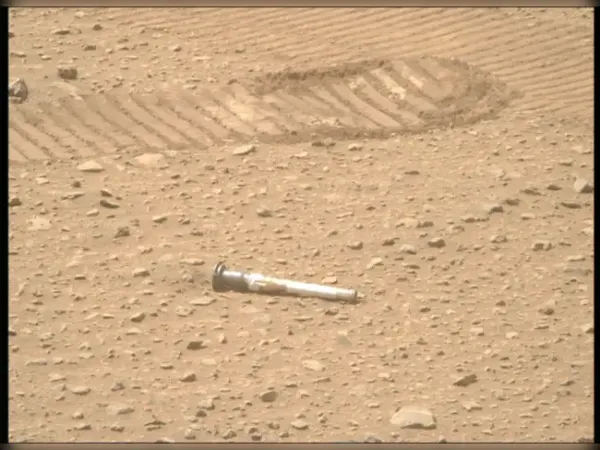
As of July 2025, the joint initiative has reportedly collected 33 titanium-sealed tubes, including rock cores, regolith, and atmospheric samples, containing cigar-sized material gathered by the Perseverance rover.
MSR would fulfill one of the highest priority solar system exploration goals from the science community. Returned samples would revolutionize our understanding of Mars and our solar system and prepare for human explorers to the Red Planet, NASA explains.
It will also answer a critical question of science: whether Mars, the seventh largest planet, was, is, or can be a habitable world.
The first step in Mars Sample Return began with NASA's Perseverance rover, which has been collecting and caching samples since landing on the Red Planet on Feb. 18, 2021. When additional NASA and ESA missions arrive (if they happen), the samples will be transferred and prepared for transport to Earth by an orbiter. Once back, they would undergo sophisticated laboratory analysis to look for indications of past life.
Scientists anticipate the samples would help answer some of the loftiest questions about planetary evolution and life: What conditions enabled life to develop? What were the planets like in our solar system at that time?
Researchers note that while life began evolving on Earth about 3.5 billion years ago, geological activity has erased much of that evidence. Mars, by contrast, contains rocks preserved from that era, making it a valuable archive for studying potential early life.
Although spacecraft already on Mars have analyzed rocks, instruments onboard must be small and durable enough for the harsh journey. Laboratories on Earth, however, can use far more sophisticated equipment. Moreover, scientists anticipate studying the samples returned to Earth across multiple facilities and generations.
NASA planned to return rock and soil samples from Mars in the 2030s, marking the first time scientific material from another planet is brought back to Earth, but its timeline is not clear.
Astronomy.com reported last year, citing NASA Administrator Bill Nelson and Nicky Fox, that a final mission profile would not be decided until mid-2026 at the earliest. The agency is weighing two “landing architectures,” one using NASA-proven technology and another involving commercial partners.
With that timeline, the European return orbiter could launch no earlier than 2030 and the lander/MAV no earlier than 2031, noted Space.com, citing Fox, who heads NASA’s Science Mission Directorate.
However, the project faces real uncertainty. In May 2025, the Donald Trump administration released its proposed 2026 budget for NASA. The plan called for widespread cuts, scrapping existing space missions, shelving many climate programs and ending the Mars Sample Return, which the administration described as “financially unstable," and instead favored eventually sending humans to Mars, according to Scientific American. The project's future now rests with Congress, which will decide whether to follow Trump's advice or save the troubled mission.
With all the uncertainties if that MSR happens, Perseverance's samples may not be the first pristine Mars material to reach Earth. China aims to launch its own sample-return mission in 2028, which could deliver samples as early as 2031.
Yet even as the mission brought excitement about future lunar exploration, because of its milestones and technical complexities, it is not the most 'ambitious mission' NASA has planned.
In addition to the traditional radio network, the spacecraft hosted the Orion Artemis II Optical Communications System, a laser communications terminal designed to transmit real science and crew data over laser links. Demonstrations like the recent Deep Space Optical Communications payload have shown that laser communications systems can send more than 100 times more data than comparable radio networks, even millions of miles from Earth, NASA explains.
While laser communications will not be on Artemis III, the Orion Artemis II Optical Communications System could pave the way for future laser communications systems on the Moon and even for Mars, where NASA’s most ambitious mission is planned, located 140 million miles away from Earth.
What is NASA’s most ambitious mission?
NASA’s ‘most ambitious’ project is the Mars Sample Return (MSR), a multi-mission campaign designed to bring carefully selected Martian samples back to Earth for the first time.
MSR would be NASA's and ESA’s (European Space Agency) joint venture to bring carefully selected Martian samples to Earth that may contain traces of life.
As of July 2025, the joint initiative has reportedly collected 33 titanium-sealed tubes, including rock cores, regolith, and atmospheric samples, containing cigar-sized material gathered by the Perseverance rover.
MSR would fulfill one of the highest priority solar system exploration goals from the science community. Returned samples would revolutionize our understanding of Mars and our solar system and prepare for human explorers to the Red Planet, NASA explains.
It will also answer a critical question of science: whether Mars, the seventh largest planet, was, is, or can be a habitable world.
NASA plans to witness history from 3.5 billion years ago
The first step in Mars Sample Return began with NASA's Perseverance rover, which has been collecting and caching samples since landing on the Red Planet on Feb. 18, 2021. When additional NASA and ESA missions arrive (if they happen), the samples will be transferred and prepared for transport to Earth by an orbiter. Once back, they would undergo sophisticated laboratory analysis to look for indications of past life.
Scientists anticipate the samples would help answer some of the loftiest questions about planetary evolution and life: What conditions enabled life to develop? What were the planets like in our solar system at that time?
Researchers note that while life began evolving on Earth about 3.5 billion years ago, geological activity has erased much of that evidence. Mars, by contrast, contains rocks preserved from that era, making it a valuable archive for studying potential early life.
Although spacecraft already on Mars have analyzed rocks, instruments onboard must be small and durable enough for the harsh journey. Laboratories on Earth, however, can use far more sophisticated equipment. Moreover, scientists anticipate studying the samples returned to Earth across multiple facilities and generations.
Mars Sample Return has a complex, costly timeline
NASA planned to return rock and soil samples from Mars in the 2030s, marking the first time scientific material from another planet is brought back to Earth, but its timeline is not clear.
Astronomy.com reported last year, citing NASA Administrator Bill Nelson and Nicky Fox, that a final mission profile would not be decided until mid-2026 at the earliest. The agency is weighing two “landing architectures,” one using NASA-proven technology and another involving commercial partners.
With that timeline, the European return orbiter could launch no earlier than 2030 and the lander/MAV no earlier than 2031, noted Space.com, citing Fox, who heads NASA’s Science Mission Directorate.
But MSR may never come home; there is an alternative, though
However, the project faces real uncertainty. In May 2025, the Donald Trump administration released its proposed 2026 budget for NASA. The plan called for widespread cuts, scrapping existing space missions, shelving many climate programs and ending the Mars Sample Return, which the administration described as “financially unstable," and instead favored eventually sending humans to Mars, according to Scientific American. The project's future now rests with Congress, which will decide whether to follow Trump's advice or save the troubled mission.
With all the uncertainties if that MSR happens, Perseverance's samples may not be the first pristine Mars material to reach Earth. China aims to launch its own sample-return mission in 2028, which could deliver samples as early as 2031.