Durable enterprises rarely begin with financial projections alone. They begin with a point of view, imagination. With a certain sensitivity to people, place and time. Even in sectors like real estate, hospitality, healthcare and retail, the most enduring outcomes don't arise from chasing margins. They emerge from nurturing ideas that carry cultural meaning. Commercial value follows, often quietly but consistently.
Today, this intuition is finding articulation in what is being described as India's 'orange economy' - the universe of creative industries spanning media, entertainment, design, gaming, live events, cultural programming and immersive experiences. Its inclusion in the latest Economic Survey signals a structural shift in how we understand growth.
Creativity is no longer a soft pursuit. It's economic infrastructure. Globally, the creative economy generates over $2 tn annually. In India, the media and entertainment industry has crossed $30 bn in 2024 and is projected to approach $47 bn by 2029, growing faster than global averages.
Industry bodies estimate that India's broader creative economy could reach $100 bn by 2030, generating over 5 mn jobs. Creative services exports, including animation, VFX and gaming, contribute more than $11 bn in export earnings.
But beyond numbers lies something more important. The 'orange economy' converts ideas into IP, and IP into livelihoods. Unlike extractive sectors, it is regenerative. A story can travel across generations. A festival can become an annual economic engine. A digital creation can scale globally without proportionate capital deployment. It is growth that compounds without depletion.
What makes this moment significant is the way creativity intersects with other sectors. It animates tourism, hospitality, retail, technology and urban development. A cultural festival does not merely celebrate art - it activates supply chains, generates employment, fills hotels, drives transport demand and revitalises public spaces.
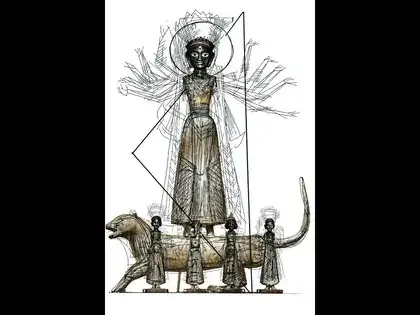
This can be witnessed first-hand in Kolkata, where Durga Puja - now recognised by Unesco as an 'Intangible Cultural Heritage of Humanity' - unleashes extraordinary creative energy each year. In 2025, its economic impact has been estimated at more than $7.2 bn. That is culture functioning as an economic catalyst.
Hospitality has become deeply intertwined with this shift. Experiences now precede destinations. Films, exhibitions, concerts and cultural narratives shape where people travel, how long they stay, and how deeply they engage. The future visitor is not a passive observer - she seeks participation in a story.
Cities that invest in cultural infrastructure - performance spaces, museums, studios, design districts - are not indulging in aesthetics. They are building economic resilience. Creativity, in this sense, is not decorative. It is strategic. Policy is beginning to recognise this convergence. Initiatives around animation, gaming and immersive technologies, the easing of permissions for live events and films, and the emphasis on experiential tourism signal a widening of India's growth framework. Yet, recognition must translate into ecosystem-building.
Three transitions become essential:
Creative capability is a national asset: Talent flourishes in environments that value design, narrative and expression, alongside engineering and analytics. The future creator will sit at the intersection of art, tech and entrepreneurship. Our institutions must prepare for that convergence deliberately.
Episodic to sustained: One-off summits generate visibility. What compounds economic value are repeatable, calendarised ecosystems - annual events, cultural districts and institutions that anchor activity over time.
Refine value measurement: The spill-over effects of creativity - employment generation, brand equity, soft power, cross-sector stimulation - are often undercounted. Yet, these are multipliers that strengthen a nation's competitive positioning over time.
For entrepreneurs, the lesson is subtle but clear. Meaning precedes margin. Projects rooted in cultural relevance tend to outlast those built purely on transactional logic. In an increasingly commoditised world, what differentiates is not product alone, but narrative and purpose.
India today stands at an inflection point. Manufacturing and traditional services will remain critical. But if we allow creativity to lead - not as an afterthought but as a strategic driver - the orange economy could become one of the defining pillars of our next phase of growth.
In the end, imagination is not a luxury. It is a form of foresight. And foresight, when nurtured patiently, has a way of becoming economic destiny.
Today, this intuition is finding articulation in what is being described as India's 'orange economy' - the universe of creative industries spanning media, entertainment, design, gaming, live events, cultural programming and immersive experiences. Its inclusion in the latest Economic Survey signals a structural shift in how we understand growth.
Creativity is no longer a soft pursuit. It's economic infrastructure. Globally, the creative economy generates over $2 tn annually. In India, the media and entertainment industry has crossed $30 bn in 2024 and is projected to approach $47 bn by 2029, growing faster than global averages.
Industry bodies estimate that India's broader creative economy could reach $100 bn by 2030, generating over 5 mn jobs. Creative services exports, including animation, VFX and gaming, contribute more than $11 bn in export earnings.
But beyond numbers lies something more important. The 'orange economy' converts ideas into IP, and IP into livelihoods. Unlike extractive sectors, it is regenerative. A story can travel across generations. A festival can become an annual economic engine. A digital creation can scale globally without proportionate capital deployment. It is growth that compounds without depletion.
What makes this moment significant is the way creativity intersects with other sectors. It animates tourism, hospitality, retail, technology and urban development. A cultural festival does not merely celebrate art - it activates supply chains, generates employment, fills hotels, drives transport demand and revitalises public spaces.
This can be witnessed first-hand in Kolkata, where Durga Puja - now recognised by Unesco as an 'Intangible Cultural Heritage of Humanity' - unleashes extraordinary creative energy each year. In 2025, its economic impact has been estimated at more than $7.2 bn. That is culture functioning as an economic catalyst.
Hospitality has become deeply intertwined with this shift. Experiences now precede destinations. Films, exhibitions, concerts and cultural narratives shape where people travel, how long they stay, and how deeply they engage. The future visitor is not a passive observer - she seeks participation in a story.
Cities that invest in cultural infrastructure - performance spaces, museums, studios, design districts - are not indulging in aesthetics. They are building economic resilience. Creativity, in this sense, is not decorative. It is strategic. Policy is beginning to recognise this convergence. Initiatives around animation, gaming and immersive technologies, the easing of permissions for live events and films, and the emphasis on experiential tourism signal a widening of India's growth framework. Yet, recognition must translate into ecosystem-building.
Three transitions become essential:
Creative capability is a national asset: Talent flourishes in environments that value design, narrative and expression, alongside engineering and analytics. The future creator will sit at the intersection of art, tech and entrepreneurship. Our institutions must prepare for that convergence deliberately.
Episodic to sustained: One-off summits generate visibility. What compounds economic value are repeatable, calendarised ecosystems - annual events, cultural districts and institutions that anchor activity over time.
Refine value measurement: The spill-over effects of creativity - employment generation, brand equity, soft power, cross-sector stimulation - are often undercounted. Yet, these are multipliers that strengthen a nation's competitive positioning over time.
For entrepreneurs, the lesson is subtle but clear. Meaning precedes margin. Projects rooted in cultural relevance tend to outlast those built purely on transactional logic. In an increasingly commoditised world, what differentiates is not product alone, but narrative and purpose.
India today stands at an inflection point. Manufacturing and traditional services will remain critical. But if we allow creativity to lead - not as an afterthought but as a strategic driver - the orange economy could become one of the defining pillars of our next phase of growth.
In the end, imagination is not a luxury. It is a form of foresight. And foresight, when nurtured patiently, has a way of becoming economic destiny.
(Disclaimer: The opinions expressed in this column are that of the writer. The facts and opinions expressed here do not reflect the views of www.economictimes.com.)




Harshavardhan Neotia
The author is chairman, Ambuja Neotia Group