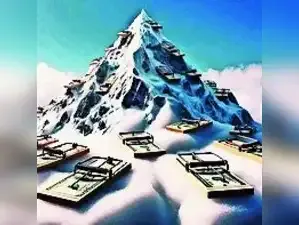
Mt Everest isn't just another peak to climb. Climbing it demands extreme convergence of physical endurance and psychological control, conditions only a small fraction of climbers can sustain at such an altitude that leads up to 29,031.7 ft. What makes Everest particularly compelling is also its historical entanglement with geopolitics. During the interwar period, institutions like Britain's Royal Geographical Society and Alpine Club framed expeditions as national endeavours, embedding them within a broader narrative of prestige and control. In doing so, the British empire effectively regulated who could attempt Everest, transforming it into a stage for imperial ambition rather than individual pursuit.
Today, Everest remains the ultimate aspiration for climbers. For Nepal's economy, it also functions as a key revenue-earner. Direct government earnings (permits) is $4-5 mn a year, and the total economic impact (tourism) is over $100 mn a year. This demand for adventure has fostered exploitative practices. Guides and operators have reportedly been adulterating food with substances like baking soda to induce symptoms resembling altitude sickness, thereby justifying unnecessary, expensive evacuations. These staged rescues are then used to inflate insurance claims, with operators billing each climber as though transported separately, even when flights are shared. Ambition and greed are slippery slopes.
This isn't something new. Nepal has faced concerns around sustainability of Everest tourism. A more disciplined regulatory approach is increasingly necessary, not only to preserve the fragile mountain ecosystem and ensure climber safety, but also to protect the long-term credibility of Everest as a global mountaineering destination.
Today, Everest remains the ultimate aspiration for climbers. For Nepal's economy, it also functions as a key revenue-earner. Direct government earnings (permits) is $4-5 mn a year, and the total economic impact (tourism) is over $100 mn a year. This demand for adventure has fostered exploitative practices. Guides and operators have reportedly been adulterating food with substances like baking soda to induce symptoms resembling altitude sickness, thereby justifying unnecessary, expensive evacuations. These staged rescues are then used to inflate insurance claims, with operators billing each climber as though transported separately, even when flights are shared. Ambition and greed are slippery slopes.
This isn't something new. Nepal has faced concerns around sustainability of Everest tourism. A more disciplined regulatory approach is increasingly necessary, not only to preserve the fragile mountain ecosystem and ensure climber safety, but also to protect the long-term credibility of Everest as a global mountaineering destination.