Shamsherganj and Lalgola constituencies in West Bengal’s Murshidabad district recorded the highest number of voter deletions following post-SIR judicial adjudication, while the tribal belt of Purulia-Jhargram saw the least removals, according to collated Election Commission of India data.
In Shamsherganj, 74,775 names were struck off from 1,08,400 under adjudication, followed by 55,420 deletions out of 99,082 in Lalgola. These figures form part of the broader purge of around 27 lakh voters reflected in supplementary rolls, taking the state’s total electorate to 6.7 crore.
Also Read: Manifesto: Rs 1,500 vs Rs 3,000 jobless benefit, 7th Pay Commission, how BJP plans to unseat TMC, Didi
Assembly-wise data shows that besides Murshidabad, significant deletions were reported from Malda, North Dinajpur, South 24-Parganas and Birbhum. Voter removals were also noted in Matua-dominated areas of North 24-Parganas and Nadia. In contrast, Purulia’s Manbazar saw only 71 deletions out of 2,771 cases under adjudication, while neighbouring Onda reported a deletion rate of just 1%.
Electoral rolls for the 142 constituencies going to polls in the second phase on April 29 were frozen on Thursday, with no further changes permitted until the elections conclude. Rolls for the remaining 152 constituencies, voting in the first phase, had already been sealed on April 6.
The Supreme Court of India is scheduled to hear the state government’s plea for review on April 13, offering a limited window of relief for those removed from the rolls.
The scale of deletions in Shamsherganj has drawn attention amid recent tensions in the area, including protests linked to the Waqf (Amendment) Act and clashes during Ram Navami processions. In neighbouring Malda, Mothabari emerged as another flashpoint after protests over bulk deletions turned violent on April 1, with more than 37,000 names removed out of 79,683 under scrutiny.
Several constituencies in Nadia district — including Krishnanagar North, Krishnanagar South and the Ranaghat segments — saw over 90% of those under adjudication excluded, while Bongaon assembly segments recorded deletion rates between 67% and 88%.
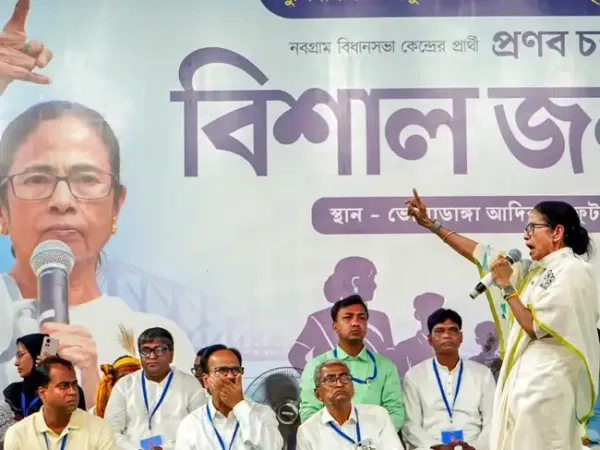
Since the data was released earlier this week, Chief Minister Mamata Banerjee has alleged “targeted exclusions”. Sukesh Chowdhury of the All India Matua Mahasangha said the deletions had triggered anxiety within the community, though the state government’s assurance of legal support offered some relief. BJP’s Bongaon unit leader Bikash Ghosh said affected voters would be assisted in approaching tribunals to restore their names.
Also Read: BJP West Bengal Assembly Election Manifesto 2026: Cash dole, jail for corrupt, & UCC dictate Amit Shah’s ‘sankalp patra’
Among high-profile constituencies, Bhowanipore in Kolkata and Nandigram in East Midnapore reported deletion rates below the state average. In Bhowanipore, where Banerjee is contesting against BJP’s Suvendu Adhikari, 3,893 of 14,154 names under adjudication were deleted, a rate of 27.5%. In Nandigram, where Adhikari is pitted against TMC’s Pabitra Sarkar, 3,461 of 10,616 voters under scrutiny — or 32.6% — were removed.
(With inputs from TOI)
In Shamsherganj, 74,775 names were struck off from 1,08,400 under adjudication, followed by 55,420 deletions out of 99,082 in Lalgola. These figures form part of the broader purge of around 27 lakh voters reflected in supplementary rolls, taking the state’s total electorate to 6.7 crore.
Also Read: Manifesto: Rs 1,500 vs Rs 3,000 jobless benefit, 7th Pay Commission, how BJP plans to unseat TMC, Didi
Assembly-wise data shows that besides Murshidabad, significant deletions were reported from Malda, North Dinajpur, South 24-Parganas and Birbhum. Voter removals were also noted in Matua-dominated areas of North 24-Parganas and Nadia. In contrast, Purulia’s Manbazar saw only 71 deletions out of 2,771 cases under adjudication, while neighbouring Onda reported a deletion rate of just 1%.
Electoral rolls for the 142 constituencies going to polls in the second phase on April 29 were frozen on Thursday, with no further changes permitted until the elections conclude. Rolls for the remaining 152 constituencies, voting in the first phase, had already been sealed on April 6.
The Supreme Court of India is scheduled to hear the state government’s plea for review on April 13, offering a limited window of relief for those removed from the rolls.
The scale of deletions in Shamsherganj has drawn attention amid recent tensions in the area, including protests linked to the Waqf (Amendment) Act and clashes during Ram Navami processions. In neighbouring Malda, Mothabari emerged as another flashpoint after protests over bulk deletions turned violent on April 1, with more than 37,000 names removed out of 79,683 under scrutiny.
Several constituencies in Nadia district — including Krishnanagar North, Krishnanagar South and the Ranaghat segments — saw over 90% of those under adjudication excluded, while Bongaon assembly segments recorded deletion rates between 67% and 88%.
Since the data was released earlier this week, Chief Minister Mamata Banerjee has alleged “targeted exclusions”. Sukesh Chowdhury of the All India Matua Mahasangha said the deletions had triggered anxiety within the community, though the state government’s assurance of legal support offered some relief. BJP’s Bongaon unit leader Bikash Ghosh said affected voters would be assisted in approaching tribunals to restore their names.
Also Read: BJP West Bengal Assembly Election Manifesto 2026: Cash dole, jail for corrupt, & UCC dictate Amit Shah’s ‘sankalp patra’
Among high-profile constituencies, Bhowanipore in Kolkata and Nandigram in East Midnapore reported deletion rates below the state average. In Bhowanipore, where Banerjee is contesting against BJP’s Suvendu Adhikari, 3,893 of 14,154 names under adjudication were deleted, a rate of 27.5%. In Nandigram, where Adhikari is pitted against TMC’s Pabitra Sarkar, 3,461 of 10,616 voters under scrutiny — or 32.6% — were removed.
(With inputs from TOI)