
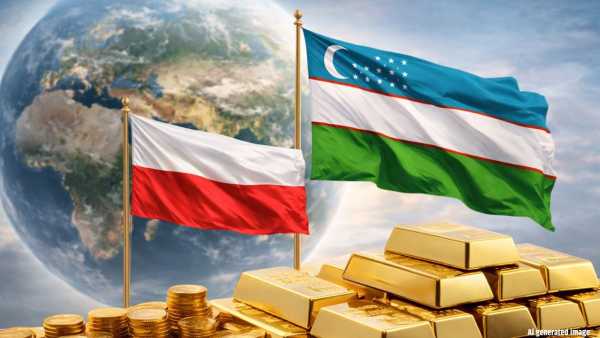
Whenever it comes to gold, the first names that come to our mind are retail buyers from India and China. But at the global level a different story is being written at the moment. Central banks around the world are quietly and aggressively increasing their gold reserves. In this historic race for gold, countries like Poland and Uzbekistan have gone ahead. In such a situation, it is very important to understand why governments around the world are suddenly accumulating so much gold.
The race to fill the safes, this 'gold rush' continues for 23 months
According to data from 'The Kobeissi Letter', the process of buying gold by central banks around the world continued for the 23rd consecutive month. In February this year alone, global central banks bought 19 tonnes of gold. Earlier in January also 6 tonnes of gold was purchased. That means, so far this year, 25 tonnes of gold has gone into the vaults of these banks.
The biggest surprise of this month was Poland. The Central Bank of Poland alone bought 20 tons of gold. Now he has a total of 570 tonnes of gold, which is about 31 percent of his total foreign exchange reserves (FX Reserves). Similarly, the Central Bank of Uzbekistan has also added 8 tonnes of gold to its coffers. Now Uzbekistan's gold reserves have increased to 407 tonnes, which is 88 percent of their total foreign exchange reserves.
China's silent move, Türkiye-Russia's helplessness
On the other hand, China, the world's second largest economy, is also not able to give up its old fascination for gold. China bought 1 tonne of gold in February, making purchases for the 16th consecutive month. Now China's total gold reserves have become 2,308 tonnes.
However, while on one hand buying is going on, some countries are also selling their gold under economic pressure. The biggest decline in gold reserves of Türkiye and Russia was recorded in February. Turkey sold 8 tons of gold and Russia sold 6 tons of gold. Turkey had to sell an estimated 120 tonnes of gold in March to meet the huge economic pressure and foreign exchange (FX) needs caused by the Iran war.
Gold price at Rs 1.51 lakh
Actually, the world is currently going through huge geopolitical tension. Due to the Iran war and tensions in the Middle East, peace agreements are in a very delicate phase. The US White House is indicating direct talks with Iran, but Israeli attacks in Lebanon have worsened the situation. The important trade route 'Strait of Hormuz' is almost closed.
Due to this international uncertainty, bullion is trading around $ 4,715 per ounce in the global market. After gaining 1.5% in the last two sessions, gold recently saw a marginal fall of 0.49% to Rs 1.51 lakh (silver also fell by 1.59%).
Standard Chartered analyst Emily Ashford believes that in this period of uncertainty, gold is performing the primary function of providing 'liquidity' in the market rather than as a safe haven. Experts say that the market recovery looks weak in the short term, but in the future, strong demand in the physical demand will support gold.
Read this also- Silver became cheaper by Rs 5,000 in one fell swoop, gold prices also fell, now the price has become this much
-
RPSC SI Answer Key 2026: Rajasthan Police Recruitment Exam Answer Key Released; Raise Objections by April 10..

-
'I'll Take Matters Into My Own Hands': Anil Kapoor’s JioHotstar Warning Post Sparks 24 Season 3 Buzz

-
Rhododendron Arboreum Blooms In Himalayas: Is It A Warning Sign?

-
Bessent, Powell warned bank CEOs about Anthropic model risks

-
Anthropic weighs building it own AI chips