
Criminals are still being given more time to challenge prison sentences than victims despite long-overdue changes, a campaigner has declared. Ministers on Wednesday confirmed victims' families will be given six months to challenge "unduly lenient" sentences, up from the current deadline of 28 days.
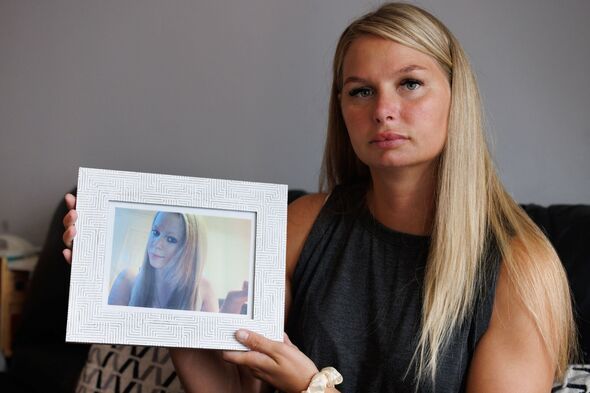
But some of Britain's most dangerous offenders will still have an "unlimited" amount of time if they believe they have been locked up for too long. Katie Brett, whose teenage sister Sasha Marsden was stabbed over 100 times by monster David Minto, said: "It's a step in the right direction, obviously it's a lot longer than 28 days, which was an insult.
"There's still a long way to go because the perpetrators of these offences still have longer... There's no limit for them, so it's still not completely equal.
"But it is a huge improvement to what it was.
"It gives victims' families some control back. It gives them some time to grieve. They can leave the trial, and there's no immediate need for them to ignore their grief and themselves, to focus on themselves and their families before they then start having to focus again on the perpetrator, who has already taken so much from them.
"If victims are restricted to six months, then I think perpetrators should be restricted as well. If they haven't submitted an appeal within six months, no matter what the extenuating circumstances are, it's tough, just like it will be for the victims."
Ms Brett paid tribute to her own mother, Jayne Marsden, who was still campaigning for the law change on the day she died, in March 2024.
The unduly lenient sentence scheme allows any member of the public to refer a sentence to the Attorney General and the Solicitor General - the Government's senior legal advisers - if they believe it is too lenient.
They can then request that the court of appeal review the sentence.
The Government will also introduce a legal duty in the Victims' Code to notify survivors of the existence of the scheme.
David Minto was sentenced to life with a minimum 35-year term in 2013 for murdering Ms Marsden, whom he lured to a hotel run by his girlfriend's mother, before sexually assaulting her and stabbing her so ferociously that she had to be identified by DNA from her toothbrush.
But he could have been eligible for a whole life order.
And Ms Brett said she hopes it will increase scrutiny on judges, to ensure some of Britain's most dangerous offenders are being locked up for long enough.
She told the Daily Express: "I hope it will ensure judges are held accountable because there is longer for sentences to be challenged.
"I think if they know that families now have longer, families are going to be informed so that if they are not happy, then the sentence that they have passed is going to be scrutinised and it's possibly going to be referred to the Court of Appeal.
"It's not going to look good for judges if a lot of their cases are being sent to the Court of Appeal and being classed as lenient sentences."
Justice Secretary David Lammy said victims and their families need "time to breathe" and get advice after a sentence is handed down.
"This change means they'll have more time to do this - and most importantly, get the justice they deserve," he added.
Alex Davies-Jones, the Victims' Minister and Sentencing Minister Jake Richards, said families "deserve a chance to be heard".
They said, in a joint article for the Daily Express: "We are giving the Attorney General more time to consider these challenges. If a request for review is made close to the new 6-month interests of justice route for victims and their bereaved families, they will have an extra 14 days to look at it - so serious cases get the careful attention they deserve.
"Most sentences are sound, and our judges do an incredibly difficult job very well and must be allowed to do so without the influence of politicians. But when a family believes a sentence falls short, they deserve a chance to be heard.
"This is about basic fairness and common sense. And this Government will do what it takes to make sure the system works for victims - not against them."
Describing her torment in the days after the trial, Ms Brett said: "We had to come away from the trial grieving, traumatised, in an absolute mess. We had found out all that information for the first time, at the same time as everybody else, and we were finally able to grieve.
"He was locked up in prison, he had been found guilty, as far as we were concerned, our battle was over."
-
Ibrahima Konate pleads for Premier League rule change after Liverpool defeat vs PSG

-
Child 'killed by dog bite' in UK town as armed police rush to destroy animal

-
Grand National racegoers party on as wind and rain batter Aintree

-
Rishabh Pant Commends LSG Stars After Thrilling IPL Victory Over KKR

-
Veer Ganapathy Shines at AM Green IGPL Invitational 2026 in Mauritius