- Crisis on ceasefire, Iran accuses America of breaking the terms
- Trump’s attack on NATO, questions raised on alliance if cooperation is not received
Tehran/Washington/Beirut. The situation in West Asia is deteriorating rapidly and the region seems to be moving towards a major war. Israel’s latest air strikes on Lebanon, the shaky ceasefire between Iran and America and the growing differences over NATO have deepened the concern at the global level. The international community is continuously appealing for restraint, but the ground situation appears to be the opposite.
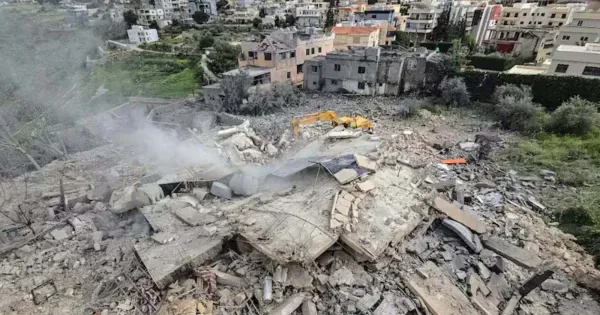
According to media reports, at least 254 people have died in air strikes carried out by Israel in Lebanon, while more than 1,165 people have been injured. Several neighborhoods and southern suburbs of the capital Beirut were targeted. After these attacks, Hezbollah has given a strong reaction and said that it has the full right to retaliate. Due to this, the possibility of further intensification of conflict in the region has increased and tension in the border areas has reached its peak.
Meanwhile, Turkey condemned the Israeli attacks, saying that this has deepened the humanitarian crisis. Turkey has reiterated support for Lebanon’s sovereignty and territorial integrity and called for international intervention.
Amidst this atmosphere of tension, the 14-day ceasefire announced between Iran and America is also in trouble. Iran has accused America and Israel of violating the terms of the agreement. Iran says that the ongoing attacks in Lebanon, the presence of drones in its airspace and putting pressure on the nuclear program are against the spirit of the ceasefire.
Iranian Parliament Speaker Mohammad Bagher Ghalibaf said that these incidents had made the talks ‘useless’. Iran’s Foreign Minister Abbas Araghchi has given a blunt message to America saying that it will have to choose between ‘ceasefire or war’. His statement is being seen as a sign of increasing conflict in the region.
On the other hand, Donald Trump has indicated that until a concrete agreement is implemented, the US military will remain deployed in the region at full capacity. He also warned that if the conditions were not followed, the situation could turn violent again. The fear of Iran closing the Strait of Hormuz has also increased the turmoil in the global oil market and a surge in crude oil prices is being seen.
Meanwhile, differences between America and NATO have also come to the fore. After meeting with NATO Secretary General Mark Rutte at the White House, Trump alleged that NATO countries did not support America enough during the Iran crisis. He even hinted that the US might consider pulling out of NATO, raising questions about the unity of the Western alliance.
Trump also reiterated his old intention regarding Greenland and described it as strategically important, which has sparked a new debate in international politics. Although NATO has said that European countries have provided military and logistics assistance, there is clearly mistrust between the two sides.
Experts believe that if the increasing violence in Lebanon, tensions between Iran and America and differences between Western countries continue like this, then this conflict could take the form of a wider regional war. Many global organizations including the United Nations are continuously appealing for restoration of peace, but looking at the situation, the solution does not seem easy in the near future. At present, the eyes of the world are fixed on whether diplomatic efforts will be able to handle the situation or whether the situation will worsen.
-
Artemis II's historic journey around moon ends with dramatic splashdown

-
Artemis II's historic journey around moon ends with dramatic splashdown

-
I ditched spaghetti in carbonara for healthy alternative that's much more filling

-
Bihar Judicial Services Recruitment: 173 Civil Judge Positions Available

-
NCH Vacancy 2026: Recruitment Announced at the National Institute of Homoeopathy, Delhi, for Various Posts Including Deputy Officer..