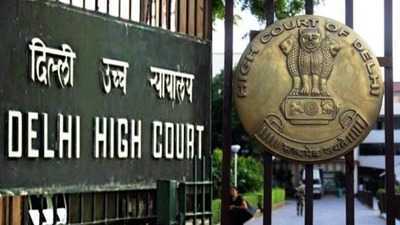
Copyright for AI artwork? Delhi HC seeks Copyright Office's decision
09 Apr 2026
The Delhi High Court has ordered the Copyright Office to decide on a copyright application for an AI-generated artwork within eight weeks.
The application was filed by American artificial intelligence (AI) researcher Stephen Thaler, who seeks copyright recognition for his work, A Recent Entrance to Paradise.
The artwork was created by Thaler's AI system, DABUS (Device for the Autonomous Bootstrapping of Unified Sentience).
HC disposed of Thaler's petition
Legal directive
Justice Tushar Rao Gedela of the Delhi High Court disposed of Thaler's petition after noting that the Copyright Office has scheduled a hearing for April 27, 2026.
The court directed the Registrar of Copyrights to conclude proceedings expeditiously, preferably within eight weeks from the date of hearing.
The case raises questions about whether AI-generated works can be recognized under India's Copyright Act, 1957.
Thaler seeks directions to authorities to process application
Application delay
Thaler's copyright application has been pending since 2022 without a decision. He is seeking directions to authorities to process and decide the application according to the law.
The case highlights a key legal issue: whether AI-generated works can be recognized under India's copyright framework, which traditionally attributes authorship to natural persons.
While the law recognizes "computer-generated works," it does not specifically address authorship by non-human entities.
Thaler argued AI-generated works fall under 'computer-generated works'
Authorship debate
During examination, objections were raised that only natural persons can be recognized as authors.
However, Thaler argued that AI-generated works fall under "computer-generated works," where authorship may vest in the person who causes the work to be created.
He is a key player in global efforts to test intellectual property law boundaries concerning AI and has filed multiple applications, seeking recognition of AI systems as inventors or authors.
Courts, patent offices in US, UK rejected requests
International stance
Courts and patent offices in the United States, United Kingdom, and European Union have rejected such requests.
The Delhi High Court case is one of the first in India to directly address copyright protection for AI-generated works.
Its outcome could have far-reaching implications for Indian law on authorship, ownership, and registrability of such content.
-
Aries, Taurus, Gemini Horoscope Today – 10th April 2026: Career Shifts, Emotional Clarity & Major Decisions
-
IMF to cut global growth forecast due to Mideast war

-
Cancer, Leo, Virgo Horoscope Today – 10th April 2026: Emotional Shifts, Career Focus & Creative Breakthroughs
-
MBBS student says his bluetooth earphones ‘burst’ inside ear, triggers eardrum inflammation: What happened

-
ETtech Explainer: How Meta's Muse Spark fares against Anthropic's Opus, OpenAI's GPT, Google's Gemini models