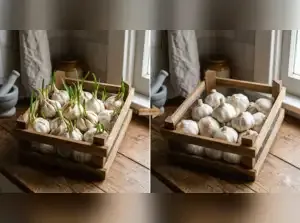
There's an uneasy feeling when looking for an onion bulb and then finding sprouts of green pushing up through the soft dead cloves. If you're a home cook who is juggling a variety of tasks, this tiny problem in the kitchen can cause chaos during preparation of meals and cost cash. Garlic, an ingredient that is used in many meals including comforting curries and thick pasta sauces, can be extremely sensitive to the way it is kept. It's good to know that just one change could dramatically increase the shelf life of your garlic and help keep it delicious, fresh and sputter-free for a few weeks, even for months.
Why Garlic Sprouts and Loses Its Flavor
Garlic sprouting isn't a unnatural occurrence, but instead a biological process. Each clove has a dormant embryo of the plant in wait for the perfect conditions for it to flourish. If exposed to heat or moisture the garlic perceives this as the onset of spring. It then starts to grow. When this process starts it redirects the stored energy into the newly formed new green shoot. It leaves the rest of its skin dry, less potent and sometimes tasting bitter.
Research conducted by research conducted by the Postharvest Research and Extension Center located at the University of California, Davis in the United States explains this process in depth. The study they conducted on storage of garlic shows that temperatures higher than 68 degrees increase enzyme activity and respiration that accelerates the process of sprouting. This problem is common for many families where the temperatures in the pantry hover at around 70 degF and, without consciously doing so, create ideal conditions for the garlic to spoil.
In addition, research studies published by LifeTips show that garlic sprouts can be able to lose as much as 30 percent of allicin-rich content. Allicin is the substance that gives garlic its distinctive aroma and a host of advantages, such as antibacterial benefits. If garlic grows it is not only losing taste and texture, but also the nutritional value.
The Common Storage Mistake That Makes It Worse
Most people will store their garlic in the fridge in the hope that colder temperatures would keep it in good condition. This can have an opposite result. Based on Cornell Small Farms Program Cornell Small Farms Program at Cornell University in the United States storage of garlic at temperatures in temperatures lower than 50degF may trigger the sprouting due to the cold that mimics winter conditions and signals to the garlic that it's the right appropriate to begin growing when temperatures begin to rise.
In the same way to also, University of California Agriculture and Natural Resources publication entitled Garlic: Secure Methods to Conserve, Store and Eat confirms that refrigerating increases the likelihood of sprouting, rather than hindering it. It means that the typical routine of keeping garlic in the refrigerator can reduce the duration of its use.
The One Simple Change That Makes All the Difference
The most important factor in maintaining fresh garlic is creating the ideal post-harvest setting. Research consistently suggests an extremely narrow, but efficient spectrum of temperatures. Garlic needs to be kept within a cooler area between 55 and 65 degrees F that is, with moderate humidity and sufficient circulation of air. Garlic should also be stored in dark conditions in order to avoid premature growth.
This approach is backed by a 2025 research study entitled Comportamiento of the visual indice de dormicion y factors fisicoquimicos de bulbs de ajo that was conducted by Figueroa Gonzalez as well as colleagues from the Universidad Autonoma de Queretaro in Mexico. This research showed that low-temperature storage can significantly delay sprouting and preserving antioxidants, thus extending the shelf-life of garlic for 120 days.
Additional evidence of this comes from the studies conducted across the globe that was published in Journal of Food Science and Technology in which it was observed that storage with low temperature decreases the rate of respiration and slows growing for long durations. Although these exact conditions are commonly used in commercial settings however, the advice for homeowners kitchens is easy: pick the driest, coolest and darkest place and ensure adequate airflow.
How This Works in Everyday Kitchens
Implementing this strategy at home doesn't require the use of any equipment or steps that are complicated. A pantry shelf that is well ventilated an area in your basement or even a storage space can be used provided it remains within the suggested temperatures. It is important to stay clear of sealing plastic bags or sealed containers that hold moisture and can cause spoilage.
Garlic that is stored in or in open baskets benefit from consistent circulation of air, which prevents either mold or sprouting. It is important to keep it out of the reach of potato and onion is vital, because they emit gasses that may encourage the sprouting.
It is noted that the Cornell Small Farms Program notes that a pantry without heating or garage can provide the ideal environment, particularly when indoor temperatures vary. If properly stored the garlic is able to be used for up to three months without losing its taste or texture.
What Science Reveals About Longevity
The research behind storage of garlic continues to develop and research like Shelf Life Predictions of dried garlic powder under accelerated Storage Conditions conducted by S. Kar in India giving deeper understanding of how humidity and temperature affect the longevity of garlic. Though the research is focused on processing garlic, these findings highlight the necessity of regulating the environment to ensure high quality throughout time.
Researchers consistently stress that airflow is a crucial factor. If it isn't there, even damaged garlic may begin to decay rapidly. The proper ventilation, in conjunction with steady temperatures and moderate humidity ensures the perfect environment that allows garlic to remain dormant instead of encouraging the growth of garlic.
A small shift with a huge Impact
When it comes to something as basic like garlic, the gap between freshness and a long-lasting waste can be attributed to a single change. The removal of it from the refrigerator to a dry, cool airy, dark area can alter the length of time it keeps and how it works in preparations.
Instead of having to deal in bitter, swollen cloves, it is possible to take advantage of garlic's peak flavour for a few months. This little change will not only cut down on food waste, it also assures that each dish you cook gets the full benefit of garlic's aroma and nutritional properties.
image Credit - Gemini
Why Garlic Sprouts and Loses Its Flavor
Garlic sprouting isn't a unnatural occurrence, but instead a biological process. Each clove has a dormant embryo of the plant in wait for the perfect conditions for it to flourish. If exposed to heat or moisture the garlic perceives this as the onset of spring. It then starts to grow. When this process starts it redirects the stored energy into the newly formed new green shoot. It leaves the rest of its skin dry, less potent and sometimes tasting bitter.
Research conducted by research conducted by the Postharvest Research and Extension Center located at the University of California, Davis in the United States explains this process in depth. The study they conducted on storage of garlic shows that temperatures higher than 68 degrees increase enzyme activity and respiration that accelerates the process of sprouting. This problem is common for many families where the temperatures in the pantry hover at around 70 degF and, without consciously doing so, create ideal conditions for the garlic to spoil.
In addition, research studies published by LifeTips show that garlic sprouts can be able to lose as much as 30 percent of allicin-rich content. Allicin is the substance that gives garlic its distinctive aroma and a host of advantages, such as antibacterial benefits. If garlic grows it is not only losing taste and texture, but also the nutritional value.
The Common Storage Mistake That Makes It Worse
Most people will store their garlic in the fridge in the hope that colder temperatures would keep it in good condition. This can have an opposite result. Based on Cornell Small Farms Program Cornell Small Farms Program at Cornell University in the United States storage of garlic at temperatures in temperatures lower than 50degF may trigger the sprouting due to the cold that mimics winter conditions and signals to the garlic that it's the right appropriate to begin growing when temperatures begin to rise.
In the same way to also, University of California Agriculture and Natural Resources publication entitled Garlic: Secure Methods to Conserve, Store and Eat confirms that refrigerating increases the likelihood of sprouting, rather than hindering it. It means that the typical routine of keeping garlic in the refrigerator can reduce the duration of its use.
The One Simple Change That Makes All the Difference
The most important factor in maintaining fresh garlic is creating the ideal post-harvest setting. Research consistently suggests an extremely narrow, but efficient spectrum of temperatures. Garlic needs to be kept within a cooler area between 55 and 65 degrees F that is, with moderate humidity and sufficient circulation of air. Garlic should also be stored in dark conditions in order to avoid premature growth.
This approach is backed by a 2025 research study entitled Comportamiento of the visual indice de dormicion y factors fisicoquimicos de bulbs de ajo that was conducted by Figueroa Gonzalez as well as colleagues from the Universidad Autonoma de Queretaro in Mexico. This research showed that low-temperature storage can significantly delay sprouting and preserving antioxidants, thus extending the shelf-life of garlic for 120 days.
Additional evidence of this comes from the studies conducted across the globe that was published in Journal of Food Science and Technology in which it was observed that storage with low temperature decreases the rate of respiration and slows growing for long durations. Although these exact conditions are commonly used in commercial settings however, the advice for homeowners kitchens is easy: pick the driest, coolest and darkest place and ensure adequate airflow.
How This Works in Everyday Kitchens
Implementing this strategy at home doesn't require the use of any equipment or steps that are complicated. A pantry shelf that is well ventilated an area in your basement or even a storage space can be used provided it remains within the suggested temperatures. It is important to stay clear of sealing plastic bags or sealed containers that hold moisture and can cause spoilage.
Garlic that is stored in or in open baskets benefit from consistent circulation of air, which prevents either mold or sprouting. It is important to keep it out of the reach of potato and onion is vital, because they emit gasses that may encourage the sprouting.
It is noted that the Cornell Small Farms Program notes that a pantry without heating or garage can provide the ideal environment, particularly when indoor temperatures vary. If properly stored the garlic is able to be used for up to three months without losing its taste or texture.
What Science Reveals About Longevity
The research behind storage of garlic continues to develop and research like Shelf Life Predictions of dried garlic powder under accelerated Storage Conditions conducted by S. Kar in India giving deeper understanding of how humidity and temperature affect the longevity of garlic. Though the research is focused on processing garlic, these findings highlight the necessity of regulating the environment to ensure high quality throughout time.
Researchers consistently stress that airflow is a crucial factor. If it isn't there, even damaged garlic may begin to decay rapidly. The proper ventilation, in conjunction with steady temperatures and moderate humidity ensures the perfect environment that allows garlic to remain dormant instead of encouraging the growth of garlic.
A small shift with a huge Impact
When it comes to something as basic like garlic, the gap between freshness and a long-lasting waste can be attributed to a single change. The removal of it from the refrigerator to a dry, cool airy, dark area can alter the length of time it keeps and how it works in preparations.
Instead of having to deal in bitter, swollen cloves, it is possible to take advantage of garlic's peak flavour for a few months. This little change will not only cut down on food waste, it also assures that each dish you cook gets the full benefit of garlic's aroma and nutritional properties.