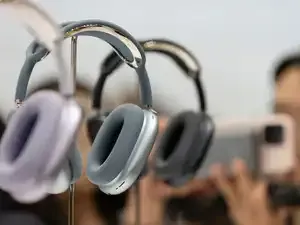
Apple Inc.’s AirPods Max 2 — the first substantial update to the company’s $549 headphones — don’t represent an upgrade-worthy sequel but should intrigue customers looking to buy the brand’s over-ear offering for the first time.
Apple released the first AirPods Max in 2020, hoping to replicate the enormous success of its wireless earbuds in a different style. They had a striking design with aluminum-clad ear cups, removable fabric ear pads and a mesh headband — as well as a price tag that led to them becoming a status symbol.
Apple let half a decade go by with nothing more than a move from Lightning to USB-C, while competitors raced to launch more affordable options. The latest versions from Bose Corp. and Sony Group Corp. include top-notch noise cancellation, while Sonos Inc. has closed in on build quality.
The main weaknesses of the first AirPods Max, like its hefty design and ineffective storage case, would have been easy to address, and the stage was set for Apple to deliver a true sequel. Instead, the AirPods Max 2 present little more than a bare-minimum upgrade.
They’re powered by the same H2 chip introduced on the AirPods Pro 2, resulting in significantly improved noise cancellation. And they’ve caught up to the AirPods Pro with some new software tricks. But most everything else — including the hardware design, battery life and impractical “smart case” — remains identical all these years later.
In some ways, this makes for an easy buying decision: If you own the original AirPods Max, there’s no need to buy the new model. If you don’t have it and you’re in the market for new headphones, take a look at the AirPods Max 2 — as long as you’re entrenched in the Apple ecosystem and willing to pay a premium. Everyone else is better off sticking with less expensive, more comfortable options.
Better noise cancellation: The more powerful noise cancellation was immediately noticeable and did a better job at offering me some quiet in cafes, train stations and the streets of Manhattan. Bose’s latest QuietComfort Ultra Headphones ($449) and Sony’s $460 WH-1000XM6 had the edge before, but Apple is back in the mix now. I’d say Bose still ekes out a victory, but just barely.
More natural transparency mode: Apple’s headphones were already best in class at piping in the outside world to give the user better situational awareness, and the AirPods Max 2 are even better. Apple outclasses all competitors here, and it’s not close.
Refined sound: The drivers in the headphones are unchanged, but the H2 chip and a new amplifier in the AirPods Max 2 allow for deeper bass extension, better instrument separation, and a cleaner overall sound. For audiophiles, the AirPods Max 2 still support lossless audio over a wired USB-C connection, but most people won’t notice a difference. Out of the box, I’d pick the AirPods Max 2 over Sony and Bose, but Sony lets you fine-tune the EQ settings in a way that Apple doesn’t, which makes the 1000XM6 more versatile.
Unchanged battery life: The AirPods Max 2 is rated to last as long as 20 hours on a charge, which will be plenty for most people. Still, competitors have advertised playback time that exceeds the 30-, 40- and even 60-hour mark. Apple’s estimate has been accurate in my tests, but if maximum endurance is critical, look elsewhere. What’s more, there’s no power button; you have to lay the headphones down flat and wait for them to automatically turn off.
Bizarre case design: Apple includes a “smart case” that offers little meaningful protection for the headphones. You’re better off with a third-party case, though they can be expensive.
Durability questions remain: Some owners of past AirPods Max headphones have raised concerns about the headset attracting condensation beneath the removable ear pads. For some, the headband has lost its elasticity over time and started to sag. Since Apple has made zero changes to the hardware, both of these issues could eventually affect AirPods Max 2 buyers. (Given the weight, I’d rule out using them at the gym regardless.)
Upgraded Chip, Familiar Features
Moving up to a more powerful chip brings numerous features to the AirPods Max that AirPods Pro owners have enjoyed for several years. They include:
Adaptive audio, which automatically balances the mix of noise canceling and transparency based on your current environment. I rarely use this feature and tend to prefer choosing one mode or the other.
Conversation awareness, which knows when you’re speaking, and then lowers the volume and makes people nearby easier to hear. This is convenient, but I still feel rude when speaking to someone with my headphones on, so I tend to drop them around my neck.
Loud sound reduction brings down the intensity of ear-piercing sounds like construction or emergency sirens. I’m a big fan of this feature and appreciate that it’s always enabled without a toggle to worry about.
Live translation can be helpful when you’re traveling abroad, playing the translation of what someone is saying in your native language through the headphones. You’ll need to put some trust in Apple’s Translate app when it comes to accuracy, but the headphones serve their role well.
“Studio-quality” audio recording helps make your voice sound more natural and textured if you’re using the AirPods Max 2 to record a podcast, but it’s still no match for the Rode microphone I have at my office desk.
But the question I keep returning to is: What took so long? To me, the AirPods Max 2 are what the USB-C refresh in 2024 should have been: a modern connector combined with noticeably better noise cancellation, slightly better sound and a handful of new software capabilities. These end up feeling like AirPods Max 1.5 more than a proper sequel.
When you consider that competitors like Sony already offer a few of these features (like speech detection) in headphones that cost about $100 less — with sound quality and noise cancellation that’s basically on par — the AirPods Max 2 are a hard sell for most. Unless you take advantage of every last Apple ecosystem trick, I’d recommend more affordable options.
Apple released the first AirPods Max in 2020, hoping to replicate the enormous success of its wireless earbuds in a different style. They had a striking design with aluminum-clad ear cups, removable fabric ear pads and a mesh headband — as well as a price tag that led to them becoming a status symbol.
Apple let half a decade go by with nothing more than a move from Lightning to USB-C, while competitors raced to launch more affordable options. The latest versions from Bose Corp. and Sony Group Corp. include top-notch noise cancellation, while Sonos Inc. has closed in on build quality.
The main weaknesses of the first AirPods Max, like its hefty design and ineffective storage case, would have been easy to address, and the stage was set for Apple to deliver a true sequel. Instead, the AirPods Max 2 present little more than a bare-minimum upgrade.
They’re powered by the same H2 chip introduced on the AirPods Pro 2, resulting in significantly improved noise cancellation. And they’ve caught up to the AirPods Pro with some new software tricks. But most everything else — including the hardware design, battery life and impractical “smart case” — remains identical all these years later.
In some ways, this makes for an easy buying decision: If you own the original AirPods Max, there’s no need to buy the new model. If you don’t have it and you’re in the market for new headphones, take a look at the AirPods Max 2 — as long as you’re entrenched in the Apple ecosystem and willing to pay a premium. Everyone else is better off sticking with less expensive, more comfortable options.
Here are my biggest takeaways after a week of testing the AirPods Max 2:
Stylish but not always comfortable: After a week of testing, I’ve found the AirPods Max 2 can still be fatiguing to wear. Sure, those aluminum ear cups are well made and look stylish, but I care less about aesthetics than I do comfort. That said, I appreciate the fabric ear pads, which don’t make my ears sweat like other headphones in warmer temperatures.Better noise cancellation: The more powerful noise cancellation was immediately noticeable and did a better job at offering me some quiet in cafes, train stations and the streets of Manhattan. Bose’s latest QuietComfort Ultra Headphones ($449) and Sony’s $460 WH-1000XM6 had the edge before, but Apple is back in the mix now. I’d say Bose still ekes out a victory, but just barely.
More natural transparency mode: Apple’s headphones were already best in class at piping in the outside world to give the user better situational awareness, and the AirPods Max 2 are even better. Apple outclasses all competitors here, and it’s not close.
Refined sound: The drivers in the headphones are unchanged, but the H2 chip and a new amplifier in the AirPods Max 2 allow for deeper bass extension, better instrument separation, and a cleaner overall sound. For audiophiles, the AirPods Max 2 still support lossless audio over a wired USB-C connection, but most people won’t notice a difference. Out of the box, I’d pick the AirPods Max 2 over Sony and Bose, but Sony lets you fine-tune the EQ settings in a way that Apple doesn’t, which makes the 1000XM6 more versatile.
Unchanged battery life: The AirPods Max 2 is rated to last as long as 20 hours on a charge, which will be plenty for most people. Still, competitors have advertised playback time that exceeds the 30-, 40- and even 60-hour mark. Apple’s estimate has been accurate in my tests, but if maximum endurance is critical, look elsewhere. What’s more, there’s no power button; you have to lay the headphones down flat and wait for them to automatically turn off.
Bizarre case design: Apple includes a “smart case” that offers little meaningful protection for the headphones. You’re better off with a third-party case, though they can be expensive.
Durability questions remain: Some owners of past AirPods Max headphones have raised concerns about the headset attracting condensation beneath the removable ear pads. For some, the headband has lost its elasticity over time and started to sag. Since Apple has made zero changes to the hardware, both of these issues could eventually affect AirPods Max 2 buyers. (Given the weight, I’d rule out using them at the gym regardless.)
Upgraded Chip, Familiar Features
Moving up to a more powerful chip brings numerous features to the AirPods Max that AirPods Pro owners have enjoyed for several years. They include:
Adaptive audio, which automatically balances the mix of noise canceling and transparency based on your current environment. I rarely use this feature and tend to prefer choosing one mode or the other.
Conversation awareness, which knows when you’re speaking, and then lowers the volume and makes people nearby easier to hear. This is convenient, but I still feel rude when speaking to someone with my headphones on, so I tend to drop them around my neck.
Loud sound reduction brings down the intensity of ear-piercing sounds like construction or emergency sirens. I’m a big fan of this feature and appreciate that it’s always enabled without a toggle to worry about.
Live translation can be helpful when you’re traveling abroad, playing the translation of what someone is saying in your native language through the headphones. You’ll need to put some trust in Apple’s Translate app when it comes to accuracy, but the headphones serve their role well.
“Studio-quality” audio recording helps make your voice sound more natural and textured if you’re using the AirPods Max 2 to record a podcast, but it’s still no match for the Rode microphone I have at my office desk.
But the question I keep returning to is: What took so long? To me, the AirPods Max 2 are what the USB-C refresh in 2024 should have been: a modern connector combined with noticeably better noise cancellation, slightly better sound and a handful of new software capabilities. These end up feeling like AirPods Max 1.5 more than a proper sequel.
When you consider that competitors like Sony already offer a few of these features (like speech detection) in headphones that cost about $100 less — with sound quality and noise cancellation that’s basically on par — the AirPods Max 2 are a hard sell for most. Unless you take advantage of every last Apple ecosystem trick, I’d recommend more affordable options.