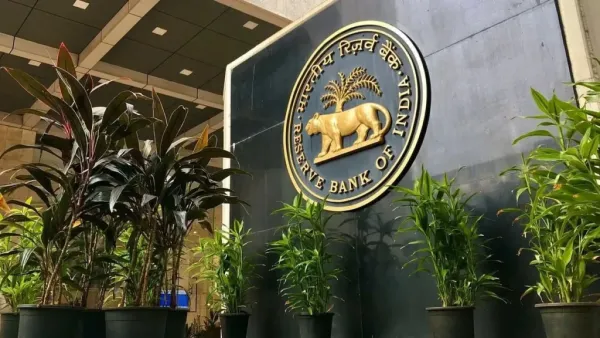
The Reserve Bank of India’s Monetary Policy Committee has left the benchmark repo rate unchanged at 5.25 percent in a unanimous decision on April 8, 2026, the second consecutive hold after the first pause in February this year. The decision maintains the SDF rate at 5 percent and the MSF rate at 5.5 percent, with the policy stance kept at neutral. This is the first monetary policy decision taken since the US-Iran war began on February 28, and it comes on the same morning that a two-week pause in hostilities was announced, the most significant diplomatic development of the 39-day conflict.
The Rate Decision in Context
The hold at 5.25 percent means that in four of the last five policy meetings, the MPC has left rates unchanged. The only rate action in that period was a series of cuts totalling 125 basis points across February, April, June, and December 2025, which brought the repo rate down from 6.5 percent to its current 5.25 percent level. The December 2025 cut was followed by a February 2026 pause and now a second consecutive hold in April 2026.
The unanimity of today’s decision is significant. All six MPC members, both the RBI’s internal members and the three external members, agreed that holding rates at 5.25 percent was the appropriate response to the current environment. In previous MPC meetings where the decision was close or contested, dissenting votes have provided forward guidance about the direction of future policy. A unanimous hold suggests the committee is genuinely uncertain about the next move and unwilling to signal direction in either a cutting or hiking bias.
Why the RBI Held
The hold reflects the impossible monetary policy position that the Iran war has created for India’s central bank. Input cost inflation hit a 45-month high in March 2026 as fuel, transport, and logistics costs surged from the Strait of Hormuz closure and crude oil’s rise toward $115 per barrel. A below normal monsoon forecast from Skymet threatens to add food inflation on top of energy inflation through the second half of 2026. And the rupee at record lows near 95 per dollar has been making every import more expensive in rupee terms.
Cutting rates in this environment risks accelerating rupee depreciation, widening the current account deficit further, and adding domestic monetary stimulus to an inflation problem that is already being driven by supply-side energy shocks. The RBI cannot responsibly add demand-side fuel to an inflation fire that is already burning from the supply side.
At the same time, holding rates while growth momentum is visibly slowing accepts a growth cost. The HSBC India Composite PMI fell to a three-and-a-half-year low of 57.0 in March, with businesses explicitly citing the Middle East war’s impact on demand, market conditions, and tourism as growth constraints. A unanimous hold accepts that cost as the price of inflation and currency stability.
Governor Malhotra’s Key Statements
RBI Governor Sanjay Malhotra’s policy address today contained two statements that will dominate the post-MPC market conversation.
The first is his assertion that the fundamentals of the Indian economy remain on a firm footing, providing it with the strength to withstand shocks. This is the RBI’s official reassurance that despite the Iran war’s economic impact, India’s macroeconomic foundations including its fiscal position, foreign exchange reserves, banking system health, and structural growth drivers remain intact.
The second and more concerning statement is his warning that the initial supply shock may potentially become a demand shock in the future in case there is a prolonged delay in the restoration of supply chains. This is Governor Malhotra explicitly flagging the stagflation risk in central bank language. A supply shock drives inflation through higher input costs without necessarily reducing economic activity immediately. A demand shock reduces economic activity through reduced consumer and business spending. If the Iran war’s supply disruption prolongs for months rather than weeks, the combination of both shocks simultaneously would create exactly the stagflation trap that monetary policy is least equipped to address.
The Two-Week Ceasefire Pause Context
Today’s MPC decision is being made on the morning that a two-week pause in Iran war hostilities was announced, the first significant de-escalation signal in 39 days of conflict. The pause, if it holds and leads to a comprehensive settlement, would change the RBI’s policy calculus significantly at its next meeting in June.
If the two-week pause produces a genuine ceasefire and Strait of Hormuz reopening, crude oil prices will fall, the rupee will strengthen from its record lows, inflation expectations will moderate, and the RBI will have the space to consider resuming its rate cutting cycle that was interrupted by the war. In that scenario, a June rate cut becomes possible and the neutral stance maintained today would shift toward an accommodative tilt.
If the two-week pause breaks down and hostilities resume, the inflation and currency pressure that justified today’s hold intensifies further, and the RBI faces a more difficult decision in June with potentially higher inflation, a weaker rupee, and slower growth than today’s data showed.
Governor Malhotra’s statement that the RBI continues to remain vigilant to ongoing developments and assess incoming information is the central bank’s acknowledgment that the next two weeks, the duration of the ceasefire pause, will be among the most consequential fortnight for Indian monetary policy in recent memory.
What This Means for Borrowers and Markets
For home loan borrowers, personal loan holders, and businesses with floating rate credit, today’s unanimous hold means no immediate change in EMIs or borrowing costs. The repo rate at 5.25 percent means the external benchmark lending rates linked to it remain at current levels. The next rate decision is June 2026, and its direction will be determined largely by whether the Iran war ceasefire holds.
For bond markets, the neutral stance and unanimous hold without a hawkish tilt is marginally positive. The absence of any rate hike signal means the bond market’s base case of eventual rate cuts in late 2026 or early 2027 remains intact, supporting bond prices at current levels.
For equity markets, the hold is broadly neutral with the focus now shifting entirely to the ceasefire pause and its durability rather than monetary policy for the immediate term.
This article is based on the RBI Monetary Policy Committee decision announced on April 8, 2026. All rate figures are as officially announced. This article is for informational purposes only and does not constitute financial or investment advice.
-
Meta Launches Muse Spark AI Model to Rival Google, OpenAI and Anthropic, Shares Jump 7%
-
DC Appeals Court Upholds Pentagon Blacklist of Anthropic, Company Alleges Retaliation Over AI Safety

-
Ramayana: Not Typical Villain, Ravana Will Be Shown As 'Benevolent King'; Here's Why

-
RR vs MI, IPL 2026 Head-To-Head: Mumbai Aim To Extend Winning Edge Over Rajasthan In Guwahati Showdown
-
Match-Fixing in IPL 2026? David Miller Opting Not to Take Single And Instances That Raise Eyebrows Over DC-GT Clash