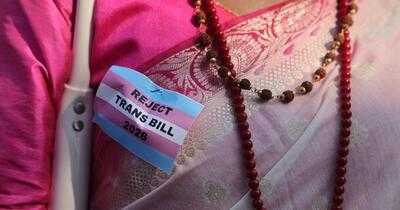
What is common between khwaja sira in Punjab and Kashmir, thirunar in Tamil Nadu and nupi maanbi in Manipur? These are some of India’s traditional trans communities whose legal standing is left uncertain under the new transgender law passed in March.
The law in force earlier, the Transgender Persons (Protection of Rights) Act, 2019, contained a wide and inclusive definition of a transgender person. It began by stating that a transgender person was someone “whose gender does not match with the gender assigned at birth”.
This included a “trans man or trans woman”, irrespective of whether or not they had undergone a medical procedure such as a sex reassignment surgery, someone “with intersex variations” and “genderqueer” individuals.
Apart from these categories, the 2019 law also included individuals “having such socio-cultural identities as kinner, hijra, aravani and jogta”. Further, it accorded all transgender individuals “a right to self-perceived gender identity”.
In contrast, the new law has a far more restrictive definition of a transgender person. It foregrounds the four socio-cultural identities of kinner, hijra, aravani and jogta, adding “eunuch” to the list. The other categories it includes are individuals who have “intersex variations”, “a congenital variation” in certain sexual characteristics, or have been “by force, allurement, inducement, deceit or...
Read more
-
Difference Between a University and a Deemed University: What Sets Them Apart? Learn Everything in 5 Key Points..

-
How to Secure a Job Opportunity on an Indian Navy Submarine? Learn Everything—From Eligibility to Salary..

-
CBSE 10th Result 2026: CBSE Class 10 Results to be Released Soon; Here Are 4 Ways to Check Your Results..

-
CRPF Constable Recruitment: Notification Issued for the Recruitment of 9,175 Constables in the Central Reserve Police Force..

-
Bank Job: Recruitment for 350 SO Posts at Indian Bank; Online Applications Open, Get Full Details Here..