
When the UAE Cabinet approved the National Healthy Nutrition Strategy 2031 earlier this year, one measure drew particular attention: a full ban on partially hydrogenated oils (PHOs), the primary industrial source of artificial trans fats.
For Nada Zuhair Al Adeeb, Secretary-General of the UAE Nutrition Society and member of the Supreme Committee for Consumer Protection, the decision came as no surprise. It was, she says, the logical conclusion of years of steadily building regulatory groundwork.
Industrially 'improved' at your health's expenseAl Adeeb describes PHOs as liquid vegetable oils that have been chemically modified through the partial addition of hydrogen, converting them into semi-solid fats and producing artificial trans fats as a by-product sometimes at concentrations as high as 25 to 45 per cent of total fat content.
The food industry favoured them for decades for purely practical reasons: they extend shelf life, improve texture, withstand high frying temperatures, and significantly cut production costs.
"But those industrial advantages came at a serious cost to consumer health," she says.
Nada Zuhair Al Adeeb
278,000 deaths a yearAl Adeeb is unambiguous about the science: there is no safe level of trans fat consumption.
She cites WHO estimates attributing more than 278,000 cardiovascular deaths annually worldwide to trans fat intake. Consuming PHOs, she explains, triggers three harmful changes simultaneously: LDL or 'bad' cholesterol rises and accumulates in arterial walls; HDL the 'good' cholesterol that protects the heart falls; and chronic inflammation in the blood vessels accelerates.
"Together, these effects harden the arteries, reduce their elasticity, raise blood pressure, and sharply increase the risk of heart attack," she adds. She also points to growing evidence linking trans fat consumption to insulin resistance and a heightened risk of type 2 diabetes.
2026 banAl Adeeb is keen to contextualise the 2026 decision. In 2024, the National Food Safety Committee, operating under the Ministry of Climate Change and the Environment, had already moved to restrict PHOs through mandatory national standards.
What the Cabinet decision adds, she explains, is an elevation of that measure from a technical specification to a formal, long-term national policy — one backed by clear implementation targets, enforcement mechanisms, and measurable public health goals, including reductions in obesity and diabetes rates.
Companies were granted a transitional period to reformulate their products, and those who fail to comply after the deadline face penalties including product recalls and financial fines. Regulatory scrutiny, she notes, will only intensify from here.
Real industrial challengeAl Adeeb acknowledges that the ban presents a significant challenge for food manufacturers.
PHOs were used precisely because they are cheap, chemically stable, and technically versatile, and replacing them requires a complete overhaul of product formulations — not a simple ingredient swap.
She identifies the healthiest alternatives as high-quality liquid vegetable oils, including high-oleic sunflower oil, canola oil, and corn oil, all of which are heart-friendly and free of trans fats.
She cautions, however, against treating palm oil -currently the most widely adopted replacement in the industry — as a health solution, given its high saturated fat content. Olive oil and avocado oil remain the gold standard nutritionally, she says, though at a higher cost.
Beyond expense, manufacturers must also contend with challenges around texture, taste, and shelf stability — qualities that PHOs delivered reliably and that are difficult to replicate without genuine technical investment.
Read the ingredients listAl Adeeb urges consumers to make a habit of reading the full ingredients list rather than relying on the nutrition panel alone. She singles out the '0 per cent trans fats' claim for particular scrutiny, explaining that under certain labelling regulations, a product may legally declare zero grams of trans fats if the amount per serving falls below 0.5 grams even if PHOs appear in the ingredients.
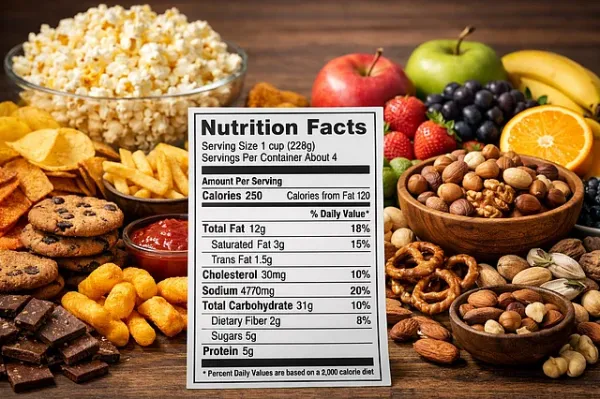
Those fractions accumulate with each additional serving. The products most likely to contain PHOs, she notes, are industrially baked goods such as biscuits and cakes, fried foods, ready-made popcorn, frozen pastry doughs, and certain types of margarine.
"The simpler the ingredients list — three to six ingredients — the safer the product. And the closer food is to its natural state, the less likely it is to contain hydrogenated oils," she says.
Healthier alternativesFor everyday snacking, Al Adeeb recommends nuts and seeds almonds, walnuts, pistachios, and sunflower seeds alongside fresh fruit, home-popped popcorn without artificial butter, natural nut butters made from 100 per cent nuts, and legumes such as hummus and lentils.
These, she emphasises, are not complicated substitutions but a straightforward return to simpler, less processed eating that is accessible to most households.
Foundation is in placeAl Adeeb concludes by framing the strategy as a genuine shift in national approach: from managing illness to preventing it. She stresses that its success depends on reaching families at home and children in school, drawing on research consistently showing that combining regulatory change with community awareness and family education produces the most lasting public health outcomes.
"The foundation is now in place," she says. "The real challenge is implementation."
UAE bans trans fats: What the new nutrition strategy means for your health Nearly 50% UAE adults eat fast food at least twice a week, research reveals Abu Dhabi bans outdoor advertising of unhealthy food and drinks-
Relief for IndiGo, Air India: Govt Cuts Landing and Parking Charges by 25 Pc..

-
Vivo T5 Pro 5G: The Thinnest Phone with a 9020mAh Battery is Coming Soon—Launch Date Confirmed..

-
Induction: Why does an induction cooktop feature a circular ring? It's not just a design element..

-
OnePlus Nord 6 vs. OnePlus Nord 5: What's the Difference? Understand Before You Buy..

-
Anthropic's Claude Mythos Is 'Powerful'—It Can Hack Any Software..