Where is the hidden number '728': Can you find it within the first 20 seconds?
ETimes | April 9, 2026 6:39 AM CST
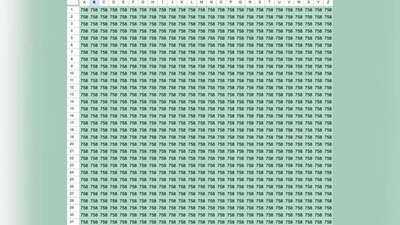
This is a simple image of grids. Every box shows the same number: 758. But hidden somewhere inside this neat Excel-style sheet is a different number, 728. The twist? It blends in so well that most eyes slide right past it.
This is not just a puzzle. It is a small test of focus, patience, and how the brain processes patterns. For children, it feels like a game. For parents, it quietly reveals how their child observes the world.
Why this puzzle is harder than it looks
The brain loves patterns. When it sees the same number repeated, 758, 758, 758, it starts to predict what comes next. This is helpful in daily life, but in puzzles like this, it becomes a trap.
Children scan quickly and assume everything is the same. That is why the hidden number feels “invisible.” The difference between 758 and 728 is just one digit, but spotting it requires slowing down and paying attention to detail.
This is where the real learning happens.
What children actually learn from this
This simple challenge builds more than just observation skills. It trains the brain in quiet but powerful ways:
These are the same skills used in reading, maths, and even sports. A child who learns to notice small differences early on often becomes more confident in problem-solving later.
A gentle way for parents to guide
Instead of giving away the answer too quickly, guide the child with small hints. Ask them to check one row at a time. Suggest moving finger by finger across the grid. This turns the activity into a shared moment, not just a test.
A simple question works well: “What if the number is hiding where you least expect it?”
This nudges the child to rethink their approach without pressure.
Celebrate the effort, not just the result. Whether they find it in 10 seconds or 2 minutes, the process matters more than the speed.
The answer, and what it teaches
The hidden number 728 is located in the K column and the 21st row.
Once revealed, many children react with surprise. They often say, “It was right there!” And that is the point. The brain learns that careful observation can uncover what seemed impossible at first.
This small moment builds confidence. It tells children that challenges can be solved with patience and a fresh look.
Why such puzzles matter today
In a world full of fast scrolling and quick answers, children rarely get the chance to pause and observe deeply. Activities like this create that pause.
They are simple, screen-friendly, and yet mentally engaging. No loud instructions, no pressure, just quiet thinking. Over time, these moments shape how a child approaches bigger challenges in school and life.
This is not just a puzzle. It is a small test of focus, patience, and how the brain processes patterns. For children, it feels like a game. For parents, it quietly reveals how their child observes the world.
Why this puzzle is harder than it looks
The brain loves patterns. When it sees the same number repeated, 758, 758, 758, it starts to predict what comes next. This is helpful in daily life, but in puzzles like this, it becomes a trap.
Children scan quickly and assume everything is the same. That is why the hidden number feels “invisible.” The difference between 758 and 728 is just one digit, but spotting it requires slowing down and paying attention to detail.
This is where the real learning happens.
What children actually learn from this
This simple challenge builds more than just observation skills. It trains the brain in quiet but powerful ways:
- Attention control: Kids learn to slow down instead of rushing.
- Visual scanning: Eyes move more carefully across rows and columns.
- Pattern awareness: They begin to question what looks “obvious.”
- Patience: Not finding it immediately teaches persistence.
These are the same skills used in reading, maths, and even sports. A child who learns to notice small differences early on often becomes more confident in problem-solving later.
A gentle way for parents to guide
Instead of giving away the answer too quickly, guide the child with small hints. Ask them to check one row at a time. Suggest moving finger by finger across the grid. This turns the activity into a shared moment, not just a test.
A simple question works well: “What if the number is hiding where you least expect it?”
This nudges the child to rethink their approach without pressure.
Celebrate the effort, not just the result. Whether they find it in 10 seconds or 2 minutes, the process matters more than the speed.
The answer, and what it teaches
The hidden number 728 is located in the K column and the 21st row.
Once revealed, many children react with surprise. They often say, “It was right there!” And that is the point. The brain learns that careful observation can uncover what seemed impossible at first.
This small moment builds confidence. It tells children that challenges can be solved with patience and a fresh look.
Why such puzzles matter today
In a world full of fast scrolling and quick answers, children rarely get the chance to pause and observe deeply. Activities like this create that pause.
They are simple, screen-friendly, and yet mentally engaging. No loud instructions, no pressure, just quiet thinking. Over time, these moments shape how a child approaches bigger challenges in school and life.
READ NEXT
-
Teenager Suryavanshi flogs Bumrah in first meeting

-
11,000 litres of milk dumped into Narmada, environmentalists see red

-
Uttarakhand CM Dhami attends Soldiers' Felicitation Ceremony in Khatima, pays tribute to martyrs

-
Iran's New Leadership Signals Shift in Hormuz Strait Management

-
'I'm a cardiologist - here are the six things I never do after 6pm'