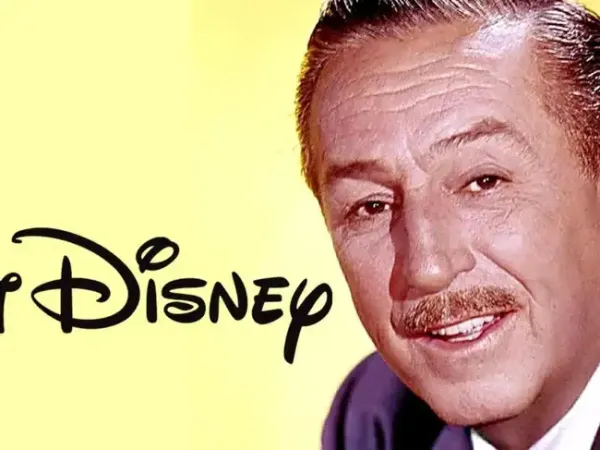
Action is the only thing that bridges the gap between thought and reality. So if you want to make your dreams come true, don’t deliberate for too long. Start acting so that they can materialise. Success begins the moment you stop overthinking and start taking practical steps toward your goal. Ideas alone have little value unless they are put into motion. By focusing on doing rather than just talking, you overcome hesitation, build momentum, and turn intentions into real progress and meaningful achievements.
Years ago, Walt Disney emphasised the importance of taking action.
Walt Disney’s Wisdom On Not Dilly Dallying But Doing
In an interview with columnist Hedda Hopper in 1957, Walt Disney said: "I found the way to get started was to quit talking and begin doing it."
In the book Walt Disney: Conversations, his philosophy of just doing things without wasting time is further elaborated. He once stated that once you have a project your 100%, it is useless to worry about the results.
“Why worry? If you've done the very best you can, then worrying won't make it any better…” he said.
Deeper Meaning Behind The Quote
this quote carries a powerful lesson about the gap between intention and action. At a deeper level, it highlights how people often get trapped in endless planning, discussion, or fear of failure, which delays real progress. Talking can create an illusion of productivity, but it does not produce results.
The statement urges individuals to overcome hesitation and take the first concrete step, however small it may be. Action builds confidence, reveals practical challenges, and creates momentum that thinking alone cannot achieve. It also reflects the idea that clarity often comes through doing, not before it.
Ultimately, the quote teaches that success is rooted in initiative. Dreams, goals, and ideas only begin to take shape when effort replaces words. By choosing action over overthinking, one unlocks growth, learning, and the possibility of meaningful achievement.
Relevance Of This Quote
this quote remains highly relevant in today’s fast-paced and idea-driven world. Many people spend excessive time discussing plans, setting goals, or waiting for the perfect moment, but delay taking real action. In an era dominated by social media, meetings, and constant planning, it is easy to confuse talking with progress.
The quote serves as a reminder that meaningful results come only through execution. Whether in careers, personal growth, or creative pursuits, starting—even imperfectly—is more valuable than endless preparation. It also reflects modern challenges like procrastination and fear of failure, encouraging individuals to move past them.
Its relevance lies in its simplicity: success begins with the first step. By prioritizing action over words, individuals can break inertia, adapt through experience, and turn ideas into tangible outcomes in an increasingly competitive world.
As his studio expanded, he pushed the boundaries of animation by integrating synchronized sound, advanced color techniques, and innovative camera methods. These advancements revolutionized the industry and set new standards for storytelling.
Following World War II, the studio continued to produce successful films, including Cinderella, Sleeping Beauty, and Mary Poppins, the latter earning multiple Academy Awards. Across his career, Disney accumulated a record number of Academy Awards wins and nominations, alongside honors like Golden Globe Awards and Emmy Awards.
His involvement extended to major global events, including the 1964 New York World's Fair. Later, he initiated plans for Walt Disney World, envisioning a futuristic community concept known as EPCOT.
Today, Disney is widely recognized as a defining cultural force of the 20th century. His films continue to be celebrated and reimagined, while his company has grown into one of the largest media enterprises worldwide. As a visionary who bridged imagination and technology, his legacy endures as a cornerstone of modern popular culture.
Years ago, Walt Disney emphasised the importance of taking action.
Walt Disney’s Wisdom On Not Dilly Dallying But Doing
In an interview with columnist Hedda Hopper in 1957, Walt Disney said: "I found the way to get started was to quit talking and begin doing it."In the book Walt Disney: Conversations, his philosophy of just doing things without wasting time is further elaborated. He once stated that once you have a project your 100%, it is useless to worry about the results.
“Why worry? If you've done the very best you can, then worrying won't make it any better…” he said.
Deeper Meaning Behind The Quote
this quote carries a powerful lesson about the gap between intention and action. At a deeper level, it highlights how people often get trapped in endless planning, discussion, or fear of failure, which delays real progress. Talking can create an illusion of productivity, but it does not produce results.The statement urges individuals to overcome hesitation and take the first concrete step, however small it may be. Action builds confidence, reveals practical challenges, and creates momentum that thinking alone cannot achieve. It also reflects the idea that clarity often comes through doing, not before it.
Ultimately, the quote teaches that success is rooted in initiative. Dreams, goals, and ideas only begin to take shape when effort replaces words. By choosing action over overthinking, one unlocks growth, learning, and the possibility of meaningful achievement.
Relevance Of This Quote
this quote remains highly relevant in today’s fast-paced and idea-driven world. Many people spend excessive time discussing plans, setting goals, or waiting for the perfect moment, but delay taking real action. In an era dominated by social media, meetings, and constant planning, it is easy to confuse talking with progress.The quote serves as a reminder that meaningful results come only through execution. Whether in careers, personal growth, or creative pursuits, starting—even imperfectly—is more valuable than endless preparation. It also reflects modern challenges like procrastination and fear of failure, encouraging individuals to move past them.
Its relevance lies in its simplicity: success begins with the first step. By prioritizing action over words, individuals can break inertia, adapt through experience, and turn ideas into tangible outcomes in an increasingly competitive world.
Early Life and Creative Beginnings
Walt Disney, born on December 5, 1901, in Chicago, emerged as one of the most transformative figures in entertainment history. Raised largely in Missouri, he developed a fascination with drawing at a young age. His artistic inclination was evident early on, leading him to attend art classes during childhood. By the time he reached adulthood, he had already begun working professionally as a commercial illustrator, marking the first step in his creative journey.Rise in Animation and Breakthrough Success
In the early 1920s, Disney relocated to California, where he partnered with his brother Roy O. Disney to establish what would later become The Walt Disney Company. Collaborating with animator Ub Iwerks, he introduced the character Mickey Mouse in 1928, a creation that quickly gained immense popularity. Disney himself initially lent his voice to the character, adding a personal touch to its charm.As his studio expanded, he pushed the boundaries of animation by integrating synchronized sound, advanced color techniques, and innovative camera methods. These advancements revolutionized the industry and set new standards for storytelling.
Landmark Films and Cinematic Innovation
Disney’s creative ambition resulted in a series of groundbreaking films that reshaped animation. Productions such as Snow White and the Seven Dwarfs, Pinocchio, Fantasia, Dumbo, and Bambi demonstrated artistic and technical excellence, establishing animation as a serious cinematic form.Following World War II, the studio continued to produce successful films, including Cinderella, Sleeping Beauty, and Mary Poppins, the latter earning multiple Academy Awards. Across his career, Disney accumulated a record number of Academy Awards wins and nominations, alongside honors like Golden Globe Awards and Emmy Awards.
Expansion into Theme Parks and Television
During the 1950s, Disney ventured beyond filmmaking into immersive entertainment. He launched Disneyland in 1955, creating a new model for theme parks. To support this ambitious project, he expanded into television with programs such as The Mickey Mouse Club.His involvement extended to major global events, including the 1964 New York World's Fair. Later, he initiated plans for Walt Disney World, envisioning a futuristic community concept known as EPCOT.
Personal Life and Character
Privately, Disney was known to be reserved and somewhat self-critical, despite projecting a friendly and approachable image in public. He maintained strict expectations for his colleagues, driving innovation but also demanding excellence. While controversies occasionally surfaced regarding his personal views, many associates refuted such claims, offering a more nuanced understanding of his character.Legacy and Cultural Impact
Disney passed away in 1966 due to complications from lung cancer, leaving several projects unfinished. Despite this, his influence remains profound. His work not only transformed animation but also reshaped global entertainment and storytelling.Today, Disney is widely recognized as a defining cultural force of the 20th century. His films continue to be celebrated and reimagined, while his company has grown into one of the largest media enterprises worldwide. As a visionary who bridged imagination and technology, his legacy endures as a cornerstone of modern popular culture.